

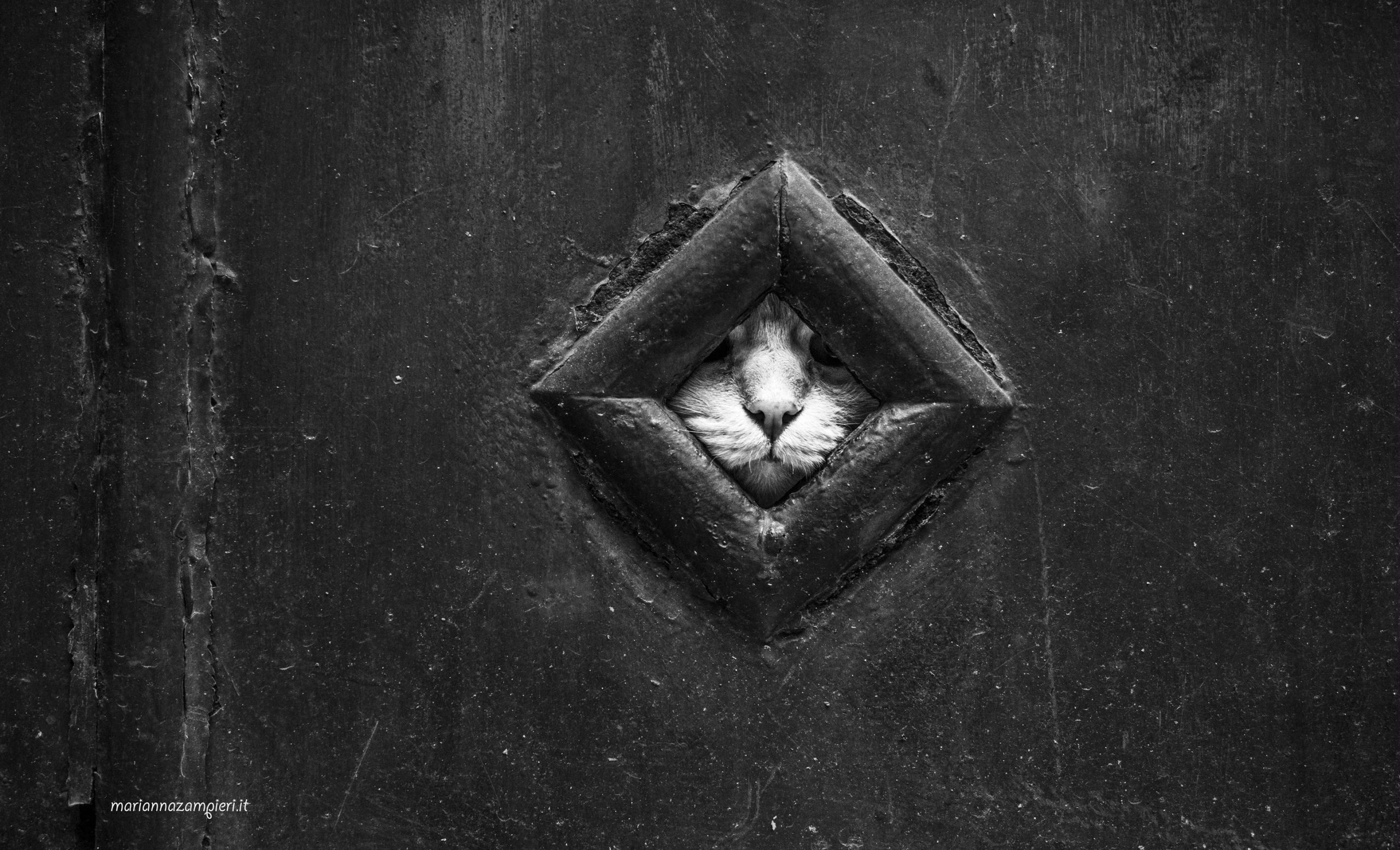
Venice’s cats live on windowsills, on shop thresholds, along the water’s edge and aboard boats. In a city without cars, the line between house and street is little more than a formality, and they take full advantage of it: amid the stream of tourists and wheelie cases they carve out spots of their own, where they let themselves be admired if and when they feel like it.
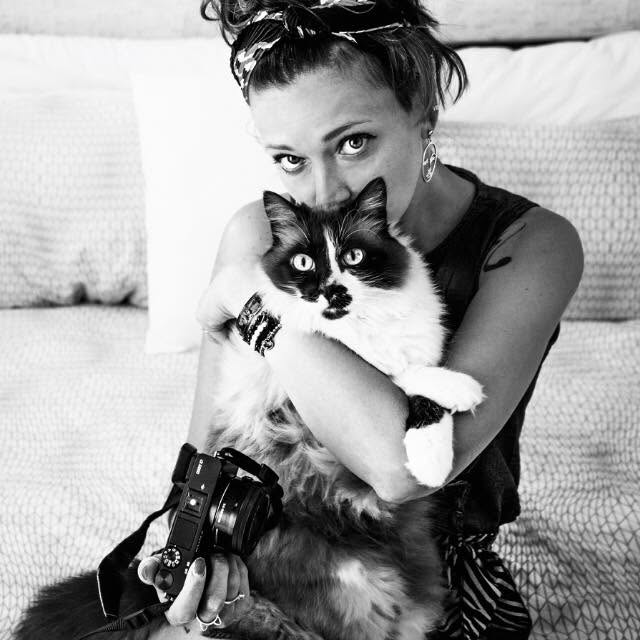
Marianna Zampieri has been photographing the cats of Venice since 2015, and she knows where to look. Seen one after another, her images feel like a walk through a museum whose rooms are scattered across the city, open at all hours, and whose works move about, fall asleep and sometimes cannot be found.
Zampieri calls herself a Catographer, a word that began as a joke and turned into a profession. She works in black and white, walks the city with no particular destination and waits for the cats to grant her access to their world. They don’t pose and they don’t try to please, and the photograph happens when they decide it does.
This way of working has produced the Cats in Venice series, C-at Work, devoted to cats who spend their days behind the counters of shops and workshops, and Cat Advisor, a collaborative map of where to find them, built on tip-offs sent in from all over the world.
We spent a day with her among the calli, and came back with the stories told here. They are portraits of a handful of cats and, at the same time, of the city they have chosen for themselves.
Bianchina
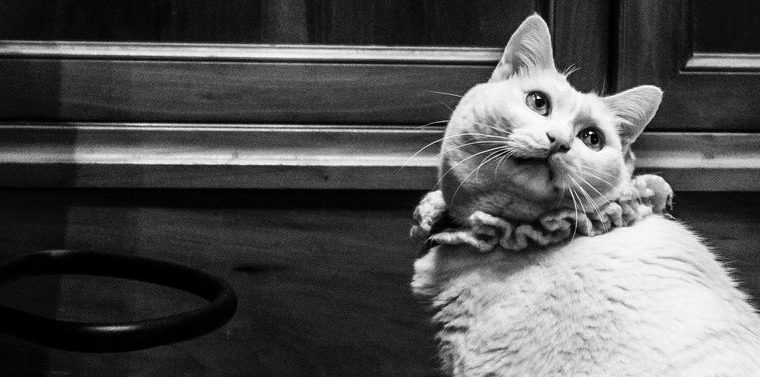
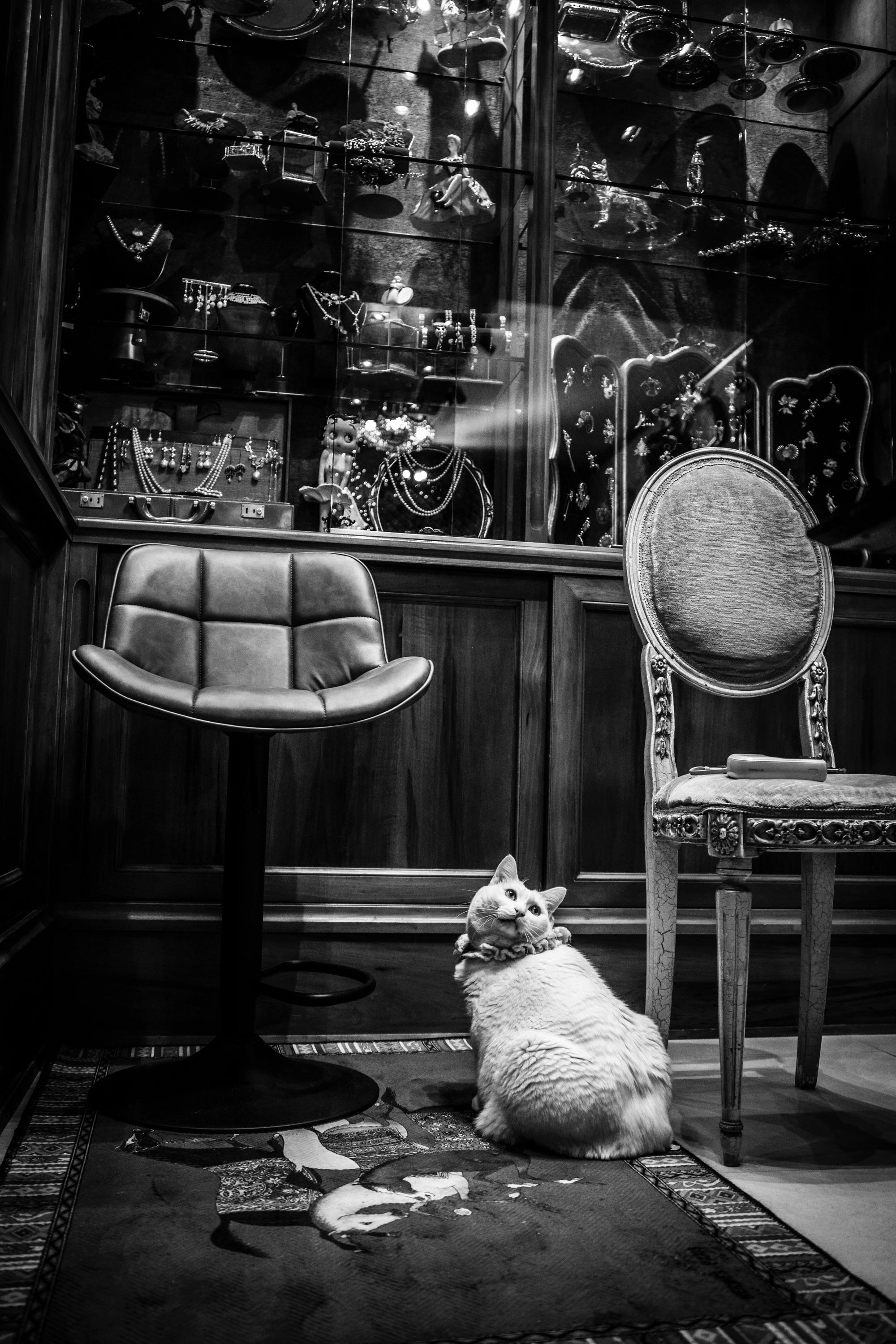
In Calle dei Stagneri, inside a jeweller’s shop, lives Bianchina, a twelve-year-old cat who came from China. Her name is a literal translation of her Chinese one, which means “little white”. She spends her days in the shop, at most appearing in the doorway without ever stepping out, and she has no time for being picked up or fussed over for long. Every day her humans pick out a different necklace for her, and she wears it with the composure of a true aristocrat.
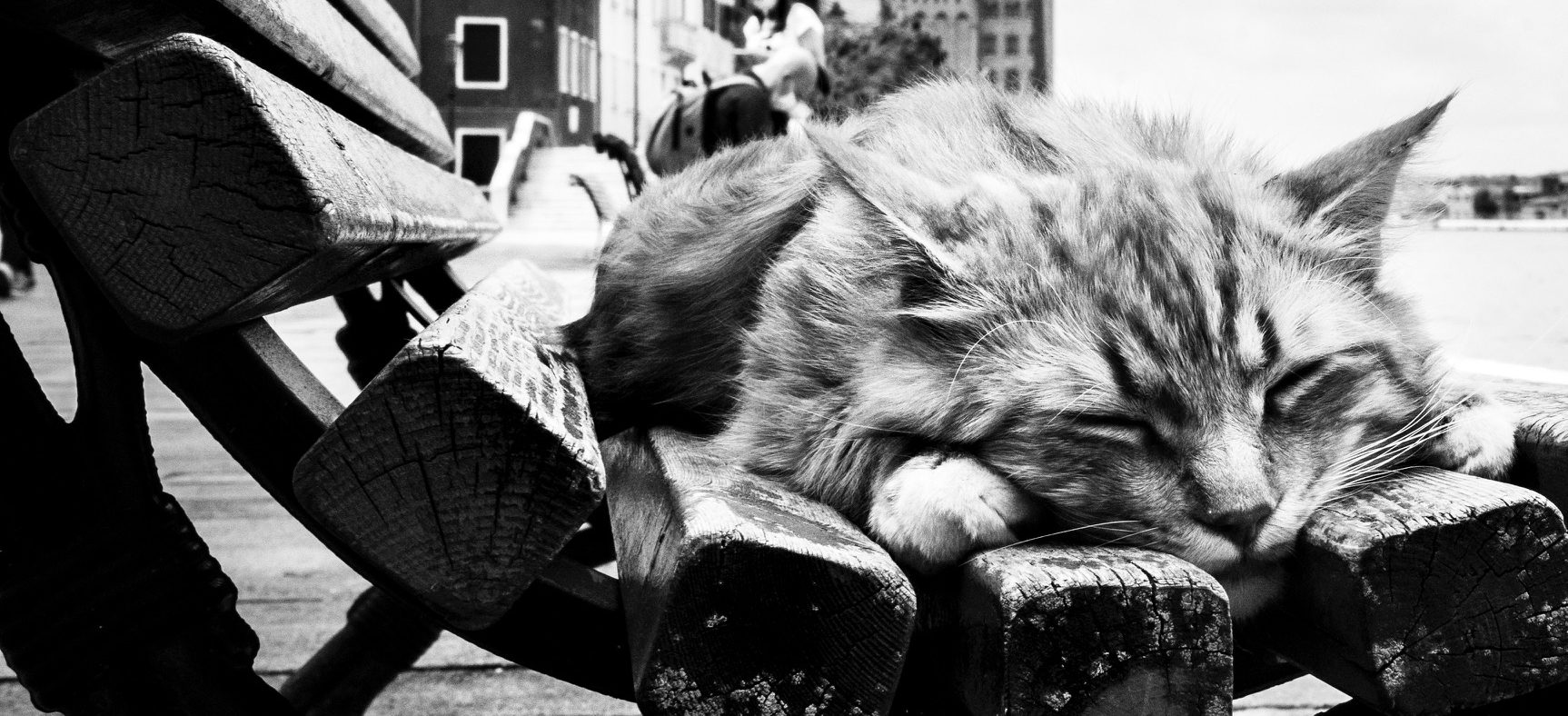
Van Gogh
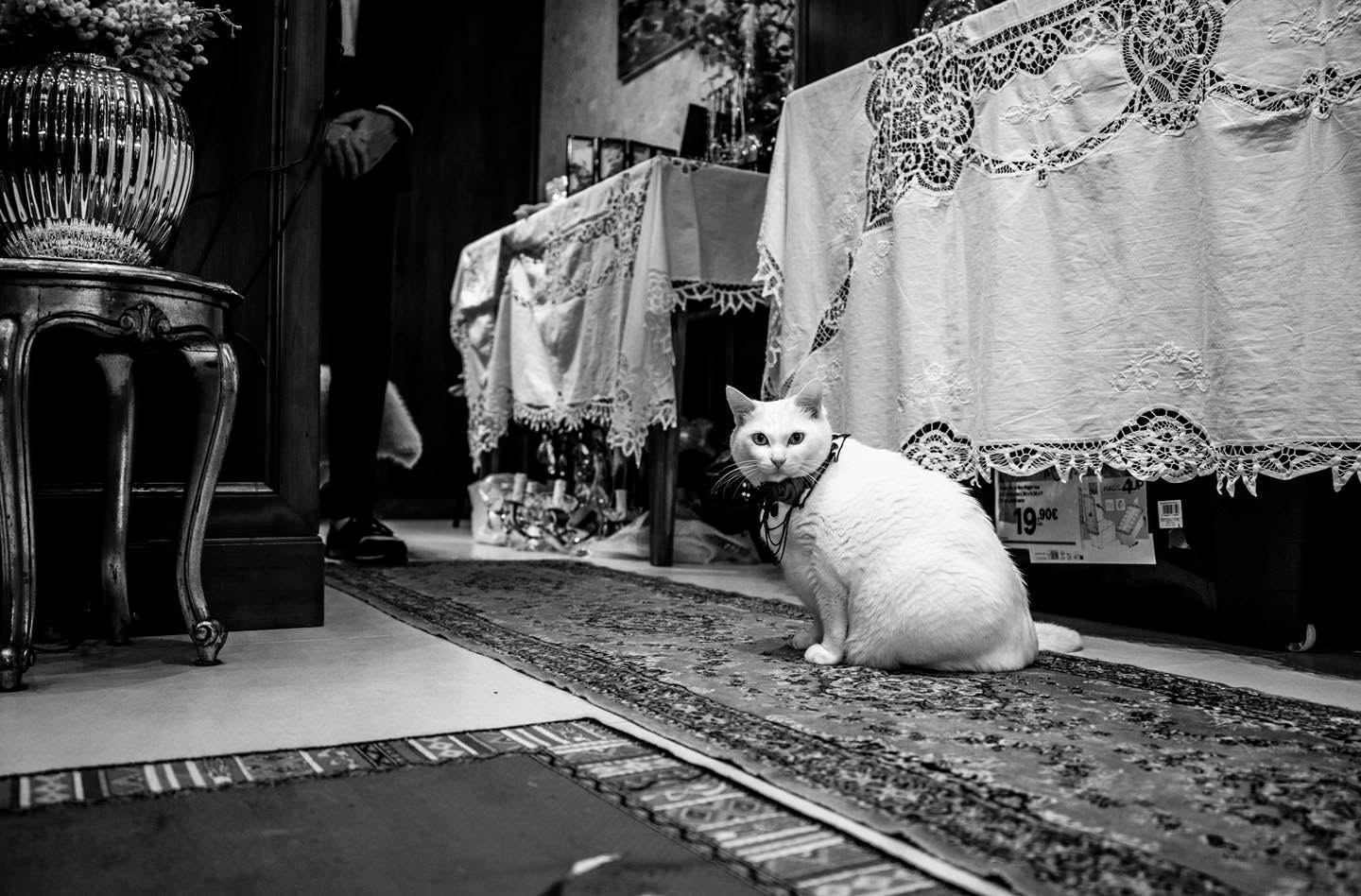
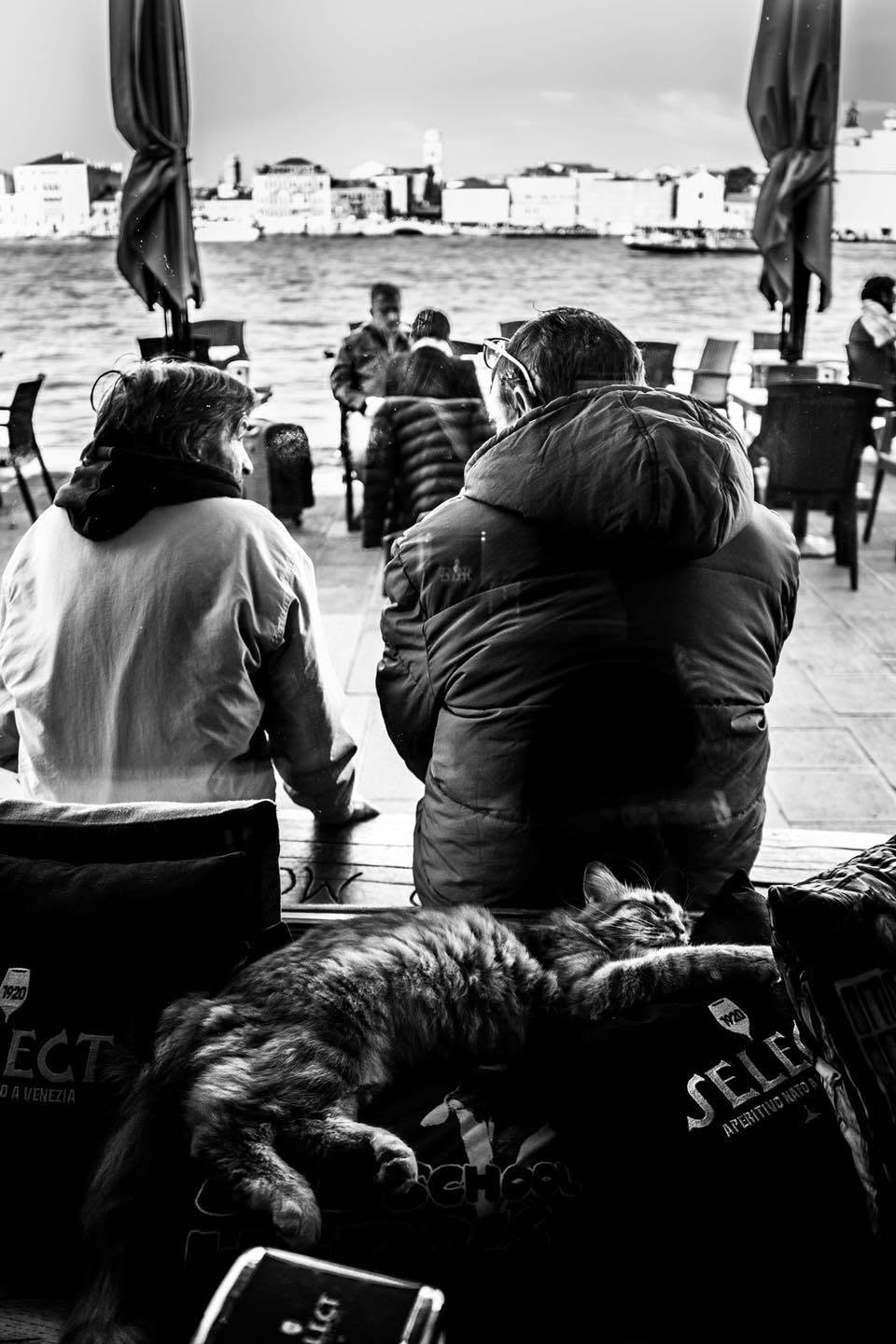
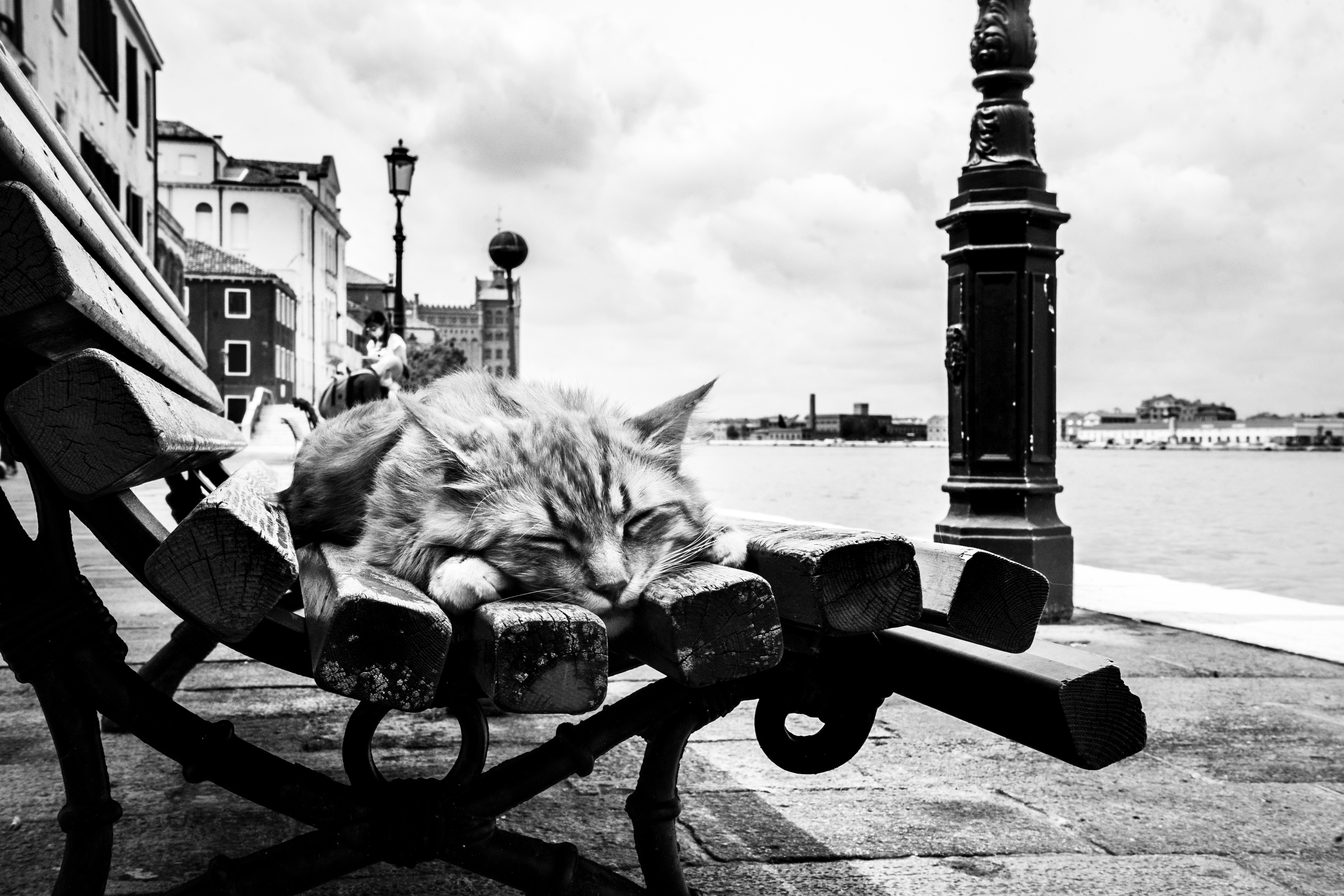
On the Giudecca lives Van Gogh, a cat who spends much of his day on a bench by the water, taking in the view, or inside a neighbourhood café, where he has a place of his own on the cushioned bench by the window. He is not the café’s cat. It would be more accurate to say the café is his, and that he (when the mood takes him) honours it with his presence.
Saba
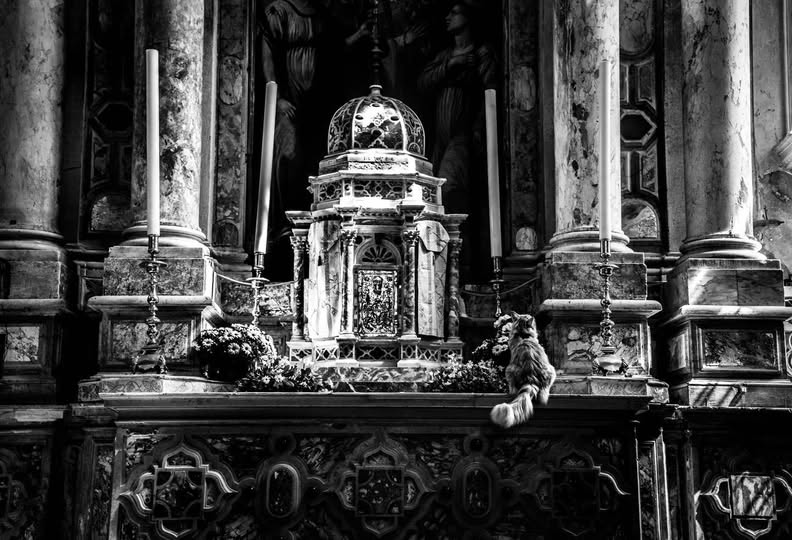
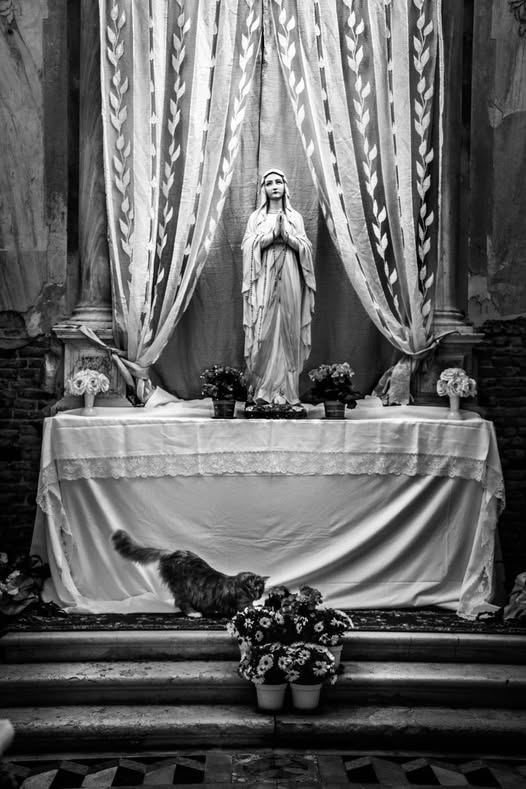
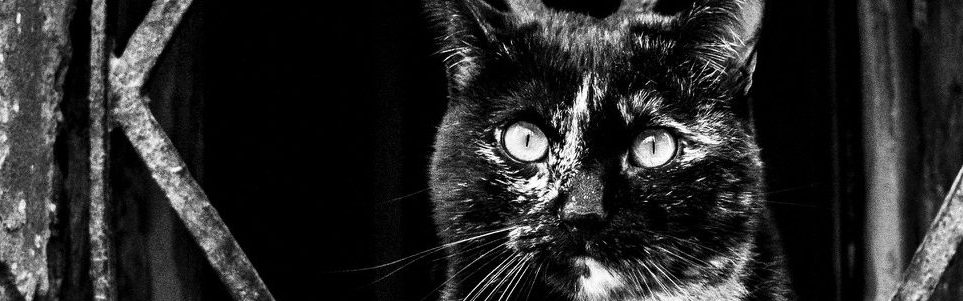
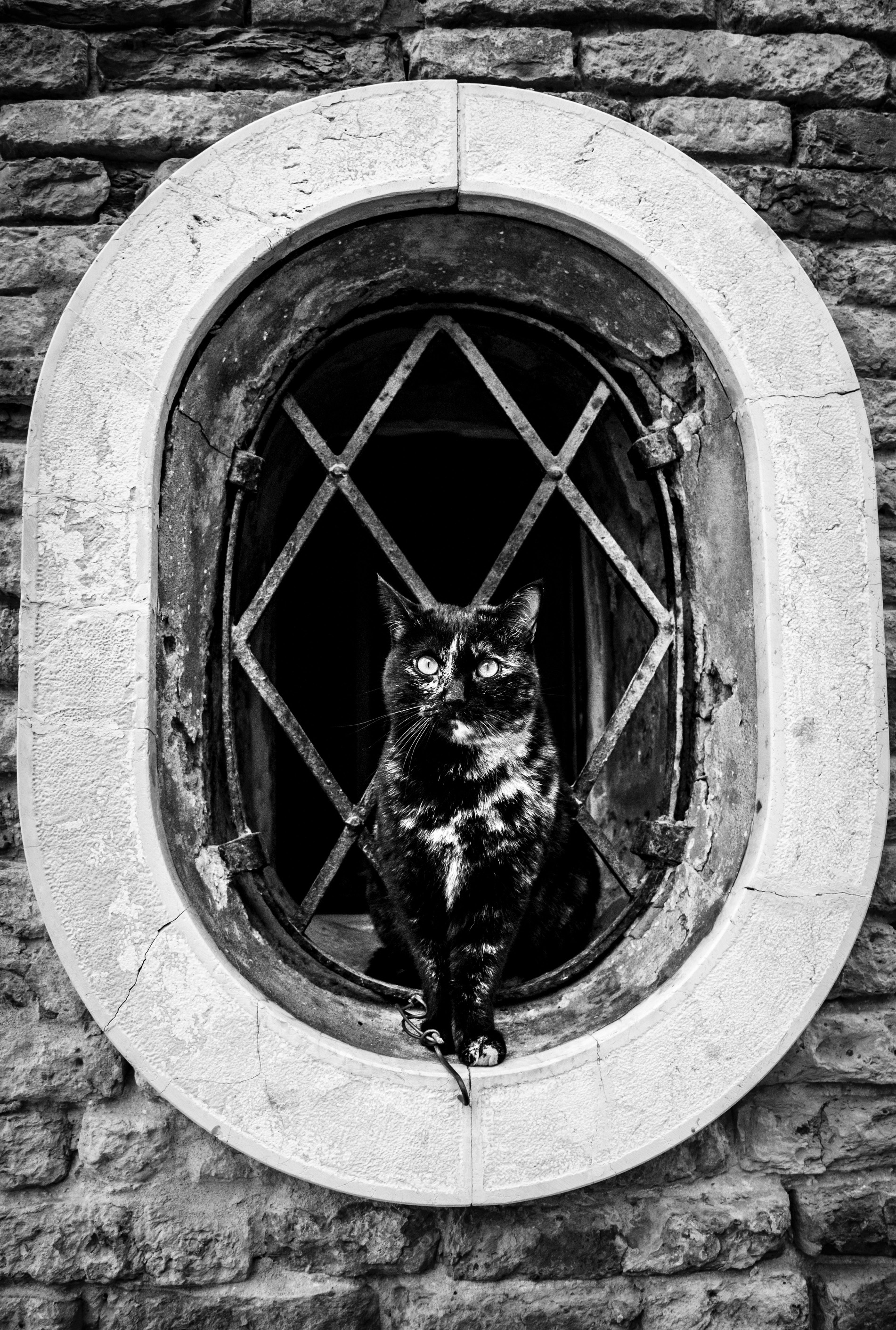
Saba lives near a busy fondamenta and comes out every morning through a small window, early in summer and later in winter. From there she often makes her way to the garden of a nearby nursery school, slipping in through a side entrance. Those who know her say she was far more sociable as a kitten and often played out in the calle, whereas now, perhaps tired of being stopped every few steps by passers-by wanting to stroke her, she prefers to keep herself to herself. On the day she was photographed, in the middle of carnival, the calle was full of people, wheelie cases and dogs on leads.
Love
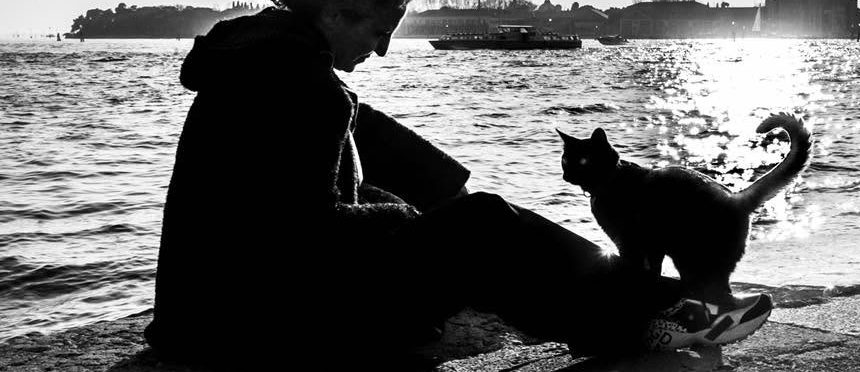
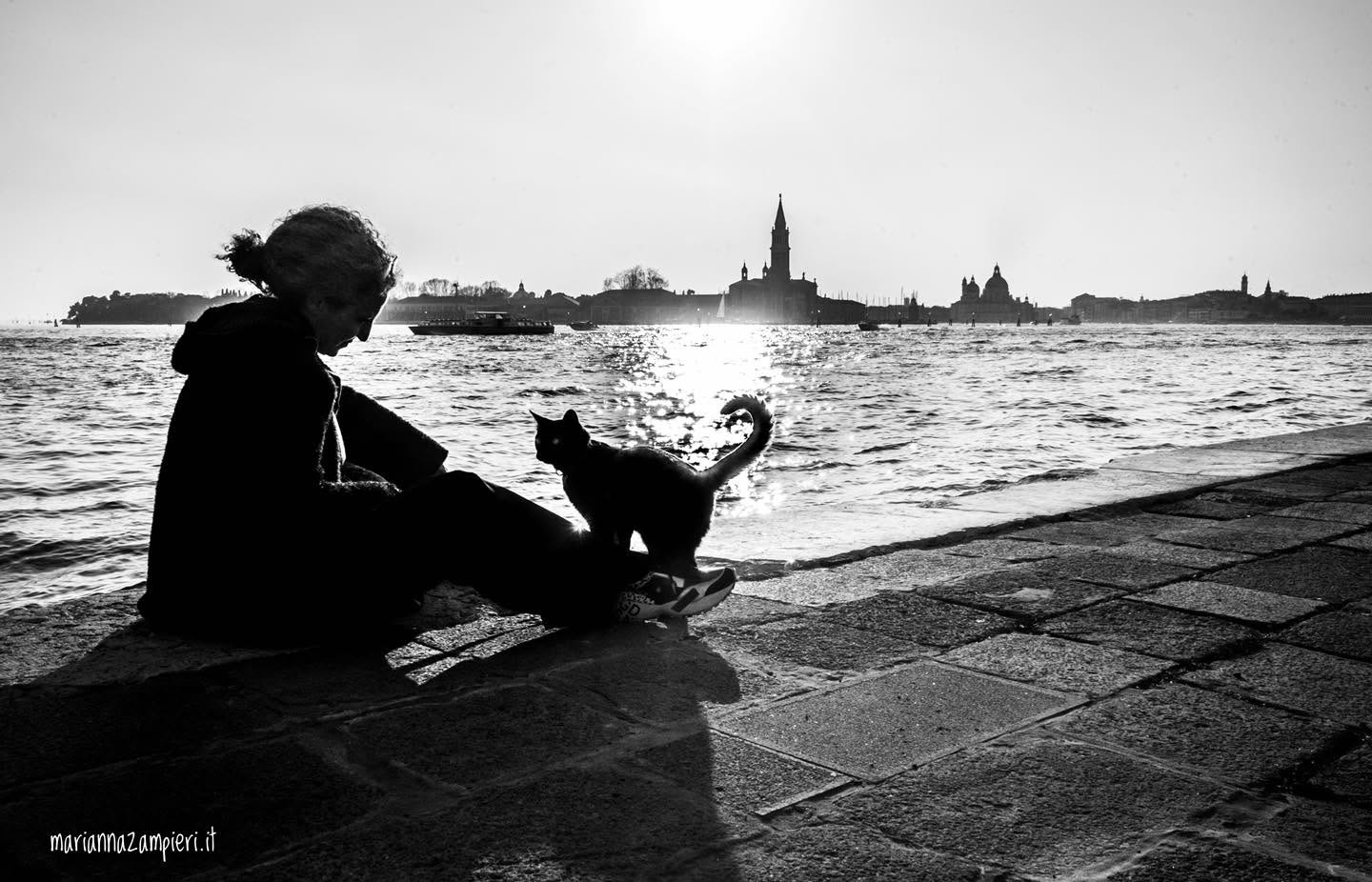
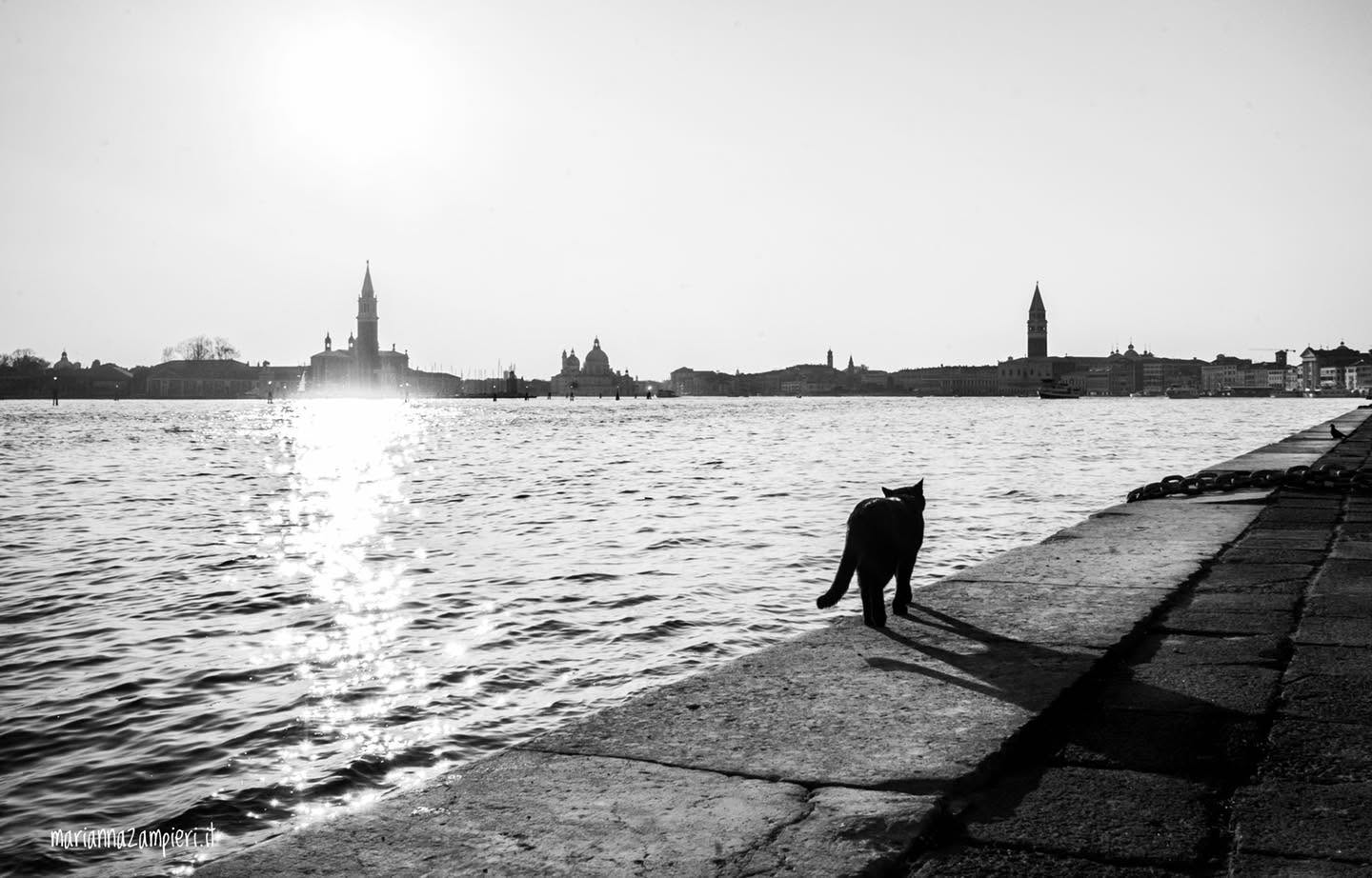
Love came to Venice with his brother Live after a year and a half in Turin, where he had fallen from the roof of a building and injured his legs, fortunately without lasting damage. Neither had ever been allowed outdoors, so their human, Carmela, deliberately chose a quiet neighbourhood away from the crowds, with some greenery around it, and spent time walking them about to teach them the way home, until they could be trusted to roam on their own. Live is the more reserved of the two and prefers to go out at night, while Love is out at all hours, day and night, and is known across the whole area, at the chemist’s and at the greengrocer’s, who always leaves him something to eat and has even made him a basket for his naps in the shop. What is most striking, though, is his bond with Carmela: during the day she often walks past the nearby gardens and whistles, and moments later a small black dot comes towards her at speed, tail straight up. What follows belongs to the two of them, all play and affection by the water, often watched by people who stop and stare, spellbound.
Oliver
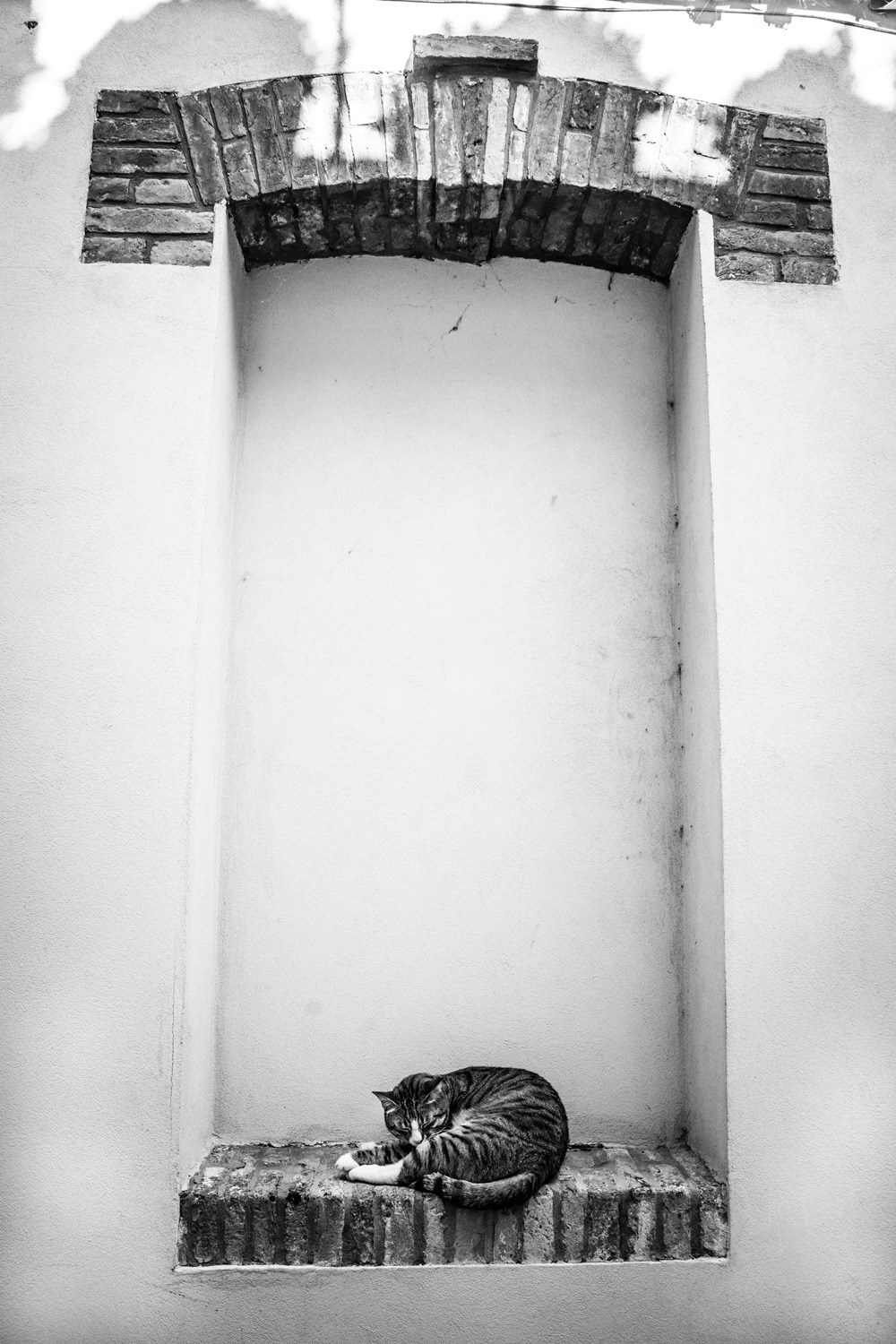
Oliver was born to a stray in Cannaregio and grew up with a particular interest in art and Venetian palazzi. When his family lived in Dorsoduro, he let himself into the Guggenheim and Ca’ Dario on a regular basis and had to be retrieved from both more than once, as well as from the classrooms of the art school and the academy of fine arts, where he got as far as the sculpture studio. More than one tourist, charmed by how friendly he is, tried to take him back to their hotel, obliging his family to collect him from there too. In the neighbourhood he had several friendly households ready to take him in for a stroke or a few treats. He now lives in another part of the city, where he applies the same enthusiasm to exploring the local restaurants, with a bowl of water waiting for him even in an orthopaedic supplies shop, and a declared preference for a small Lebanese place nearby.
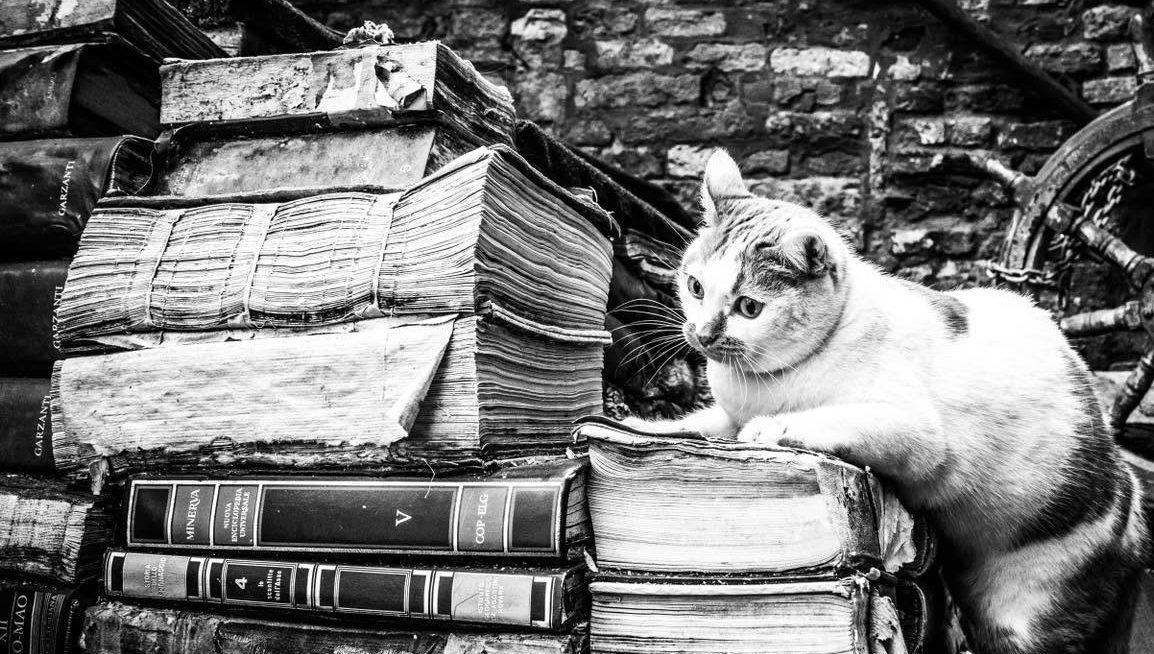
The cats of Libreria Acqua Alta
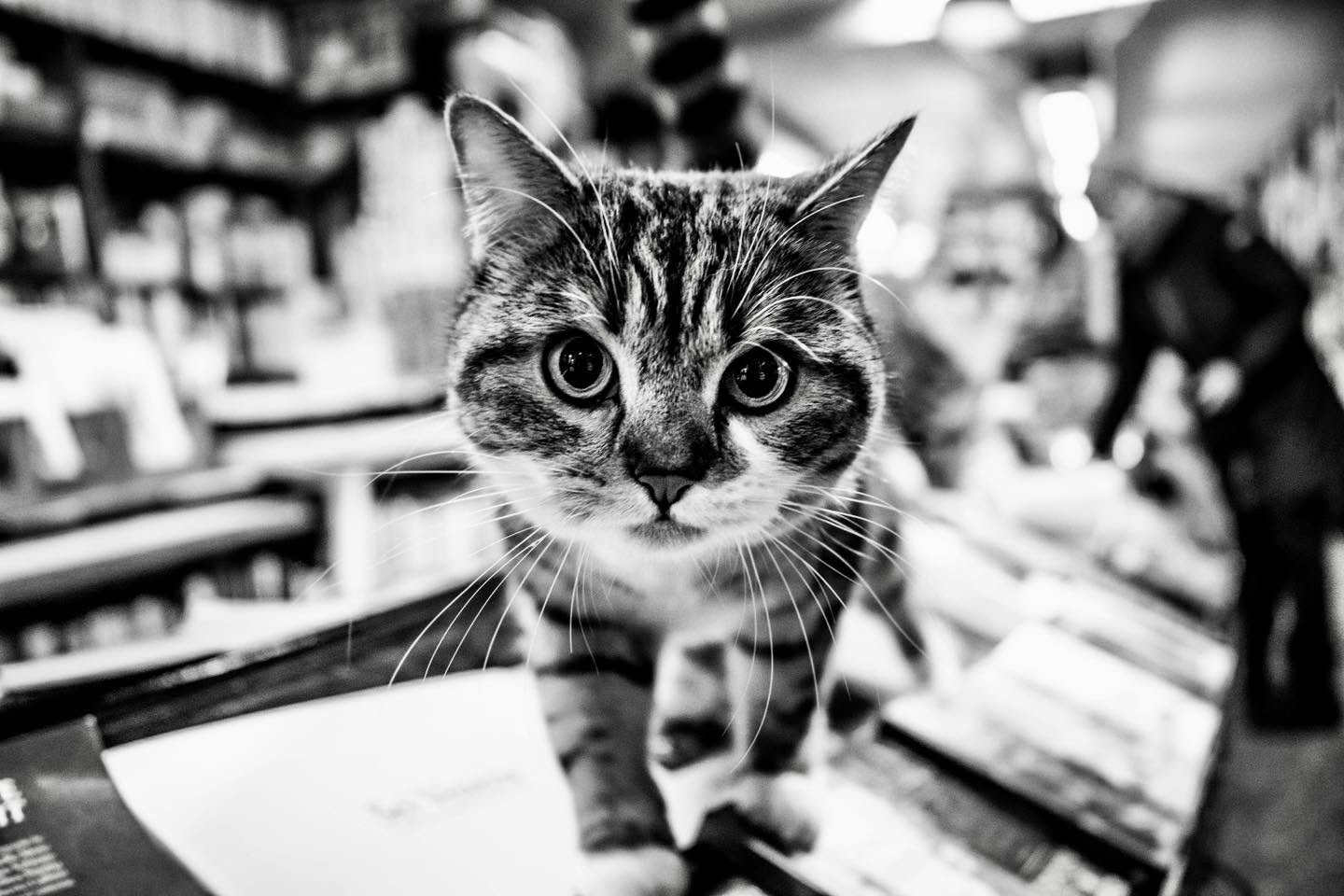
Our tour of Venice ends at Libreria Acqua Alta, where Marianna has been a regular for years: she works with the booksellers and produces their calendar of resident cats each year, the only work she shoots in colour. The bookshop is the quintessence of C-at Work, the project through which she documents cats who spend their days in shops, businesses and public places.
Here the cats live among the books and do what all working cats do: they greet, they observe, they reassure. To all appearances they do nothing, and meanwhile they are essential. They have chosen a place full of people, full of paper and full of high shelves to survey it from, and it suits them perfectly.
There would be far too many stories to tell, because the cats here come and go, and every so often new ones arrive and learn the trade taking their first steps among the shelves. We have chosen a group portrait instead, which says more about a place like this than any single story could. The photographs that follow show only some of them. For the others, you’ll have to go in person.
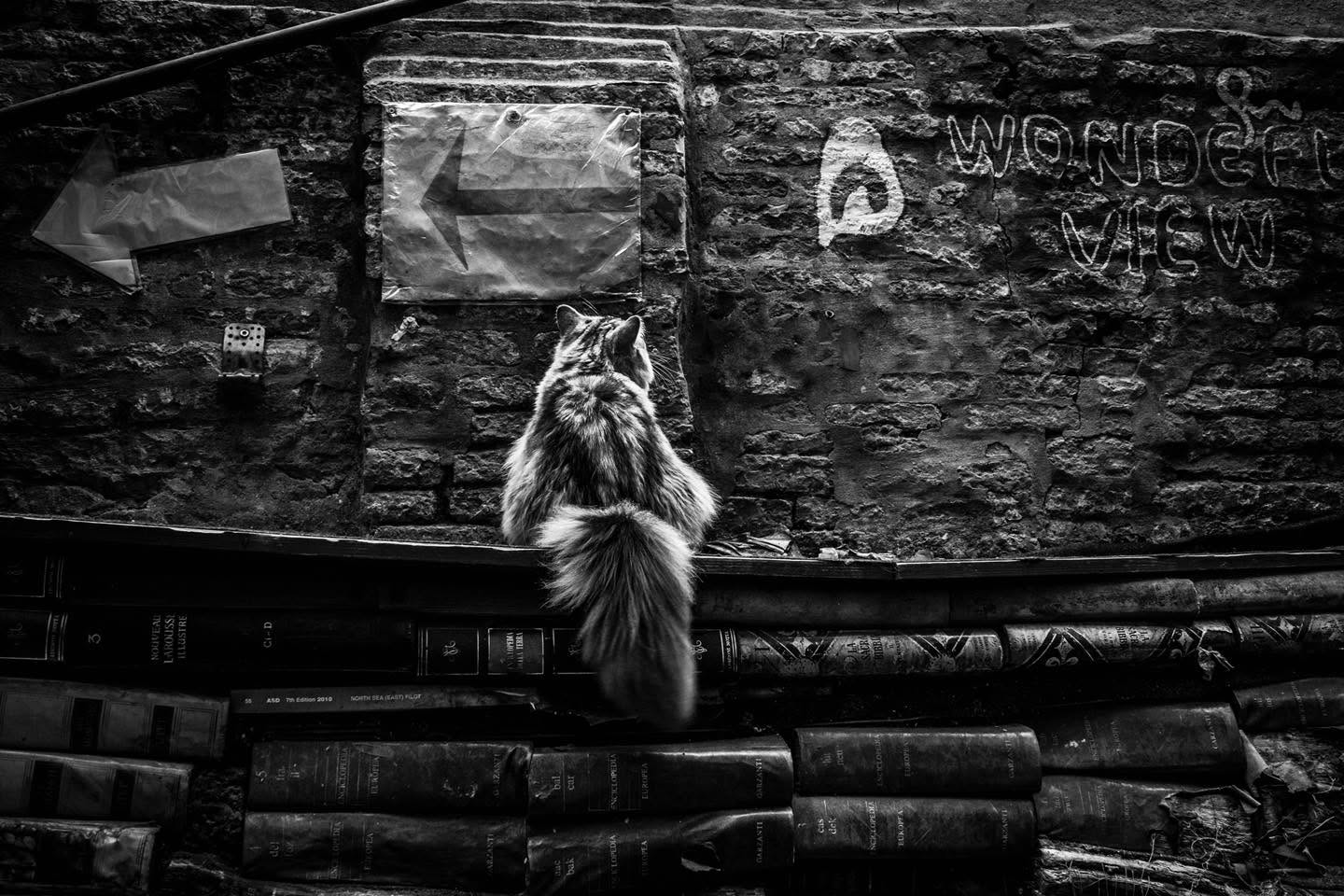
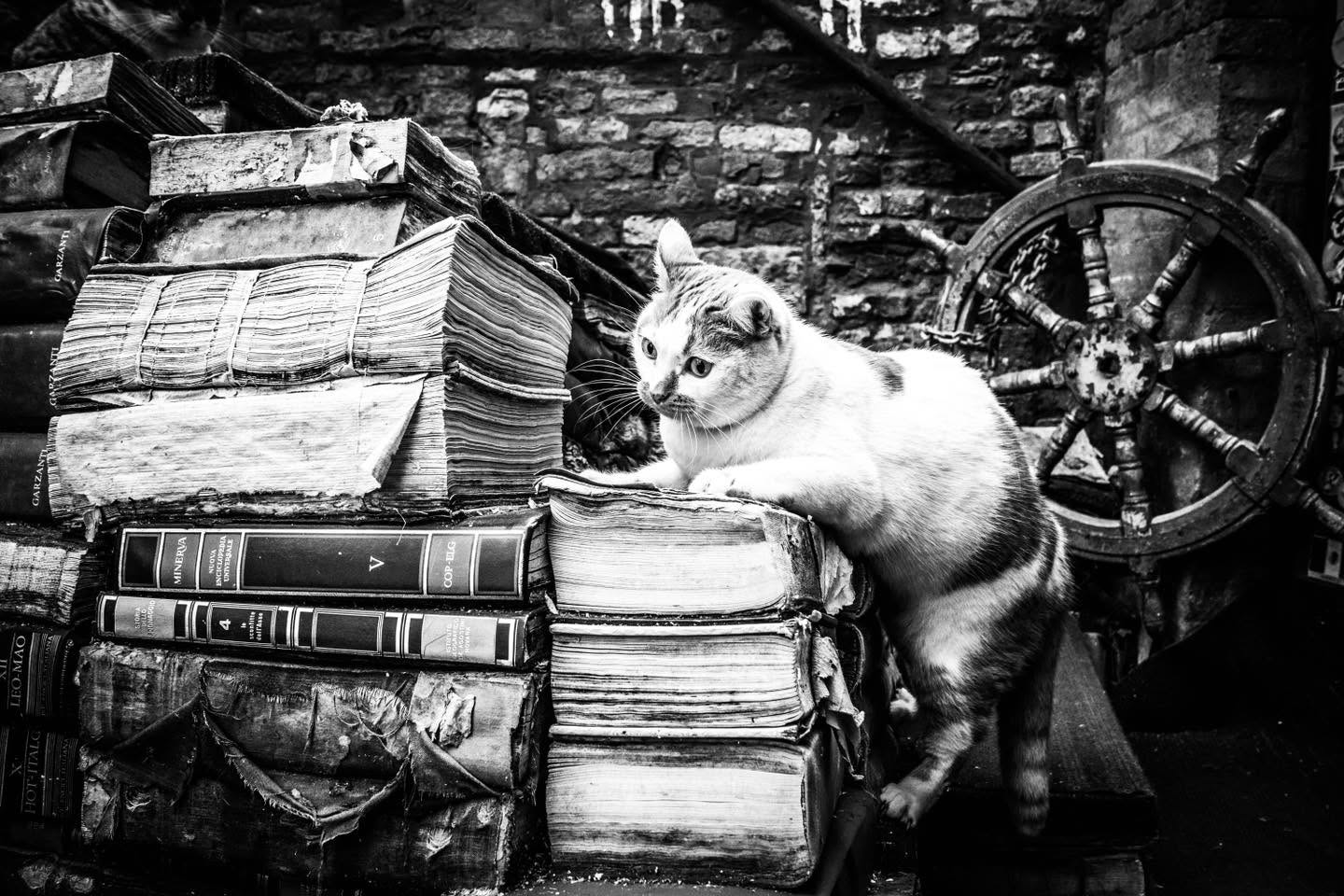
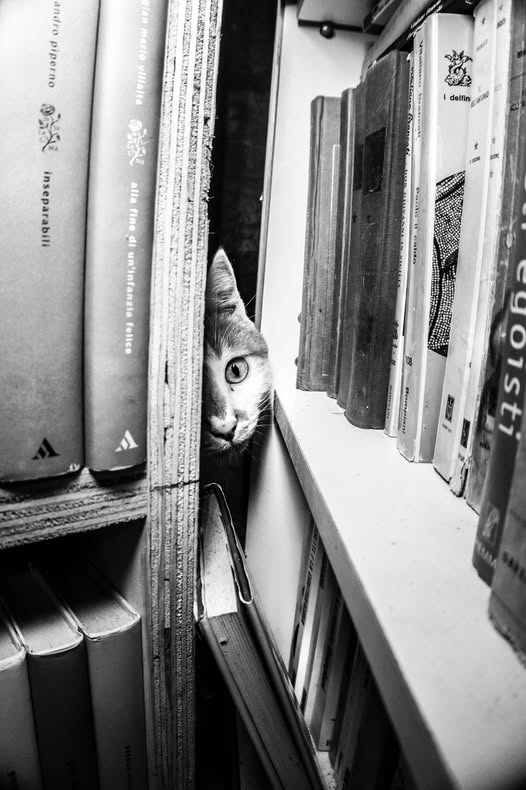
Marianna Zampieri has shown us that Venice, among many other things, is also a museum of cats. These are stories with no end, one for every window and every doorstep, and once you know them you never cross the city in quite the same way.
www.instagram.com/marianna_catographer
Digital Gallery
See Marianna Zampieri’s photos.
Interview
We had the pleasure of talking with Marianna Zampieri about photography, cats, Venice and her photographic series.