

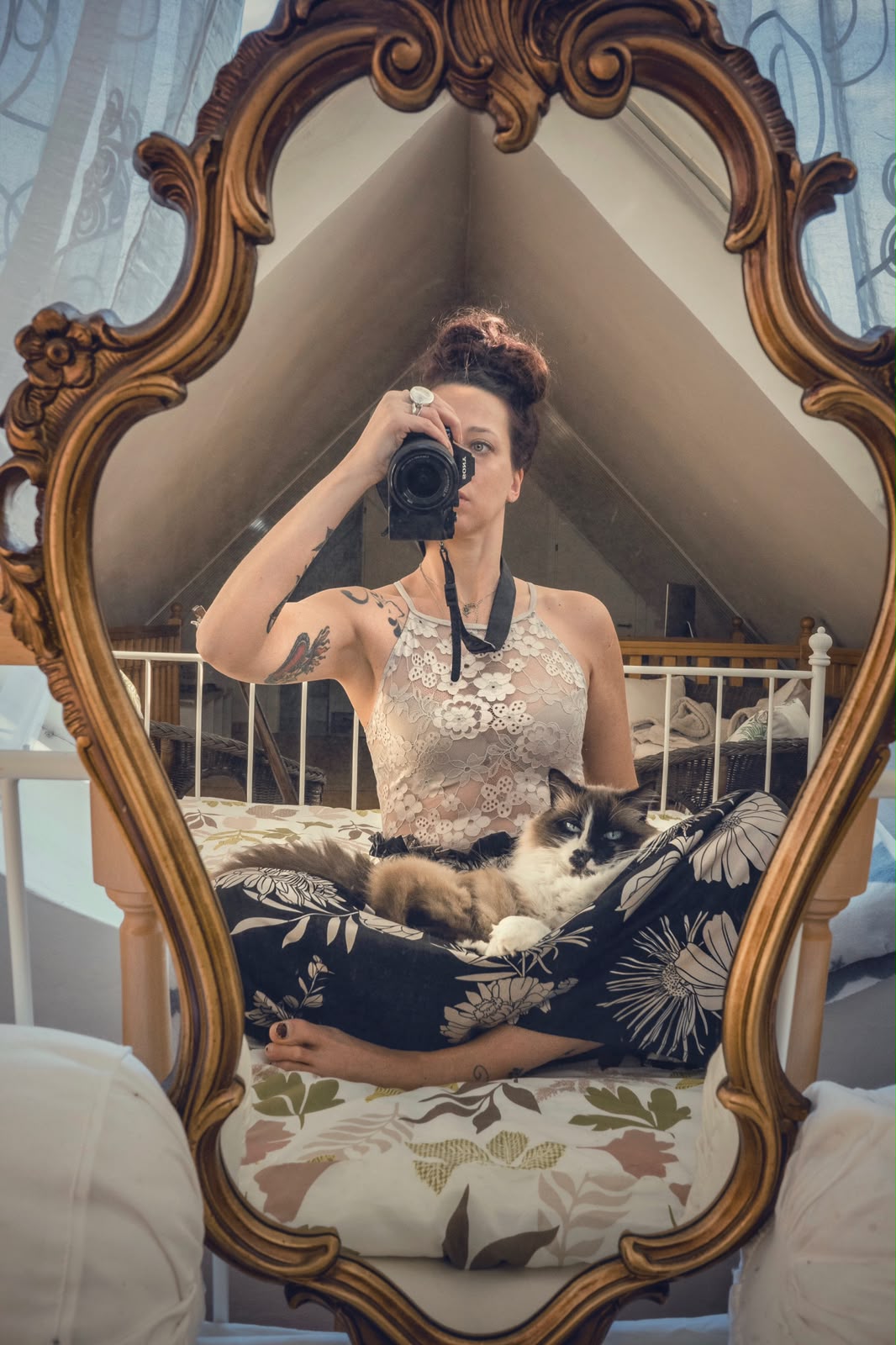
Marianna Zampieri’s interview: the Catographer who has photographed the cats of Venice since 2015 talks about her work.
Let’s start with your artistic choice: you’ve focused entirely on cats, to the point of calling yourself a “Catographer”. What led you in this direction? Why cats?
It wasn’t a strategic decision, it was more that I realised something. Photography had never interested me before, but cats always had. And I found in photography a language for talking about these creatures, who are extremely photogenic but above all free. They don’t pose, they don’t try to please, they don’t pretend. If you manage to photograph them, it’s because they’ve granted you access to their world. At some point I understood that telling the story of cats also meant telling ours, the cities, the spaces we share. That’s where the word “Catographer” came from, almost as a joke, but today it describes me completely, because cats are the only thing I photograph.
Many of your cats are Venetian, and you’ve published the Cats in Venice series. As a photographer, and as a cat lover, what strikes you about them?
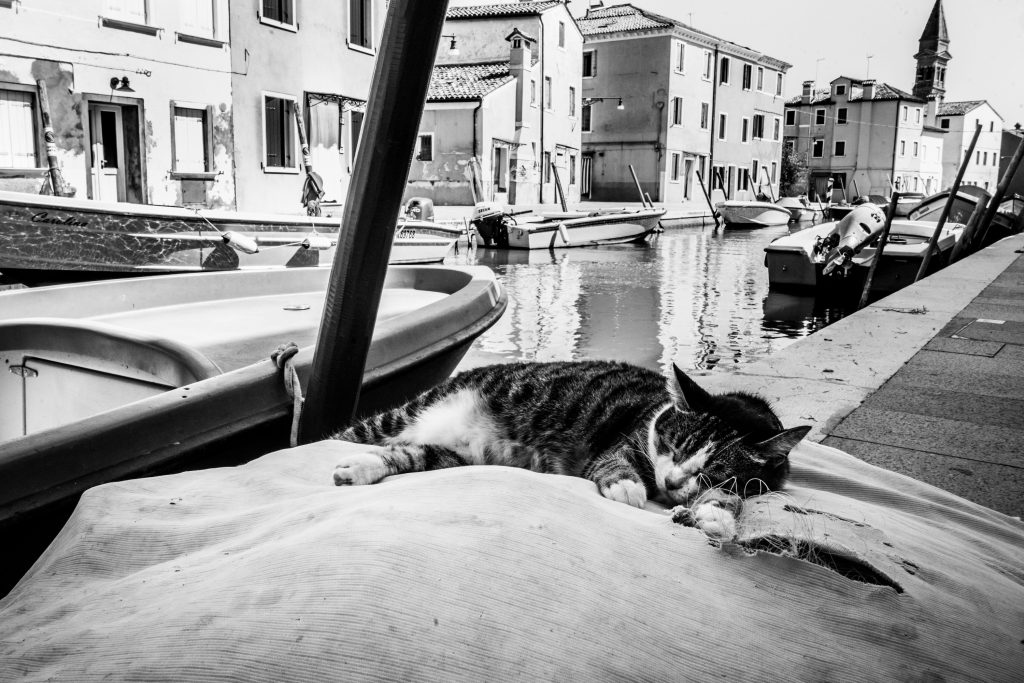
Cats, Venetian and otherwise, have a natural elegance, almost an aristocratic one. They live in a city that is fragile, slow, suspended, and they seem perfectly attuned to that rhythm. You find them on windowsills, on boats, outside shops: they belong to the landscape as much as the water or the stone. What strikes me is their relationship with urban space, which they occupy with complete ease, as though Venice had always been their home. And in a sense it has. The history of Venice has been bound up with cats for as long as anyone can remember, and with no cars it remains a city built to their measure.
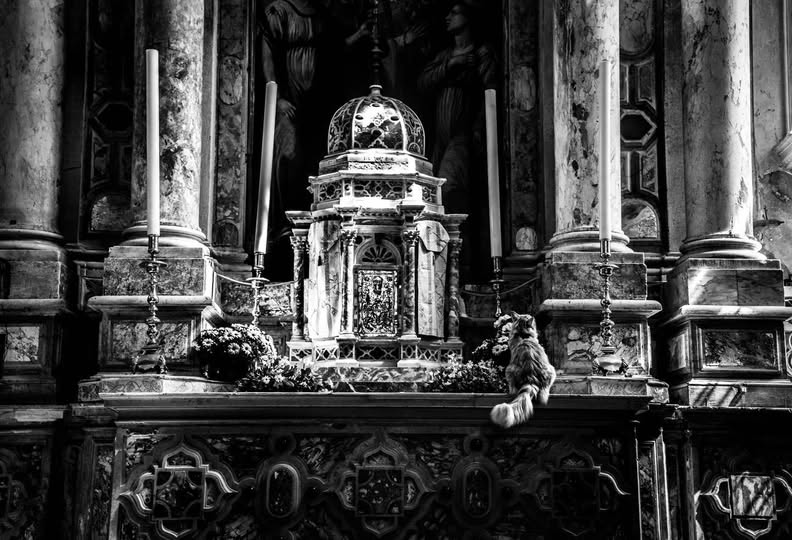
Can you tell us what a typical day is like when you go “on safari”?
I walk a great deal, very often with no particular destination. A feline safari is made of waiting and watching. No rushing, no forcing things. I stop, I look, I double back. Sometimes I photograph nothing at all; other times I come across the right cat in the right place. It’s a very meditative practice: you learn to slow down and listen to the city.
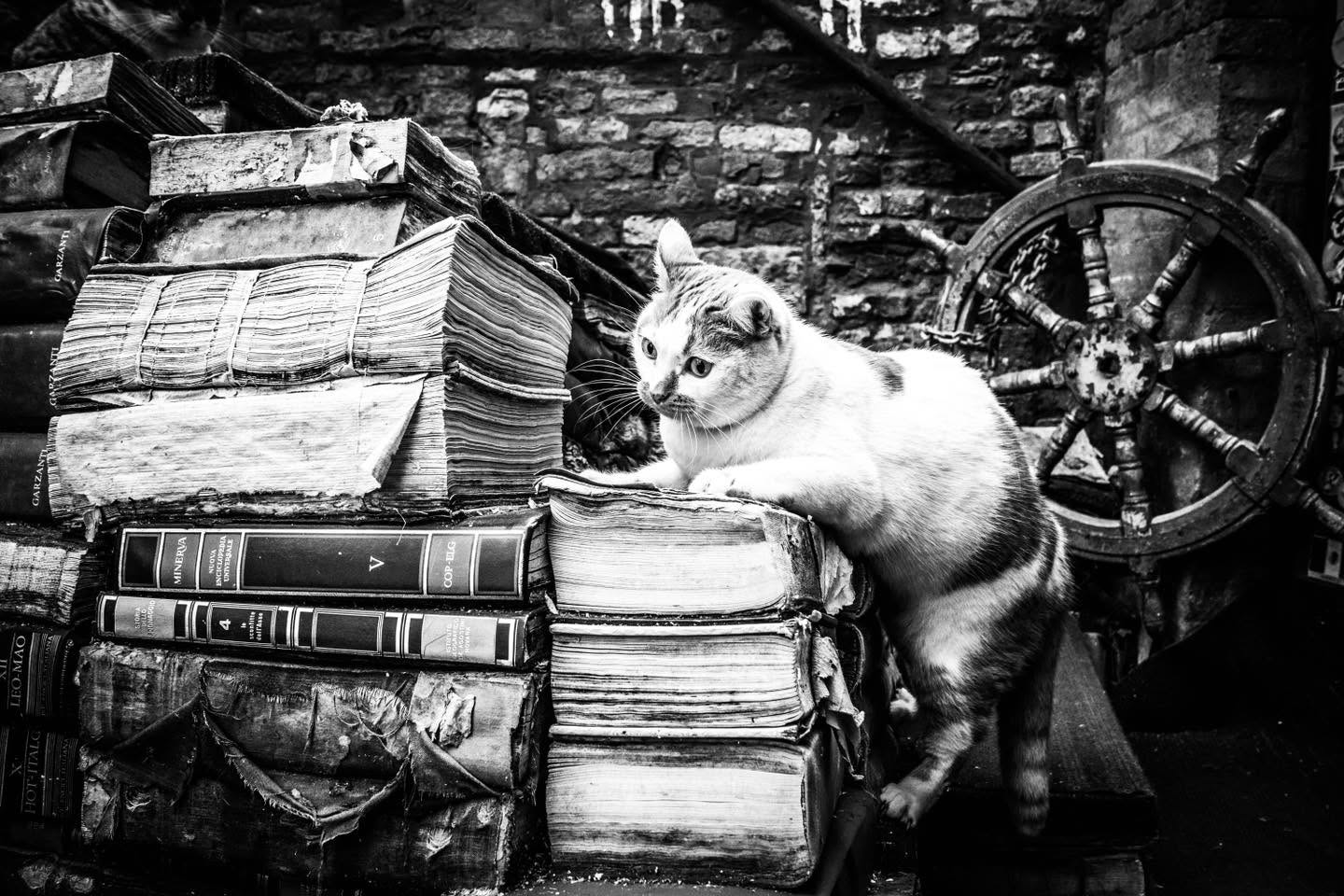
In C-at Work you photograph cats who spend their days in shops, businesses and public places. How did the project come about?
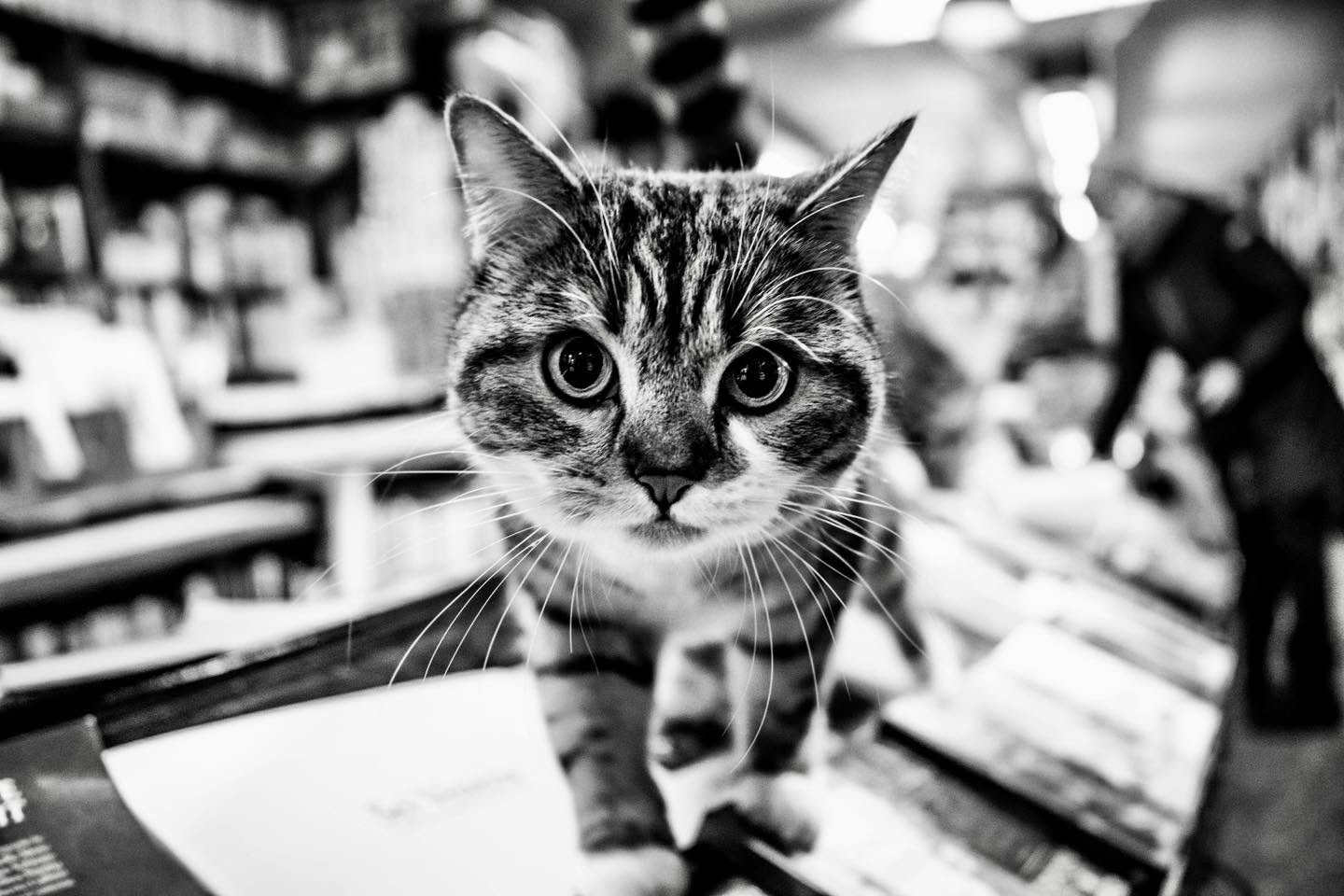
It happened by itself, going into shops and finding cats behind the counters, among the fabrics, next to the till. Their “role” fascinated me: to all appearances they do nothing, and meanwhile they are essential presences. They greet, they observe, they reassure. C-at Work is a way of telling the story of daily life from another point of view.
Tell us about Cat Advisor too, a map showing where you can find working cats in shops and businesses. How did it start, and where has it got to?
It came out of a wish to share, but above all out of a personal need. I was getting endless messages along the lines of “Where can I find cats in…?” And I want to know myself where to meet working cats when I travel, which in a way also promotes the businesses that keep them. So I thought of a collaborative map, based on what people send in. Cat Advisor is constantly evolving. It isn’t meant to be a tourist guide, but a network of feline stories scattered around the world.
You’re building a worldwide community with this project. Where do the tip-offs come from? Do you notice cultural differences, or things in common, among the cat lovers who get in touch?
They come from absolutely everywhere: Japan, Turkey, the United States, tiny out-of-the-way places. Cultural differences do exist, but what they share is very powerful: respect and affection for cats. The settings change, the way of looking doesn’t.
Has there been a particular tip-off that stayed with you?
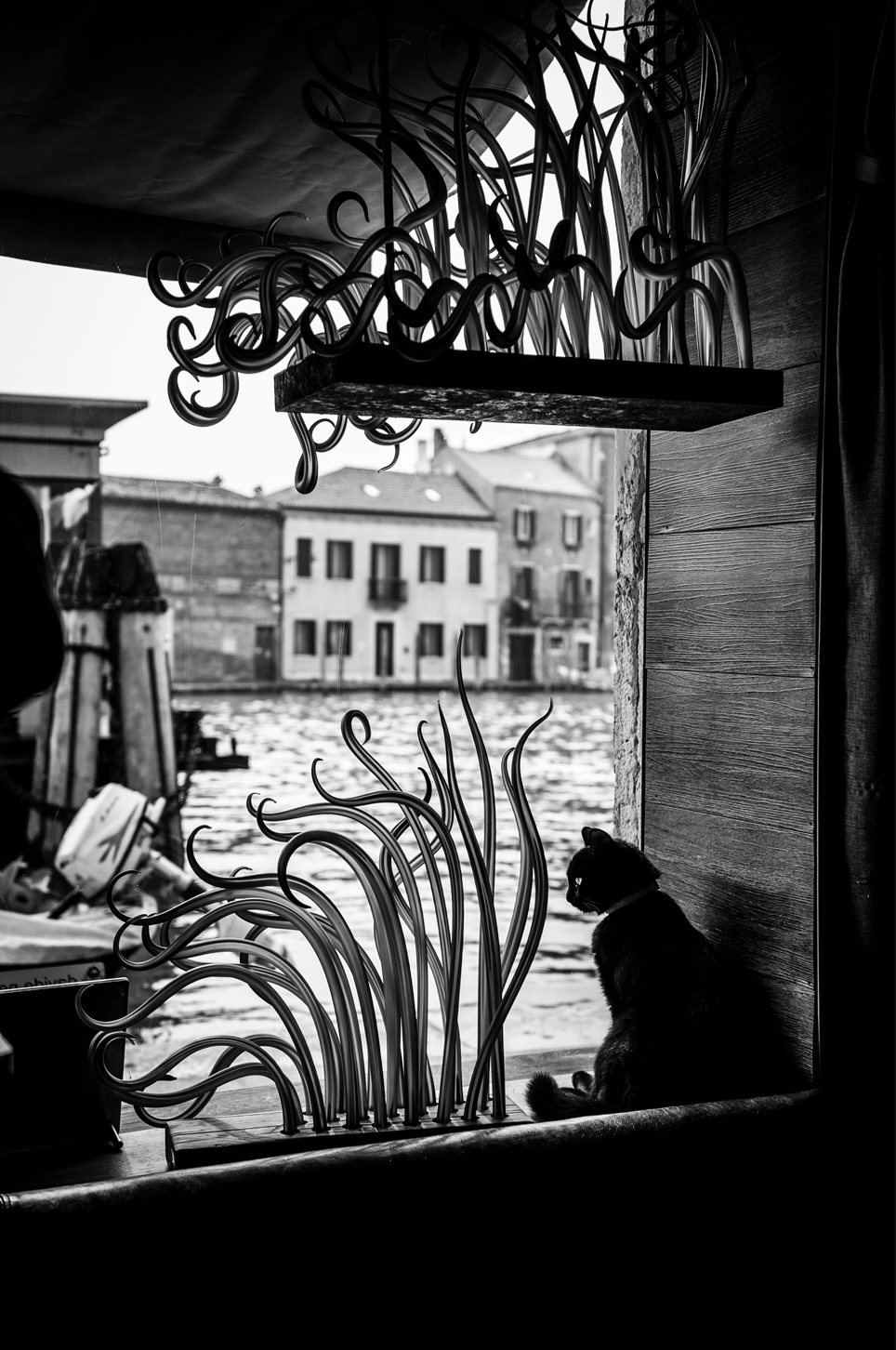
Plenty, to be honest. But what strikes me every time is discovering that in most cases it was the cats themselves who chose to live in places that don’t strike us as at all suitable for a cat. Places where you’d never expect to find one: glassworks, garages, cinemas, hairdressers and so on, which they find perfect, and which give me genuinely unique settings.
You also do post-wedding photography, and here too, of course, cats are the stars. How does it work exactly?
Rather like a home visit. The first thing is that the cat mustn’t be afraid of strangers. I never put a cat in a shoot for the sake of it: if the cat is part of these people’s lives and is comfortable, then it enters the story naturally. It’s very intimate photography, funny and truthful. These shoots are arranged for another day, after the wedding itself, so as not to put the cat through unnecessary stress. The couple put their outfits back on and we do a session just for them.
How does it feel to be working at a time when cats have taken over the internet? Is that a strength for you, and for photographers generally?
It’s a great opportunity, but also a responsibility. The risk is superficiality, and sending out the wrong message. There’s a lot of misinformation, and often what people find funny is behaviour that’s deeply misguided. For me it’s an incentive to portray cats in a deeper way, less “meme”, more about relationship and respect.
What do you think sets you apart from other photographers or cat content creators?
I’m not sure anything really does. The black-and-white style might be a start. But fundamentally I’m not after going viral. I photograph cats because I need to, myself. It does me good, and I share it.
Photography is always a choice. Is there a feline gesture or attitude you particularly love to capture?
Any of them! Every shot is a gift. But perhaps the moment when they look at you and don’t run away. It’s a split second of absolute trust.
Are there artists, photographers, or non-artistic influences that have shaped your style?
There are a great many photographers whose work I admire, Elliott Erwitt first among them. And I love black-and-white photography. I try to study, to understand, to learn. But in practice I don’t take my inspiration directly from anyone, and I couldn’t: as I often say, it’s only ever the cats who decide how and when the photographs happen, and therefore the result as well.
Is there an anecdote about cats, from your life or your practice, that you’d like to share?
Nothing specific, but in general cats have been a kind of training ground for the eye. Photographing them is a constant exercise in patience and attentiveness: they can never be directed, so I’m the one who has to adapt to their timing, their silences, their sudden disappearances. Often I can already see the perfect image, the scene, the light, the right framing, and then they simply decide to leave. At first it was frustrating, then I understood that the lesson is exactly there: to stop controlling everything and let the image happen.
Cats have taught me to observe better, to respect distance, to catch those tiny unpredictable moments that can’t be constructed, only welcomed. In the end, I think my way of photographing comes from that too: from a relationship built on attention, patience and trust.
What’s your earliest memory of a cat?
A soft toy I’d wanted, given to me by my grandmother. And long walks around my neighbourhood, stroking every cat I came across.
Last question: what do you think should never be missing from a cat museum?
Empty space. Because a cat, if it wants to, will come along on its own and fill it.
Cats in Venice
Marianna Zampieri’s Digital Exhibition.
Digital Gallery
See Marianna Zampieri’s photos.