

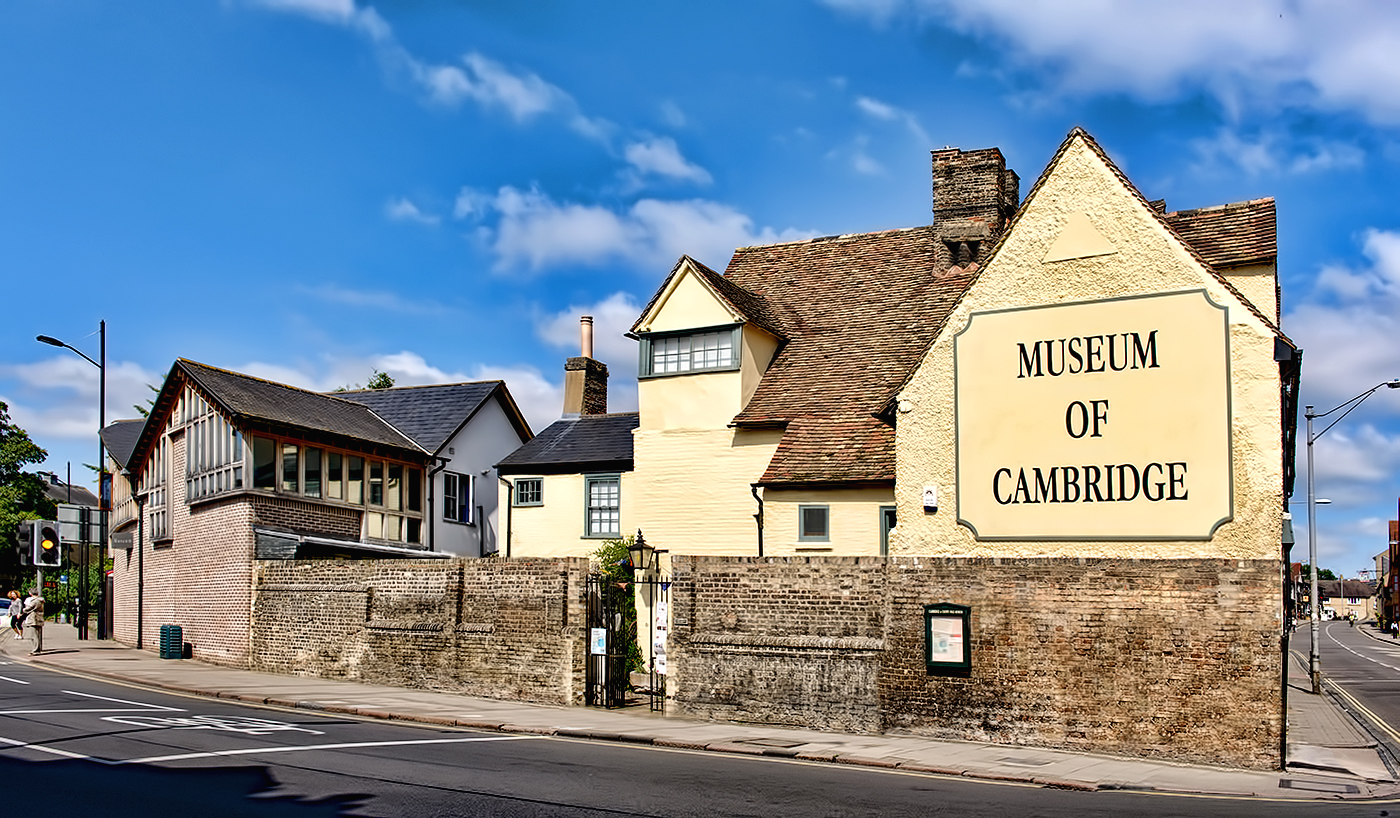
The Museum of Cambridge is housed in the old White Horse Inn on Castle Street, a seventeenth-century building with winding staircases and uneven floors. Opened in 1936, this small social history museum tells the story of more than three hundred years of everyday life, with period rooms and household objects that bring a long-gone world back to life.
The Cats of Cambridge exhibition is currently running here, alongside the permanent collections and throughout the museum. It tells the story of the city through its cats – the very perspective Cats Museum is all about. Among the objects on display are concertina Christmas cards from the early twentieth century, along with postcards and a birthday telegram sent to Cambridge addresses between 1910 and 1963.
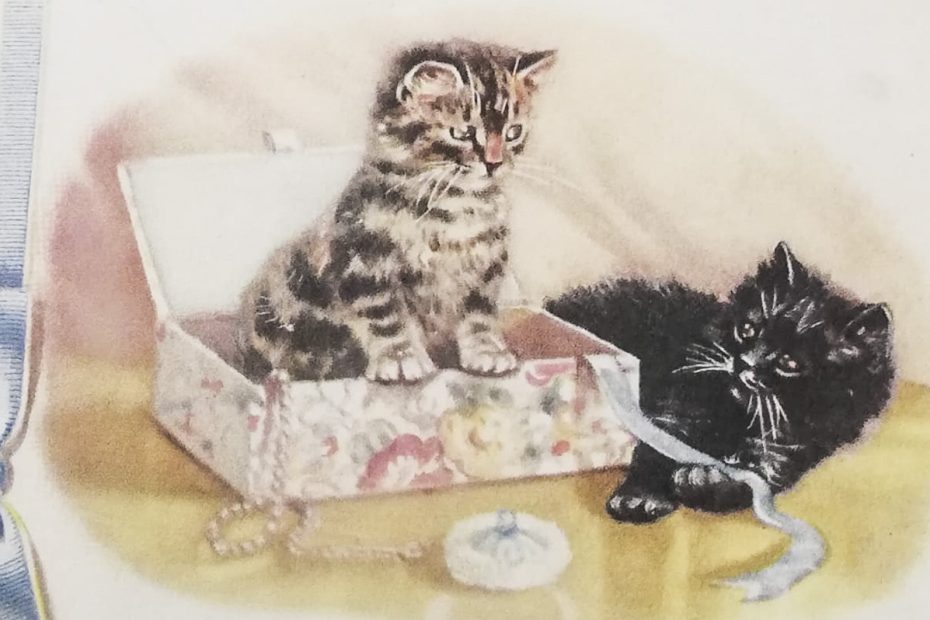
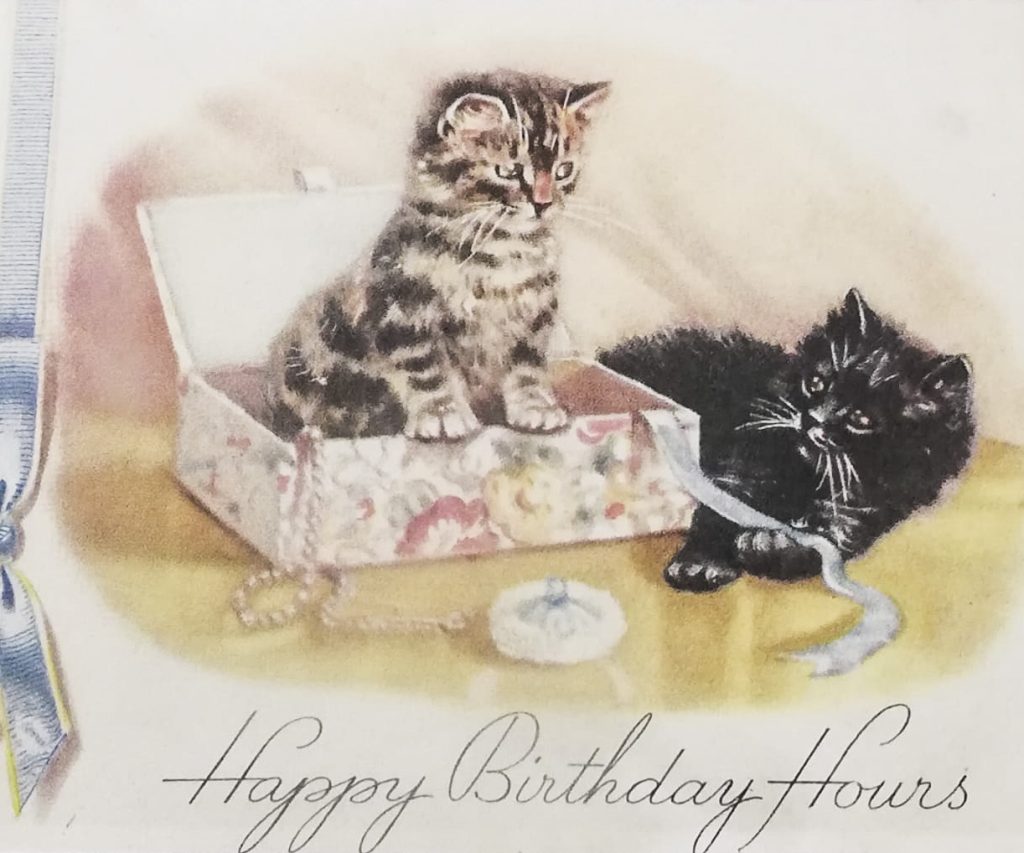
Having first come into the home as mousers, cats soon took over greetings cards, postcards, and telegrams too, becoming a way to show affection to loved ones. Today they rule social media, and one panel traces the origins of Caturday, the Saturday the internet devotes to cats. Sending someone a cat to say ‘thinking of you’ is a habit that goes back a long way, as these early twentieth-century greetings show, and it is one we can certainly relate to.
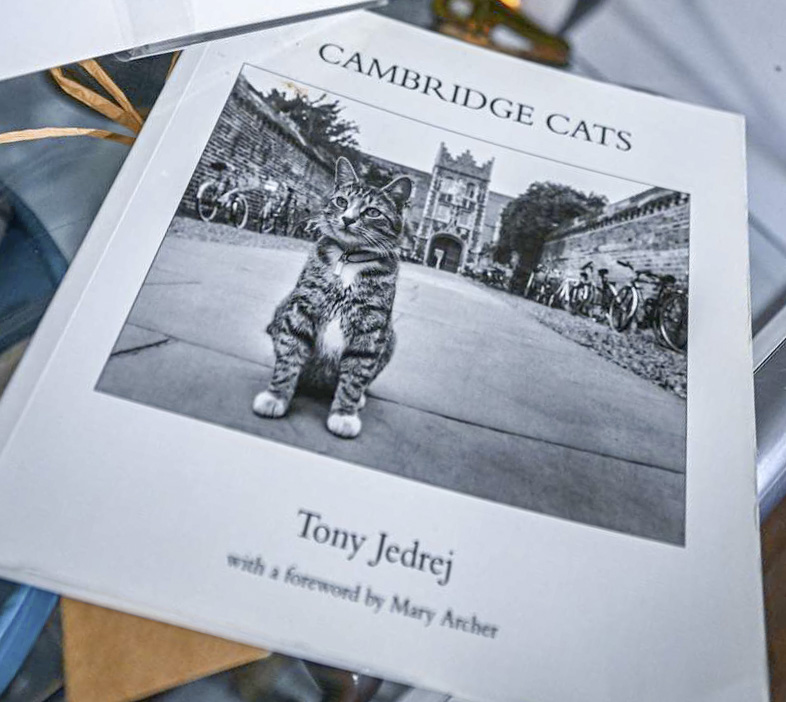
Cats have carved out a place for themselves among the objects in the collection, just as they do in any home. College cats, with their long history in Cambridge, are here too. Among those portrayed in the book Cambridge Cats (1994) is Thomasina of Pembroke College, so clever that a translation of Aristotle’s Rhetoric was dedicated to her.
And then there is the irresistible philosophical cat of ‘Cambridge Cats’, an article published in 1891 in The Granta, the university’s student magazine:
In my present lodgings dwells a sable cat, which is remarkably fond, in my temporal absence, of appropriating my rooms, and a certain chair in them, whereon it sits and gazes silently out of the window. Being unable to assign any cause for these fits of intense philosophical abstraction, I once asked my landlady the reason, and she said ‘it was watching the falling leaves:’ an extremely pensive and poetical view.
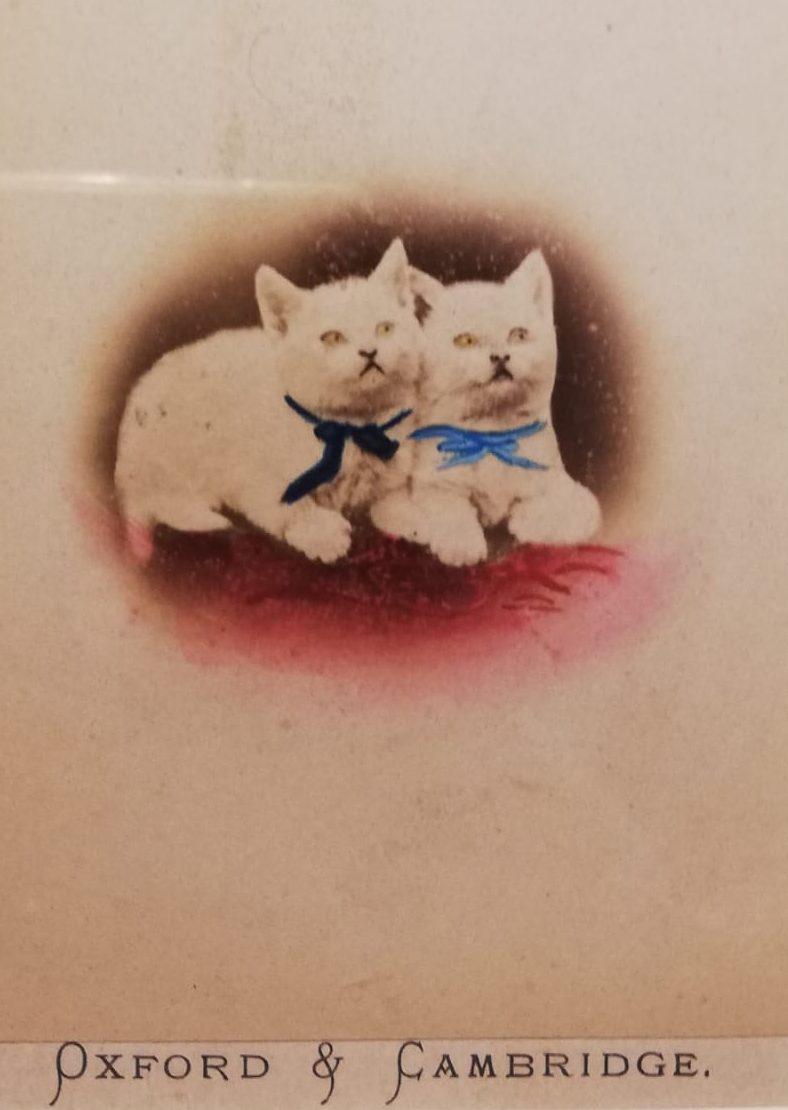
Two kittens, meanwhile, reveals the origins of the university colours. In a late nineteenth-century carte de visite, a small hand-coloured photograph, they pose perfectly, one wearing a dark blue ribbon for Oxford and the other light blue for Cambridge. Light blue arrived in 1836, at the second Boat Race between the two universities, when an Old Etonian suggested his school colour for the ribbon on the Cambridge boat.
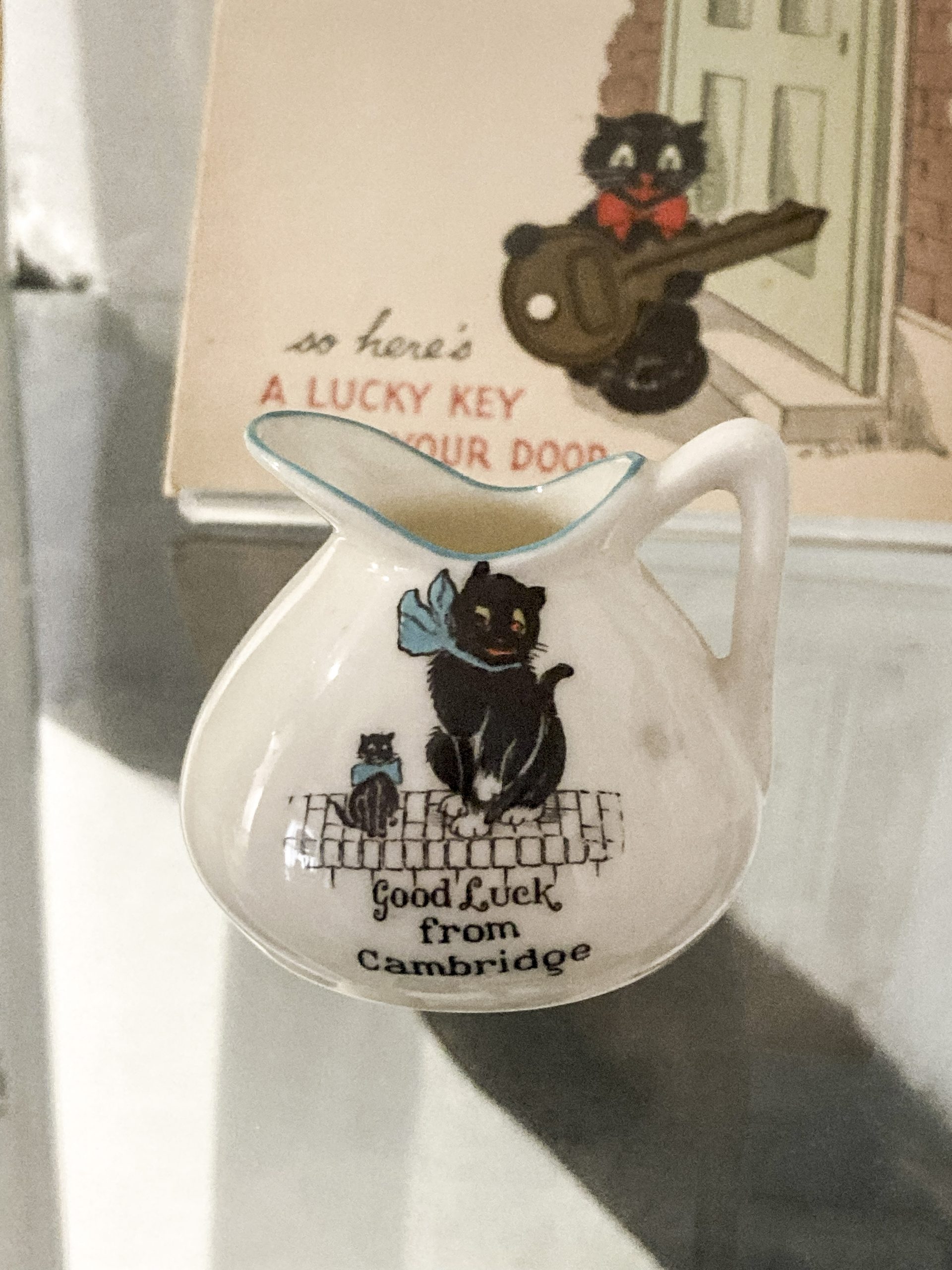
In Randolph Caldecott’s late nineteenth-century illustrations for children, cats play the violin and chase mice, while on souvenirs black kittens wish visitors ‘Good Luck from Cambridge’ (in Britain, unlike Italy, black cats are good luck!).
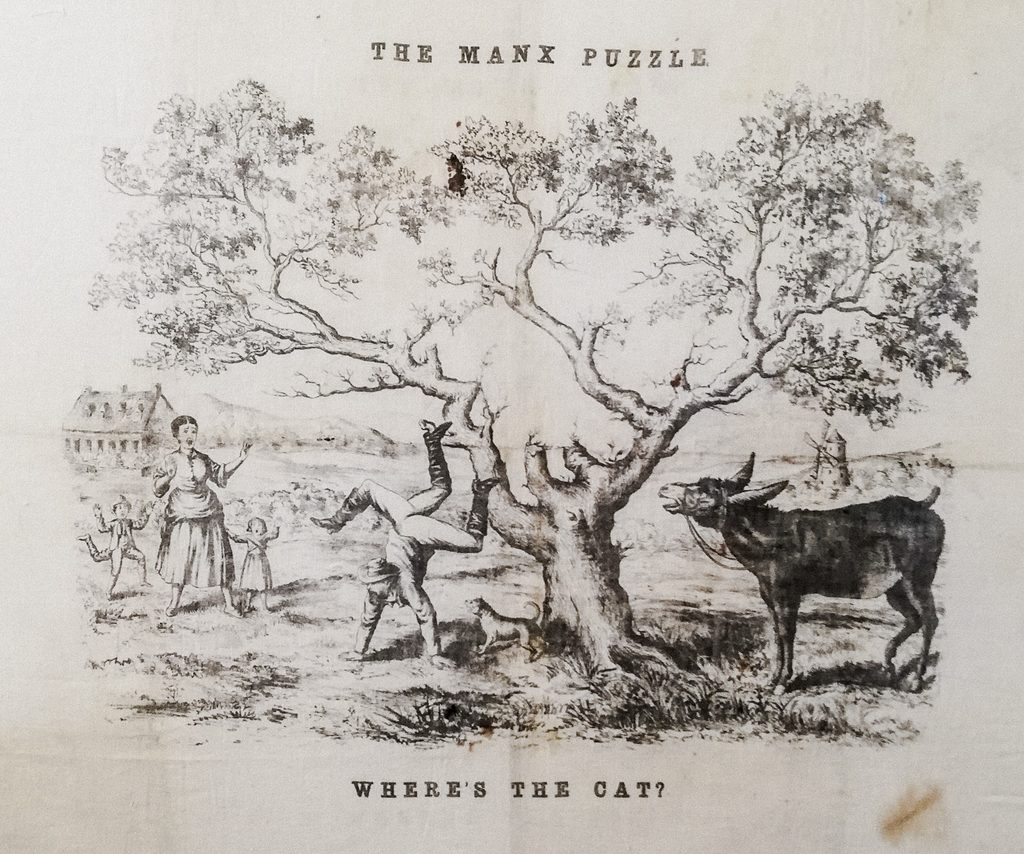
Next to several illustrations, a little kitten symbol invites you to look closely and spot the tiny cats hidden in the details. The hunt continues with The Manx Puzzle, a late nineteenth-century printed cotton handkerchief sold as a souvenir on the Isle of Man. The cat is a Manx, the island’s famously tailless breed, and its silhouette is formed by the negative space between the branches of a tree. Anyone who lives with a cat knows the search is all part of the game.
Small, intimate museums like this one look after a community’s everyday life and help to bring that community together: family postcards, souvenirs, and photographs of pet cats lent by local people add up to a shared history.
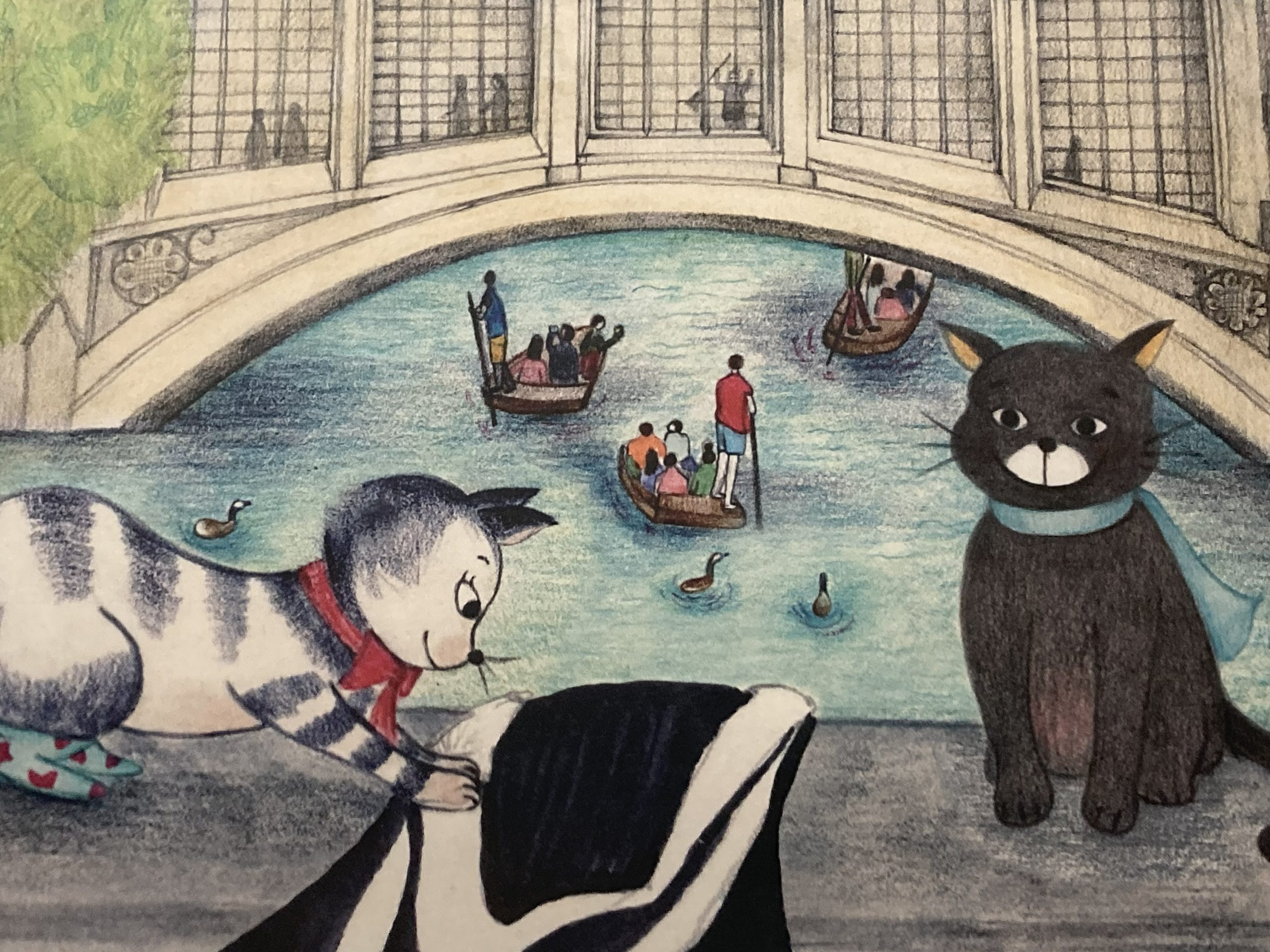
The cats guided us from room to room, and following them was a lovely way to explore the museum and discover a quiet but unmistakable side of the city. We kept following them after we left, too, thanks to the little guidebook Explore Cambridge with Fitz and Will.
Fitz and Will, whose names together make Fitzwilliam, are the feline stars of a series of illustrated children’s books, and here they lead readers on a walk through the city, complete with a map and quiz, that ends at the Fitzwilliam Museum. It was yet more proof that, when it comes to cats, there is always something new to learn, and for the rest of our stay we wandered around Cambridge, peering through every college gate and into every library window in the hope of spotting a cat.