

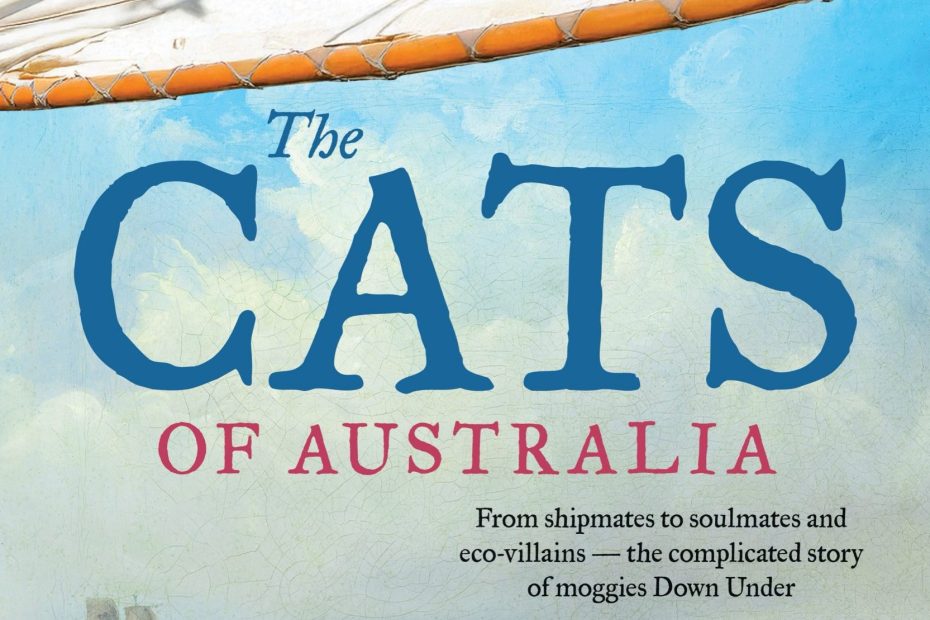
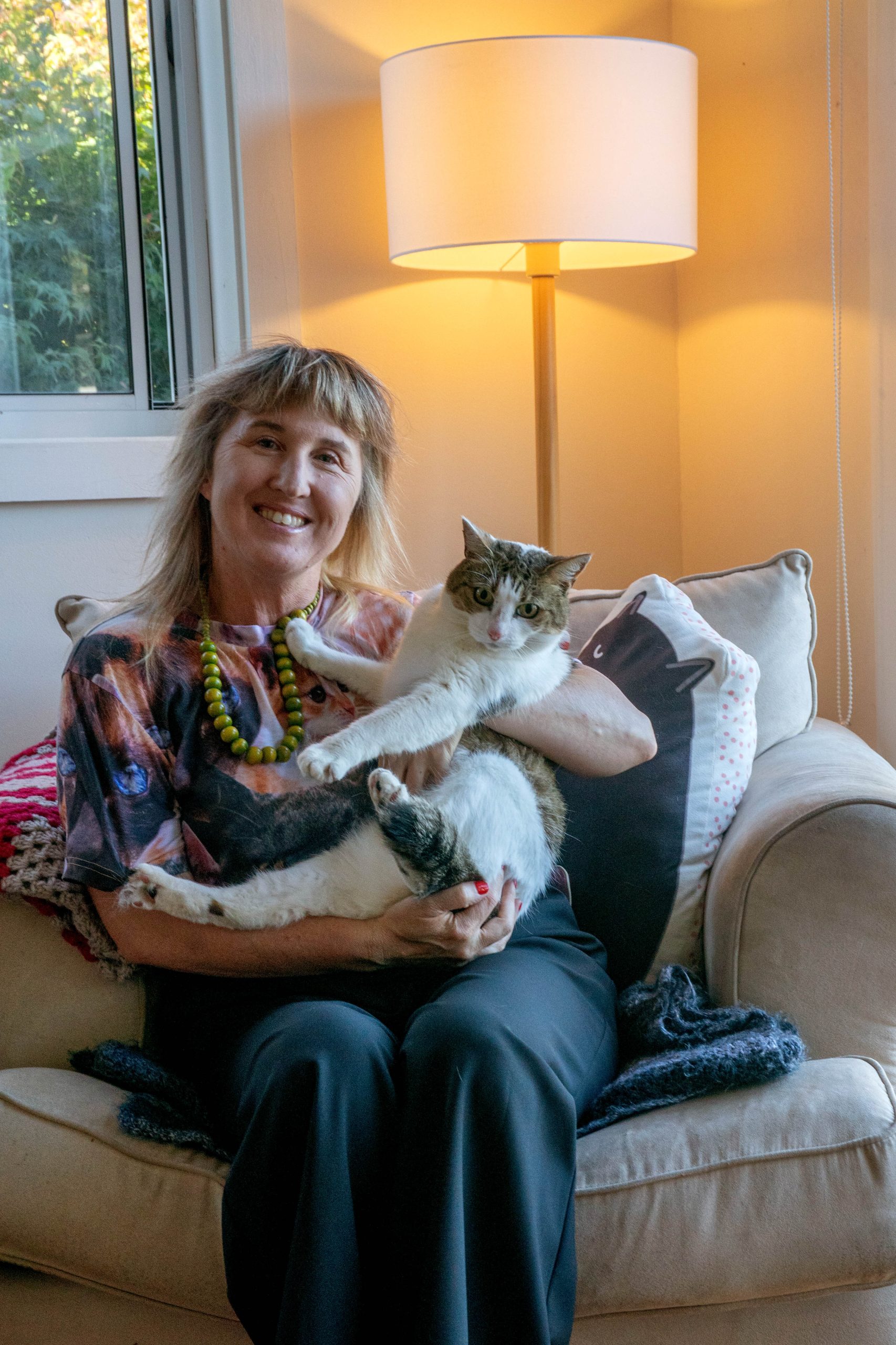
We had the pleasure of speaking with Jodie Stewart, an Australian historian or, as she likes to call herself, a “cat historian”. A scholar who has combined academic rigour with a visceral passion for cats and archives. An award-winning researcher at the University of Wollongong, she received the Professor Jim Hagan Memorial Prize and the Deen De Bortoli Award for Applied History. Jodie lives in Djiringanj country with her cats, Poppy-girl and Catty, and her bulldog, Luna.
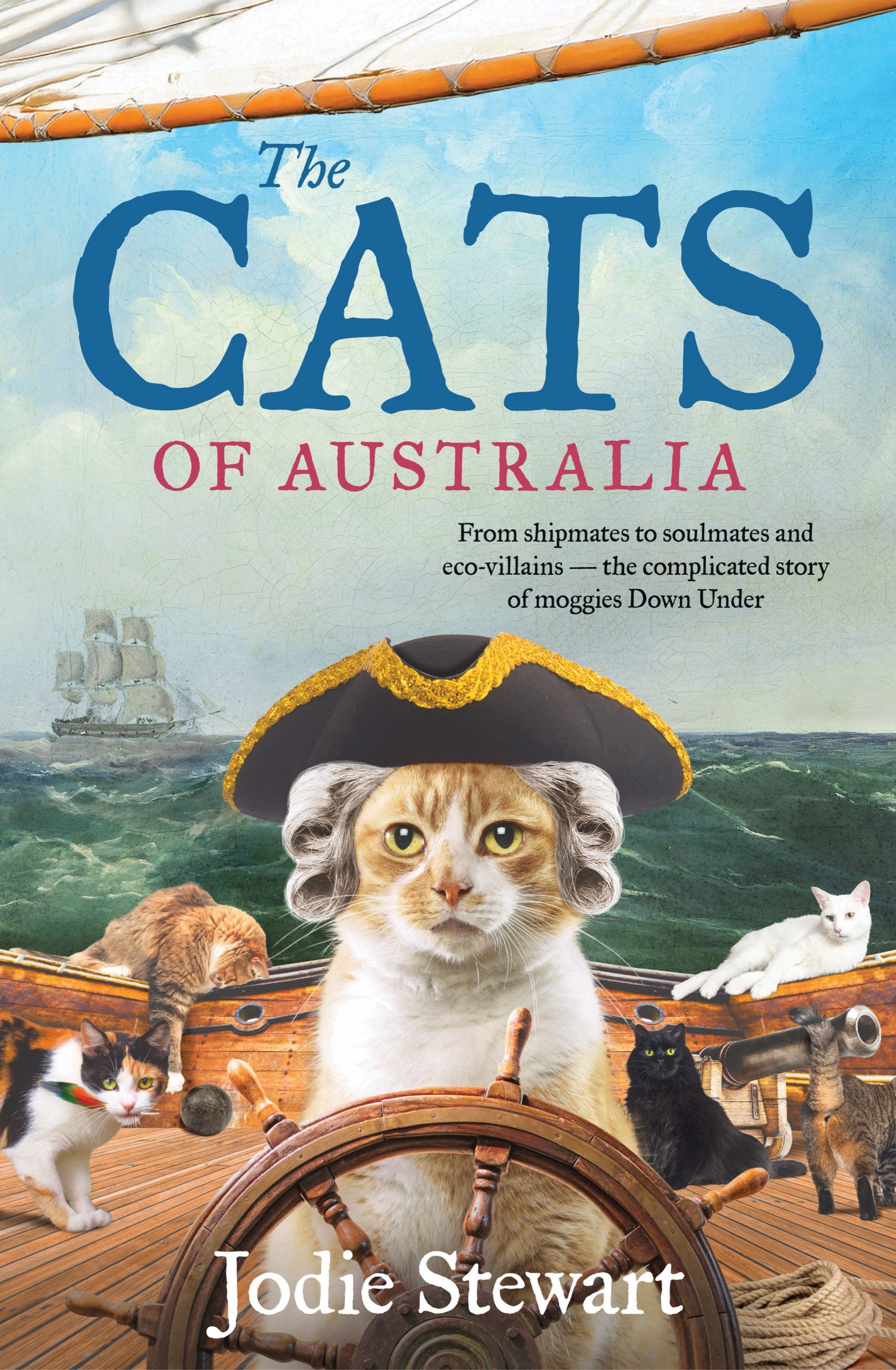
Jodie Stewart is the author of the book The Cats of Australia, published by HarperCollins, a work that restores cats to their place in the official historical record. From the battlefields of the Great War to parliamentary debates on feline management, Jodie finds them where no one had looked: at the centre of Australian social and political history.
Her work suggests what we also believe: cats are not a minor chapter in history, but a tool for reading it in depth. Placed at the centre of the analysis, they reveal what official narratives have left in the shadows. For centuries cats lived in Australian homes, on their battlefields, on their ships, but without ever entering the official historical record. Until now. Jodie Stewart decided to find out why. With years in the archive behind her and a cat named Poppy beside her.
The Cats of Australia is available for pre-order here.
You can follow Jodie Stewart on Instagram @aculturalhistoryofcats.
It’s great to meet you! Since you decided to pivot to cat history after your PhD, I’d love to hear the story behind that change. What made you realise this was the direction you wanted to take?
The short answer is: I got a cat! Or more precisely, a cat deigned to love me. Believe it or not, I was always a dyed-in-the-wool dog-person. Loving dogs was in my DNA. My beloved maternal grandfather was a great dog lover and pontificated on the value of dog champions to anyone who would listen. He was a firm believer that dogs taught important life lessons. When appraising someone’s moral worth, my grandfather would often say, ‘You cannot trust someone who does not like dogs.
In Australia, dogs are championed and heroised as nation builders. As an introduced species, dogs, especially working dogs, were quickly embraced as invaluable to the masculine settler colonial project. Dogs worked on our farms and stood beside our brave white male pioneers. Cats were often viewed as domiciles – the ‘pets’ of women and children, or alternatively ‘pests’. Just as women and children were omitted from our national stories, so too were cats.
I have always been fascinated by history, particularly the art and craft of historical storytelling. My PhD focused on the impacts of Indigenous history-making on Indigenous and white settler relations in a small regional town on the far south coast of New South Wales, Australia. The history and the stories we tell about ourselves as individuals and national subjects impact how we interact with the people, places and animals we encounter. History matters.
When I fell in love with a cat, like madly deeply in love, I became equal parts fascinated and infuriated by our relationship with cats in Australia. Much of this relationship was informed by the stories we had told about cats. I loved my cat, like really loved my cat, and I was perplexed as to why stories of feline love had been omitted from the history of cat-human relations in Australia. I wanted to understand my own humongous, confounding love, and I also wanted to understand why our love for cats – our deep historical love – was missing from the historical record. So, I started looking for cat love, and just like cat hair on your favourite jumper (pullover), I found it everywhere!
Are you currently sharing your home with any “furry research assistants”? I’d love to know how much your personal life with cats shapes your writing.
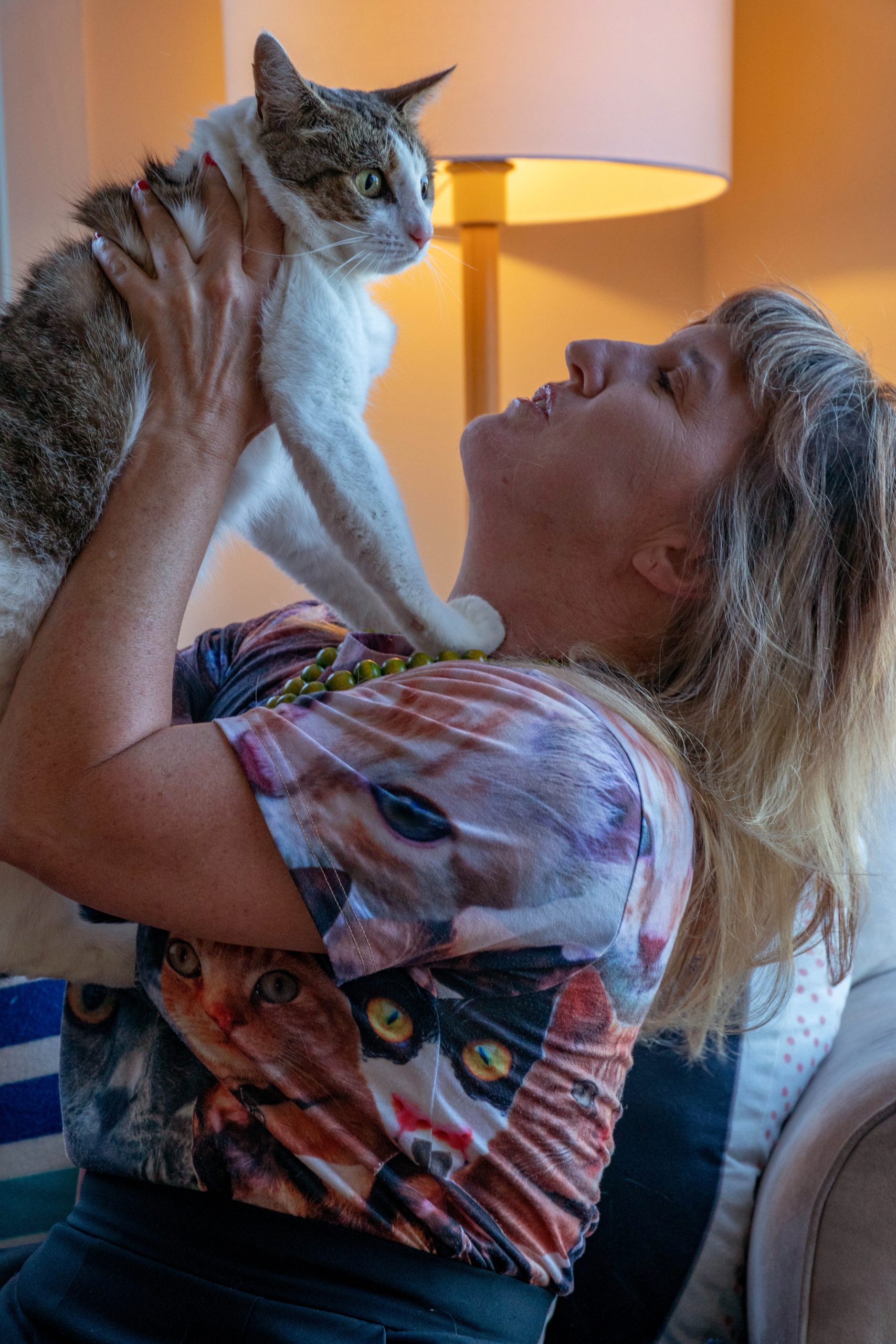
Writing is just better with a cat! And I am so privileged to be currently loved – and sometimes resented- by two fabulous felines: Poppy-girl, my soul-cat, and Catty, my very first cat. I also have six grandcats – Cecil, Ginny, Winnie, Daisy, Teddy and Stevie, whom I visit regularly. Cecil is also currently living with us and enjoying a very spoilt existence.
I find the practice of writing equal parts excruciating and exhilarating. Sometimes the words arrive in a triumphant flood, other times they dribble out before being disappeared by the delete button. As I wrote my manuscript, Poppy would often sleep curled beside me on the daybed in my office. If I were feeling frustrated or having a particularly bad day with the delete button, I would lie down next to her and pull in close so I could hear her gently purring. The therapeutic benefits of a cat’s purr are well known to cat lovers. Poppy’s purr-therapy has kept me above ground and moving forward for many years. There were many times, though, that a quick purr therapy session turned into an hour-long nap. It is an occupational hazard for those writing at home with cats!
I sometimes pinch myself, though, that I get to research and write about cats, all with a cat by my side. I really have the best job in the world!
I wrote in my book that my proximity to cats was a constant purry reminder that I was doing important work, possibly the most important work. Poppy and Catty’s story, and the story of all the cats that make up the kaleidoscope of Australia’s past, is just as important as mine. Their lives and their stories matter. Poppy and Catty remind me of this every day with their plaintive meows, gentle head-bobs, and stealth attacks from under the bed.
I’m so looking forward to diving into The Cats of Australia, could you give our readers a little glimpse into what the book is all about?
The Cats of Australia is a love story. It is about the profound impact the human-cat relationship has had on Australians’ lives, and the myriad ways cats have shaped the country’s cultural, social, economic, and even political landscape. But like our Facebook relationship status, it’s complicated. With big love comes a range of other antithetical emotions, such as hate, shame, grief, and even apathy.
In the book, I foreground the nation’s love affair with cats by picking up on the supposedly smaller stories of individuals and families whose relationships with cats fundamentally changed them. I share the stories of several cat lovers, whose cats and their purry furry love fundamentally changed them. I was so privileged to spend time with people like Barry York, British-Maltese migrant who brought his intergenerational love of cats with him when he arrived on Australian shore in 1954, and Anthorr Nomchong who defied societal expectation and acquired a cat by the name of Bandit and trained her as the Australian Capital Territory’s first registered assistance cat, the Lonesboroughs -Gary, Gary jnr., Ryan and Hayleigh- an Indigenous family living in settler colonial Australia who generously shared their stories of cat-love with me, and Bob Williams who sailed in the 2023 Sydney to Hobart Yacht race with his cat Oli by his side. I zoom in on their stories and consider how small acts of cat love have had big, historically significant impacts.
I also draw out the bigger stories – the charged national debates in the 1990s about cat management, how by the turn of a new century cats went from heroic rabbit killer to maligned eco-villain, and how cats were deployed to both romanticise and criticise the role of women in the early decades of the twentieth century.
I also examine cats in Australian politics and include chapters on the roles they played both domestically and on the battlefields during the Great War. I also include stories about everyone’s favourite, the indomitable ship’s cat.
There is a bit of my own story in there, too, as I grapple with how to understand what I call my ‘big, monumental love’. I state that I wrote this book for all the cat-lovers and all the cats, but I hope dog-lovers read it too, and those who claim that they ‘don’t like cats’. This is a story about cats in Australia, but it is also the story of Australia and how, for good or ill, cats have played a part in shaping it. This should appeal to everyone with an interest in the history of cats and the social and cultural history of Australia.
If you had to pick one story from the book that you’re most proud of uncovering, what would it be?
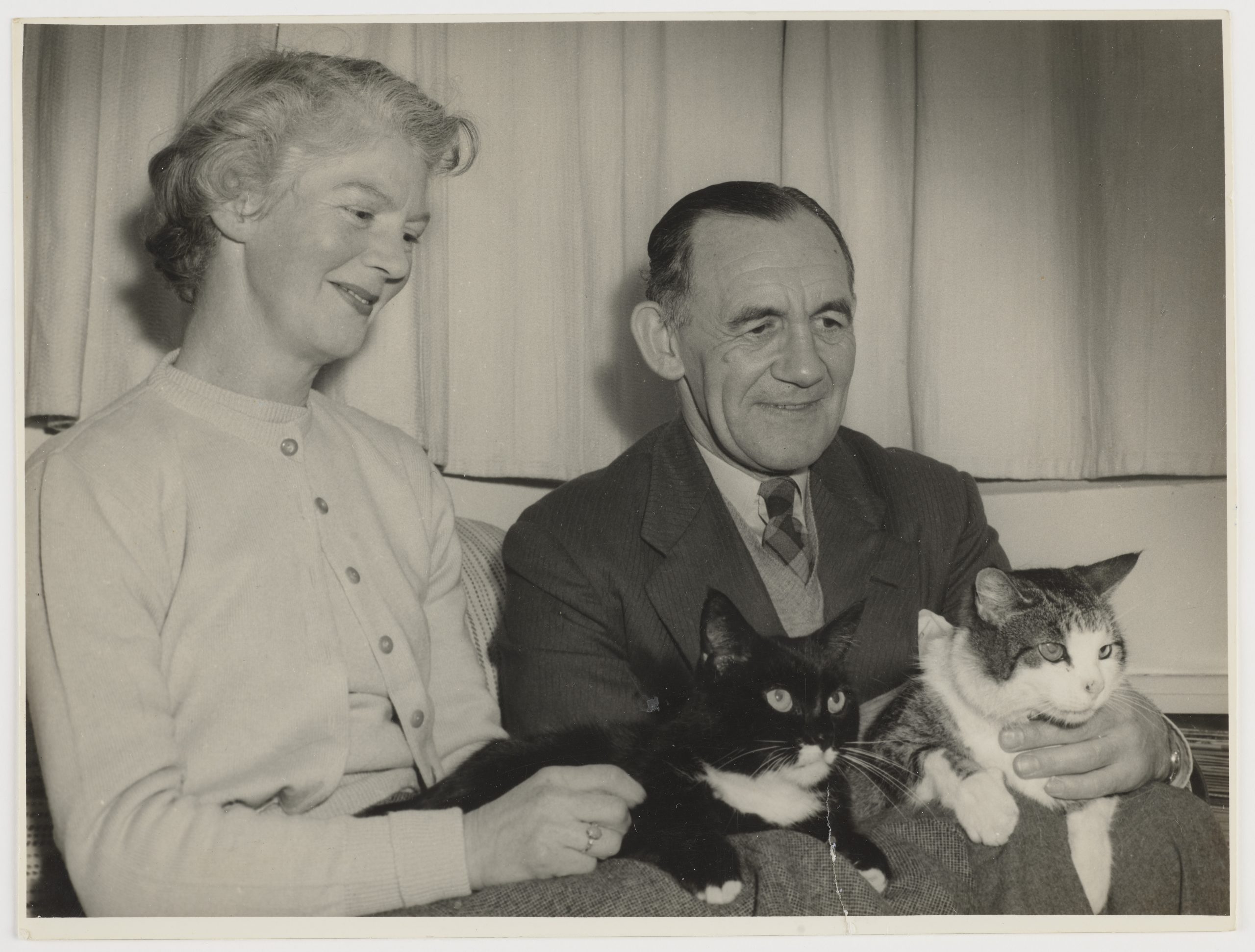
It would have to be the story of Frank and Elva Legg. Frank was a famous radio broadcaster in the 1940s and 50s, a WWII veteran and war correspondent who became a passionate cat lover after marrying Elva Gregory in 1949.
In Australia, we have a great love affair with our military past. One of our most enduring and powerful myths of origins is the story of the Australian Imperial Force’s (AIF) participation in the Gallipoli offensive in 1915. According to many myth-makers, including Australia’s WWI war historian, Charles W Bean, the beach at Gallipoli was where the Australian nation was born. This was the place where Australia’s men were tested and proved themselves worthy of national validation. Anzac Day on April 25 commemorates the day when the AIF landed at Gallipoli and still stands as Australia’s unofficial national day. Anzac Day is a behemoth in our national calendar. To criticise Anzac Day or the nation’s valorisation of war is to risk becoming a national pariah.
Frank Legg’s story is not well known, but he does feature in histories about Australia’s participation in WWII, particularly the Pacific theatre and the Middle East. Frank fought in the famous siege of Tobruk, where Australian troops battled Italian and German forces and became ‘trapped like rats’. The soldiers became known as the Rats of Tobruk. Over time, the story of Australia’s participation in the siege at Tobruk has become part of the nation’s war mythology. The story of the Rats, the Australian men of the 9th and 7th divisions, became legendary.
Discovering that Frank Legg, a celebrated veteran and Rat of Tobruk, loved cats was a significant find because it counters the two-dimensional mythologising about Australian soldiers at war. Adding cats to Frank Legg’s story adds further complexity and depth. Frank’s cats and his love for them provide insight into his emotional world and, more broadly, those of an ex-soldier in post-war Australia.
I think the more humanity we add to the story of Australia’s involvement in war, the better placed we will be to understand the profound impacts war and conflict have on the nation, and on us, beyond narrow mythologising or political propaganda. I came across a quote by Stephen Murray-Smith that speaks to this idea. When Murray-Smith uncovered nineteenth-century British naval officer, Matthew Flinders’s tribute to his cat, Trim, in the Maritime Museum in Greenwich, he stated that this artefact ‘tells us as much about his personality and his humanity as, perhaps, the rest of his published work does in total’. Flinders would go on to posthumously publish Voyage to Terra Australis, which would become a hugely influential tome to British naval navigation and the colonisation of Australia.
I am immensely proud of my reimagining of Legg’s feline story. Legg’s love of cats provides a more nuanced and humane narrative of the Australian soldier. Legg himself struggled with the narrow stereotypes and mythologising that had built up around the Aussie digger, as they were affectionately called. Perhaps he would be proud of this, more emotional, furrier version of his story, too.
What was the most unexpected place or archive your research took you to?
Cats turn up in the most weird and wonderful places. For example, I didn’t expect to find a funny cat story in the historical Hansard, but there, hidden in plain sight, is a story about how several hundred cats were sent to a far-flung settlement in Western Australia in the late nineteenth century to address the alleged ‘rabbit problem’. Apparently, to secure that many cats, a few pampered pussies were snatched off front doorsteps. The conversation about this event and its eventual fallout (some very disgruntled ‘old ladies’), documented in Western Australian government Hansard, is one of those rare archival nuggets and comedy gold!
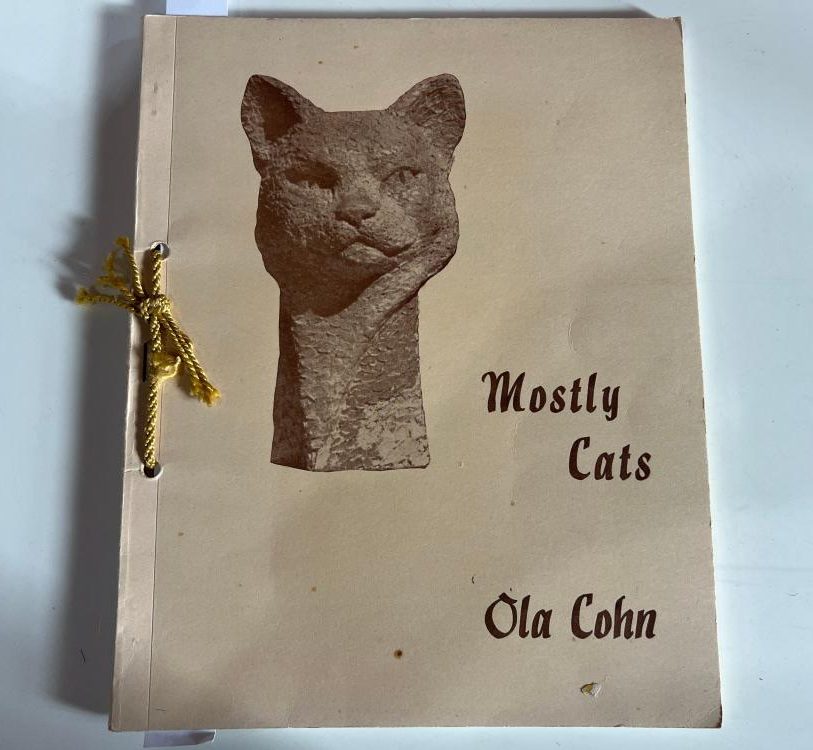
Cats are everywhere in the archive and can leave large and auspicious paw prints. Still, they can also tease the researcher by peeking out from the shadows and swiftly departing, leaving only a small, sometimes indecipherable trace. For example, men fighting on the WWI battlefields would write home to friends and family, sharing their wartime experience. These men would expound on camp conditions or the health of their fellow soldiers and then casually drop in a few scant words about a cat. In this instance, the cat emerges briefly, flashing a fine whisker or issuing a faint meow heard reverberating in the tantalising words, ‘we have a cat’. Other times, people wrote whole treatises on their cat or cats, like Matthew Flinders and the famed sculptor Ola Cohn, who, in her published book Mostly Cats, wrote at length about the cats in her life.
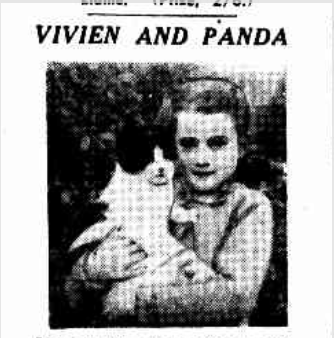
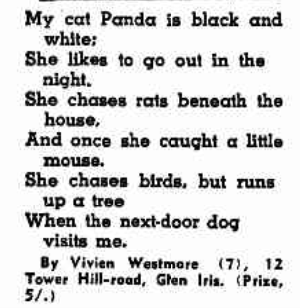
I have really enjoyed finding cats in the works left by children. In the late nineteenth century through to the 1950s, the children’s section of local newspapers was a popular place for children to showcase their literary talents. Children were encouraged to write to the children’s section of their local newspaper, sharing stories, poems and photographs. Many of these submissions included cats. I have found the loveliest and sweetest works of literature and photography about cats, produced by their young carers, that illustrate the importance of the human-feline relationship to children and young people. For example, during WWI, children would often write to children’s sections, writing lovingly about their cats alongside their concerns for friends and family fighting at the front. These letters provide invaluable insight into the emotional and social worlds of children in Australia’s past. I have been so privileged to give these children and their cats a voice.
If you could jump back in time and meet one cat from your research, who would it be?
OMG, great question! There are so many great cats to choose from. What a choice to have to make, it is like having to nominate your favourite child.
I came across a story about a man named Keith Slapp who dressed his 12-month-old cat, Smokey, in an army costume to raise funds for the Redlands Bay (Queensland) branch of the Australian Comforts Fund during WWII. He would fit Smokey out in a soldier’s uniform complete with an iconic Australian slouch hat, rifle and water bottle and people would pay to view him. Smokey was also known to ride to meetings of the Comforts Fund sitting up on the handlebars of Keith’s bike.
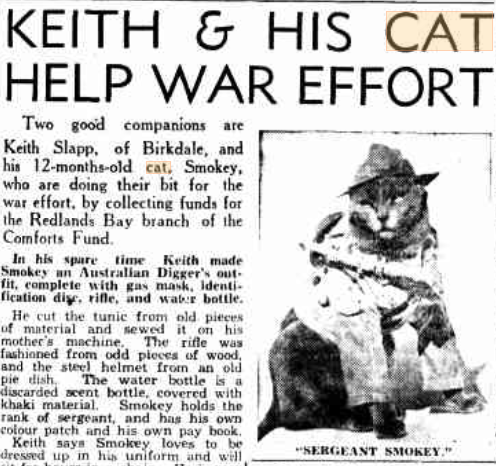
Smokey was one cool cat! And Keith was pretty great, too. He sewed Smokey’s uniform himself using his mother’s sewing machine. So, while soldiers were off becoming fodder for someone else’s war and storylines for someone else’s national myths, Keith from Redlands was sewing a soldier’s uniform for his cat using his mother’s sewing machine. Now, imagine if men spent their time sewing cat costumes with their mum’s Singer, rather than starting wars.
I love Keith and Smokey so much; they are one of the many human-cat pairings that remind me why my work matters.