

Let’s start with the very foundation of your research. You graduated in Painting from the Academy of Fine Arts and then continued your studies by specialising in Anatomical Drawing. How did this interdisciplinary approach come about? And how much does scientific research influence your artistic vision?
My love for anatomy began in art high school, where we had to study bones and muscles to accurately represent the human body. During my time at the Academy, I discovered the School of Anatomical Drawing at the Sapienza University of Rome. It was promoted by my artistic anatomy teacher, a physician who was deeply in love with art. Through anatomical drawing, I explored anatomy by moving from the macroscopic world to the microscopic. Every time I study a histological slide, I can’t help but see it as an abstract composition.
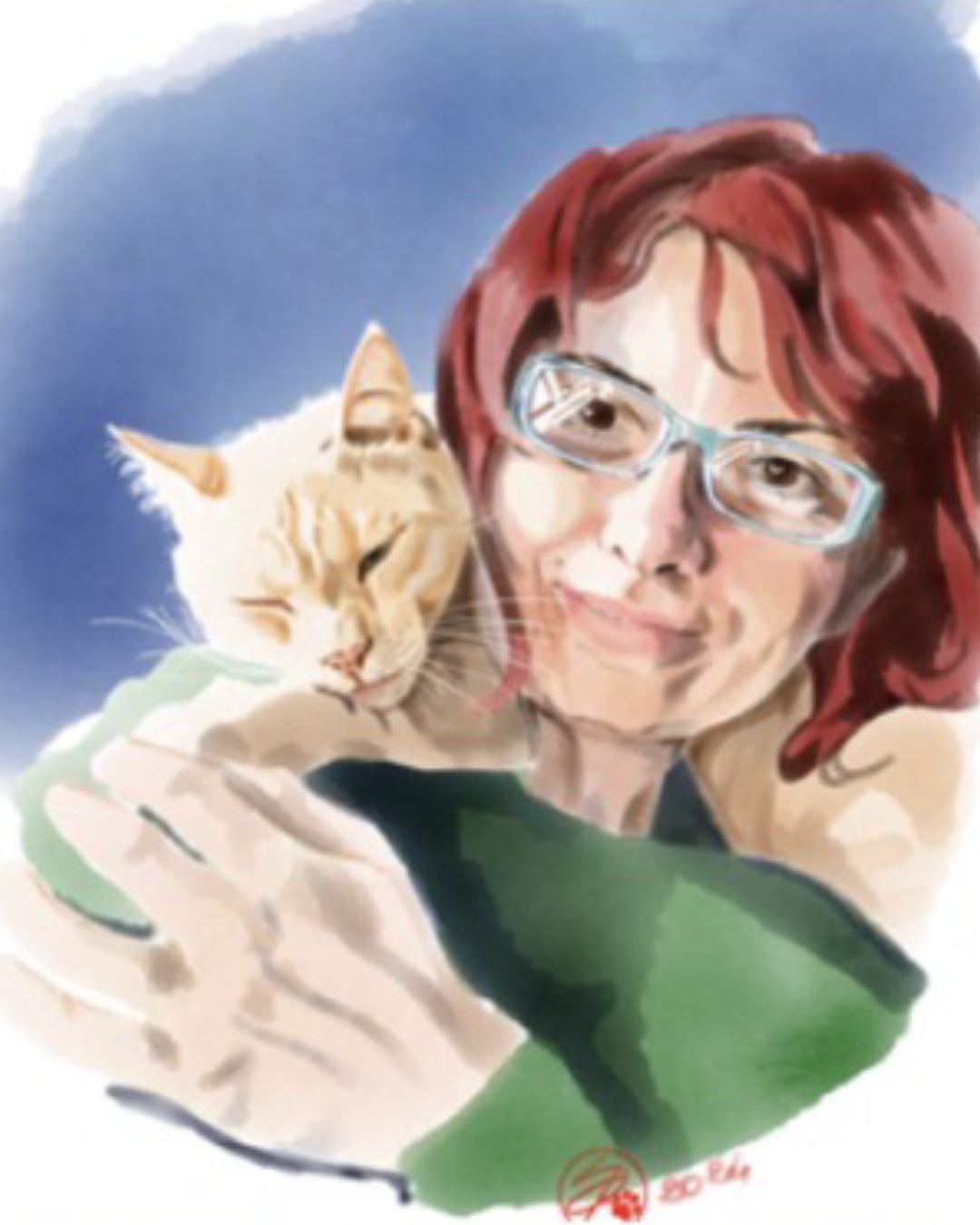
Anatomia Felina presents cats’ senses through digital watercolours that reveal details invisible to the human eye. How do you approach scientific representation in your work? What fascinates you most about feline anatomy?
Before creating a scientific illustration, I research anatomical texts and, most importantly, study existing imagery. Leonardo da Vinci wrote, “The smallest feline, the cat, is a masterpiece,” and he was absolutely right. A cat’s entire body is fascinating, but its senses are truly incredible.
Your plates transform biological elements (papillae, vibrissae, retinas, olfactory organs) into delicate images. How does one of your illustrations come to life? Can you describe your creative process?
First of all, I research all the existing material. Based on what I find, I begin to develop an image that is different and, above all, new.
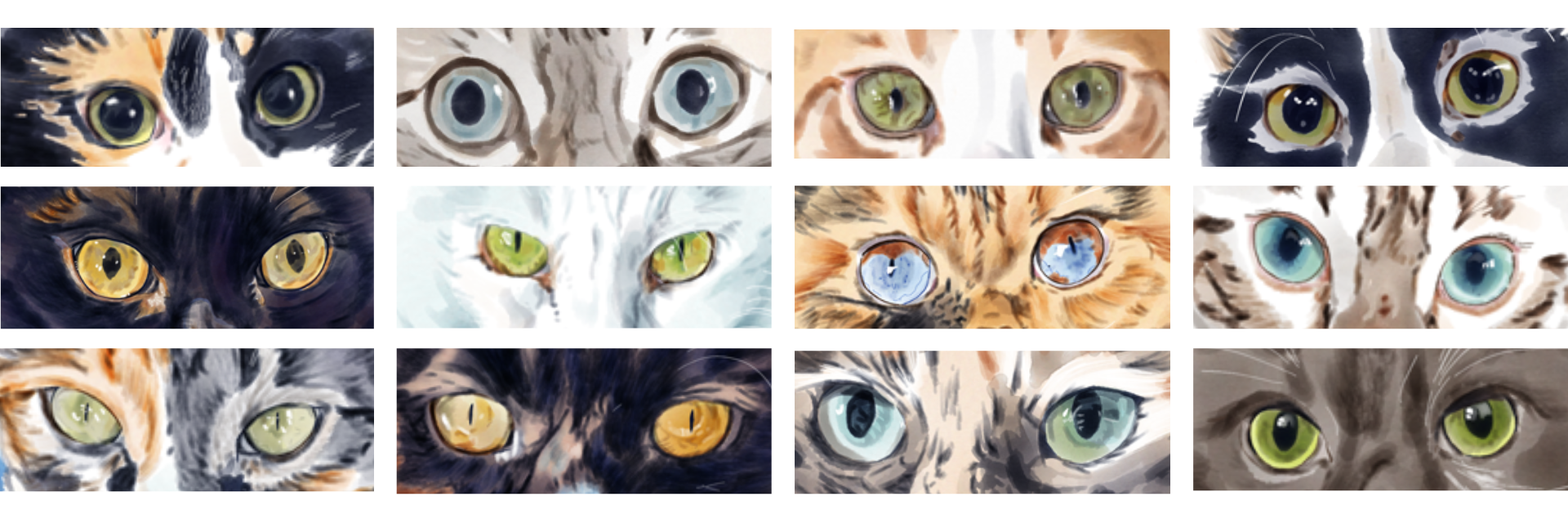
The project is structured into five sections, each dedicated to a sense. As an illustrator, which feline “superpower” was the most complex to render visually? Or which one moved you the most?
Cats’ eyes have always been the anatomical feature that fascinates me most; I find them wonderfully complex. In 2020, I returned to painting, choosing cats’ eyes as my subject: so large and colourful, always different and unique! This led me to create many portraits of these beautiful animals.
We live in an age where technology allows for detailed 3D reconstructions and AI can process complex data to observe the world from new perspectives. What do you think painting can communicate that technology alone cannot?
In painting, the hand of the human artist is unmatched in its interpretation of the world. Personally, I find images created through technology cold, even when they are executed with absolute perfection.
The anatomy of the cat is often cited as an example of extraordinary biological efficiency, remaining almost unchanged over time. Was there an anatomical element particularly intrigued you or that you didn’t expect to discover during your work?
I am fascinated by the complexity of the sense of smell, starting with the highly articulated nasal cavity and extending to the Jacobson’s organs, which, when activated, cause cats to adopt that distinctive facial expression.

Your work comes at a historical moment where cats dominate digital culture. How do you feel about this feline popularity on the web? Do you think it helps or hinders a more respectful and conscious understanding of cats?
Cats were highly admired in antiquity as well. The web has rediscovered them, and I must say they are perfect stars. Unfortunately, this popularity has its pros and cons. While many professionals, especially veterinarians, try to educate people on healthy behavior, there are many others who use cats as toys just to gain a few more likes.
Are there illustrators, painters, scientists, or non-artistic references that have influenced your style and approach?
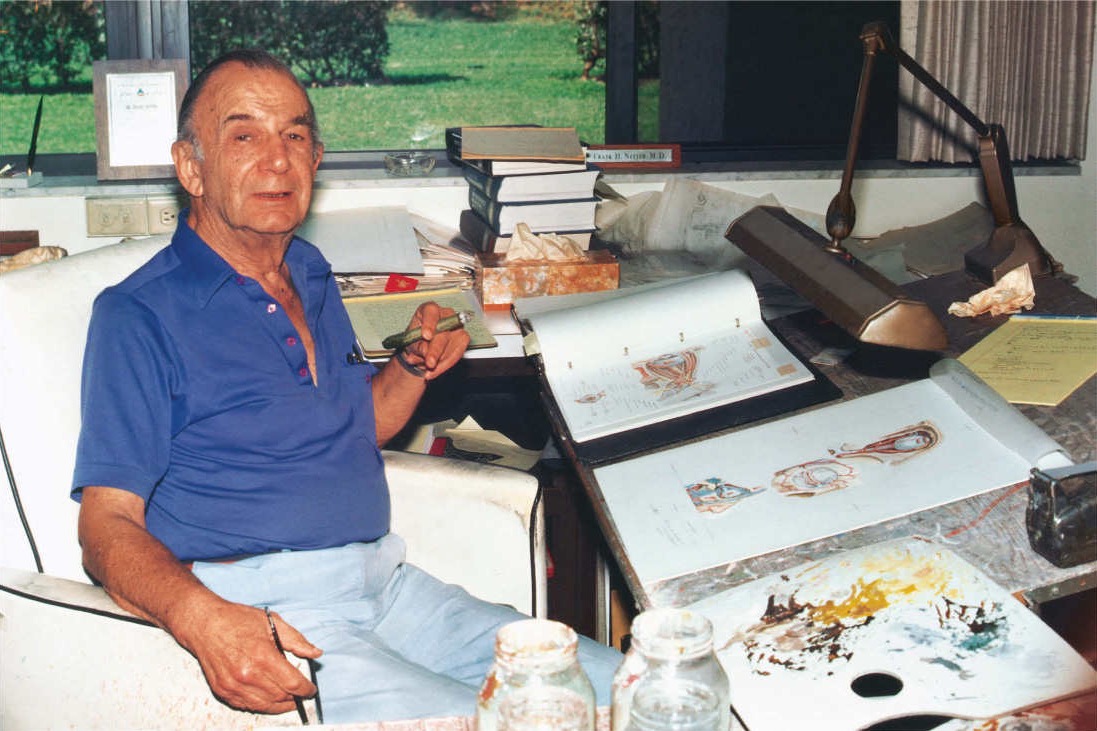
In the field of anatomical illustration, a major point of reference is Frank H. Netter, who was both a physician and an anatomical illustrator. His plates are rich in colour and highly detailed; they are greatly appreciated by both anatomical illustrators and doctors.
What is your first memory of a cat?
A very dear friend of mine lived with several cats. During one of my visits, I sat down on the sofa and shortly afterwards found myself completely covered by cats, who had all fallen asleep on me. A beautiful memory.
To discover more about Sabrina Risuleo’s work, visit her website or follow her on Instagram @4_zampe_2_ali_1_pennello