

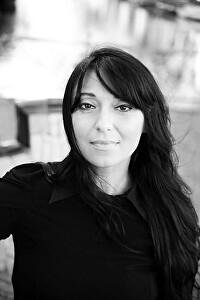
Sometimes I feel as though I am looking at the world and reading poetry everywhere: in the changing seasons, in the way light strikes an object and the shadow it creates, in the silent passage of an animal through the garden grass.
Your works stand out for their bold use of contrast, the depth of tonal realism, and the precision with which you render texture through charcoal. How did you arrive at this technique? Was it a conscious choice from the beginning, or the result of a journey of research that led you to this form of expression?
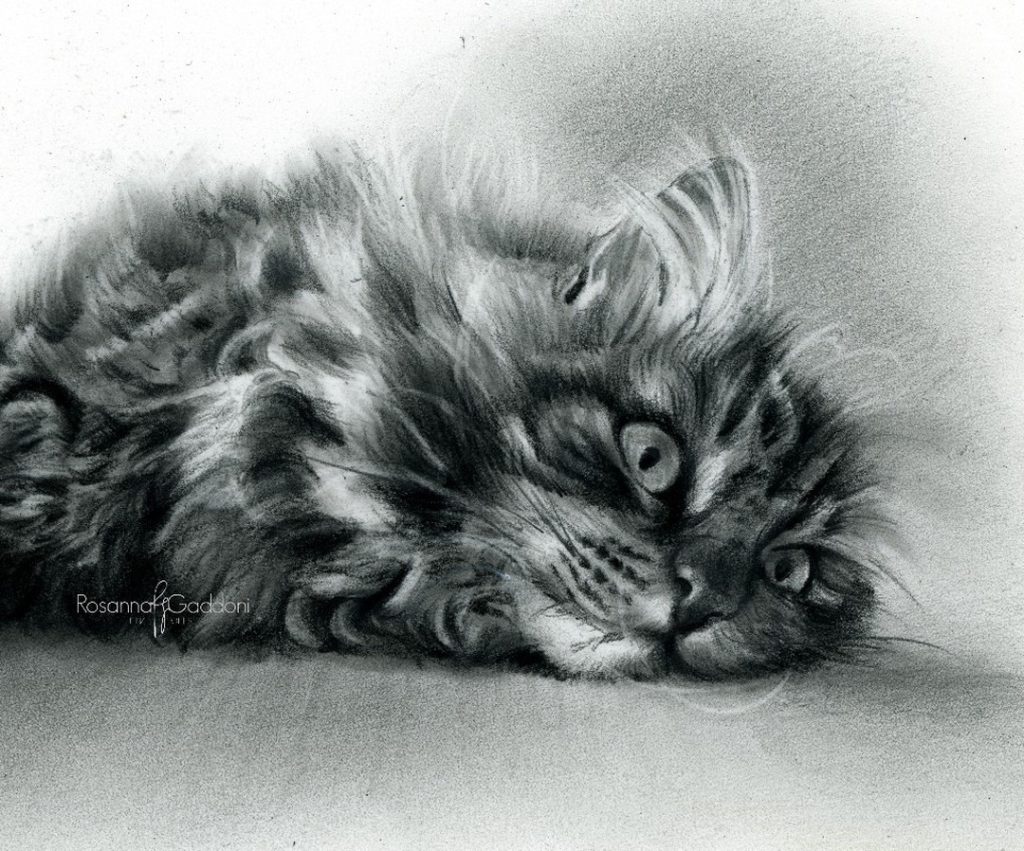
I love shadows and darkness: I think they hold surprises and truths. It was by playing with shadows and the contrasts of black and white, experimenting with new materials and techniques, and at the same time discovering myself and what moves me, that my technique evolved. Charcoal and graphite are humble tools, and I am always thrilled by the infinite range of tones and values they can render.
In your art statement you speak of ‘Poetic Realism’ and of a ‘thread’ that connects your works in a framework of ‘devotion and respect for every form of Life’. Can you tell us more about what you mean?
People often ask me where I find inspiration. For me, it is enough to look around and notice the Life beside me. Sometimes I feel as though I am looking at the world and reading poetry everywhere: in the changing seasons, in the way light strikes an object and the shadow it creates, in the silent passage of an animal through the garden grass. I feel, deep within me, that everything holds together, that every creature manifests a different quality of the same Life. My work is born from the attempt to recognise this quality and make it visible. I am happy when I manage to translate this experience into art.
Animals — both wild and domestic — appear often in your portraits. In our selection we have focused (obviously!) on cats. Are there differences in portraying a cat compared to other subjects, technically or emotionally?
Animals, like everything I portray, are for me symbols of states of mind, presences that embody different qualities of existence — just as in the myths of antiquity, which translate psychological principles and forces of transformation. When I observe an animal I enjoy recognising these symbols: they teach me something about my own existence. Technically, every animal has specific qualities to consider in a portrait. I particularly love portraying my cats because there is not a day when they don’t surprise me with their silent wisdom. It is almost as if they know me: they know how to pose in the most natural and perfect way, perhaps beneath a shaft of light that caresses and illuminates them. Or they jump onto my lap when it is time to take a break from drawing.
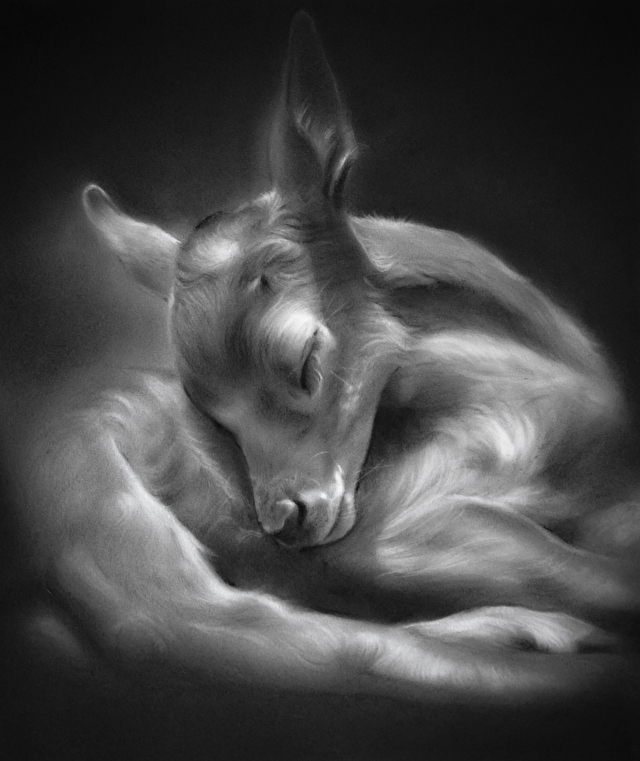
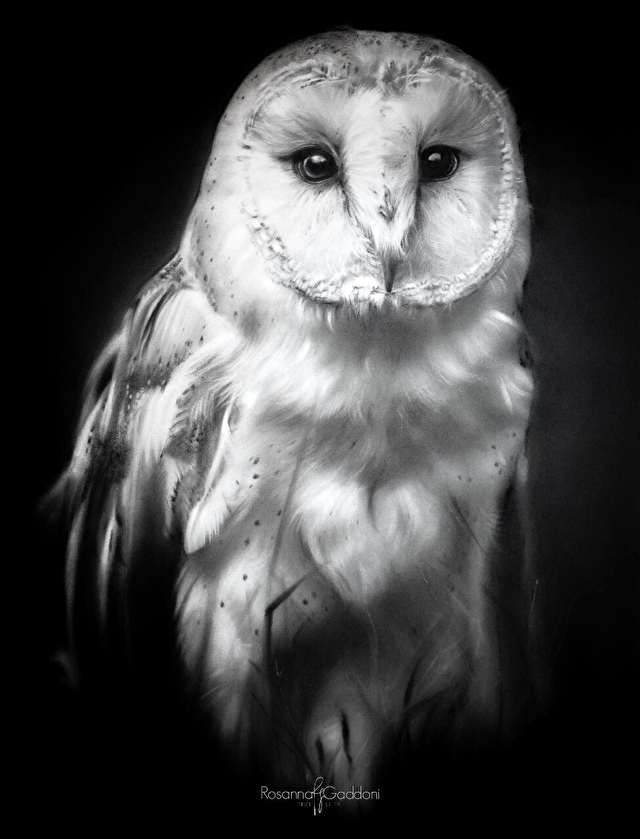
Is there a particular feline quality or gesture you especially enjoy capturing in your work?
For me, cats are messengers of regality, dignity and mystery. Everything about them — their movements, the way they rest, play and explore — speaks to me of secret grace and elegance. It is as though they embody the teachings of a Zen master: they move through life with ease, measuring their energy with extraordinary precision.
I particularly love portraying my cats because there is not a day when they don’t surprise me with their silent wisdom.
Are there artists, painters, scientists or extra-artistic references that have particularly influenced your style and approach?
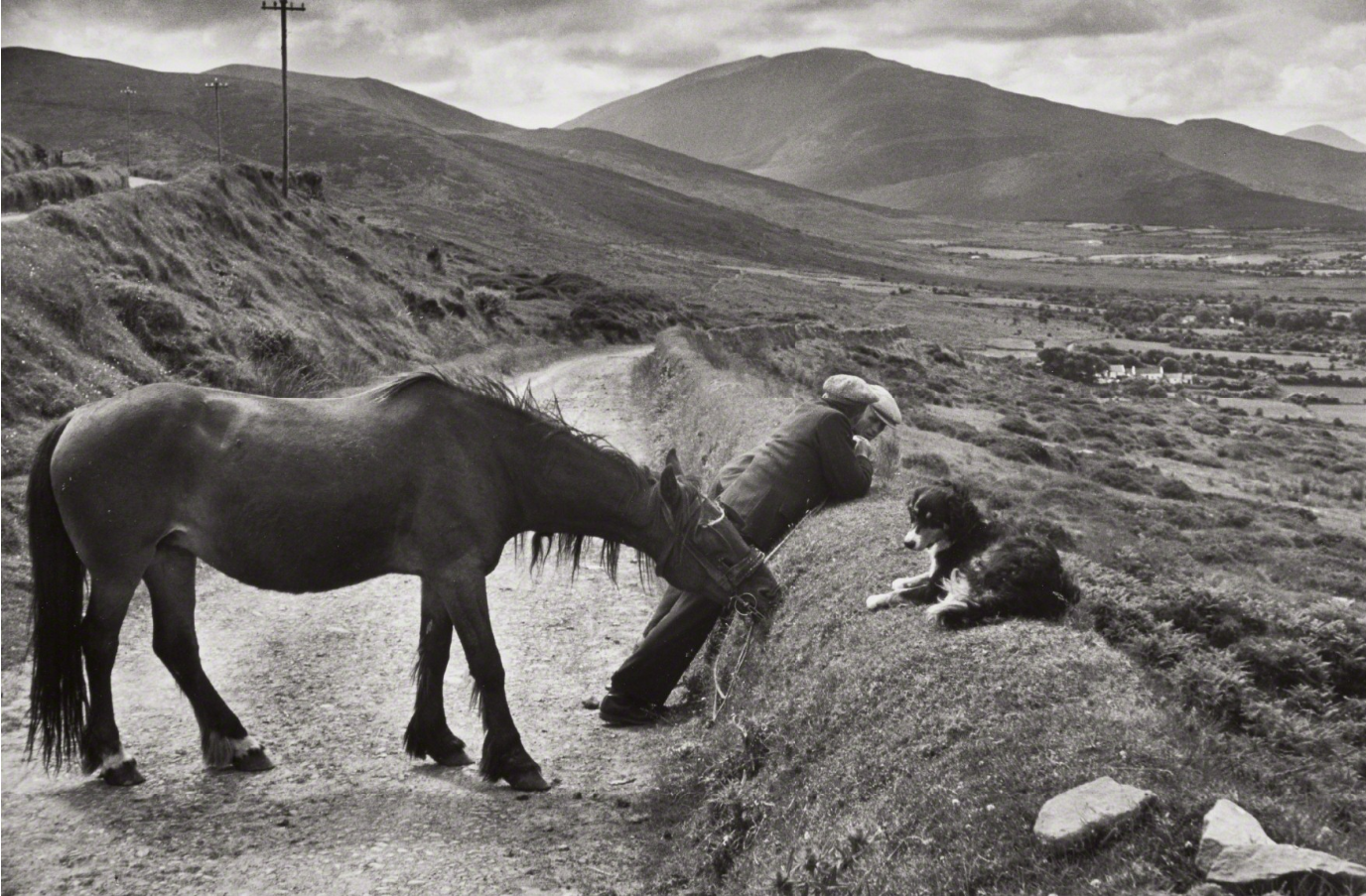
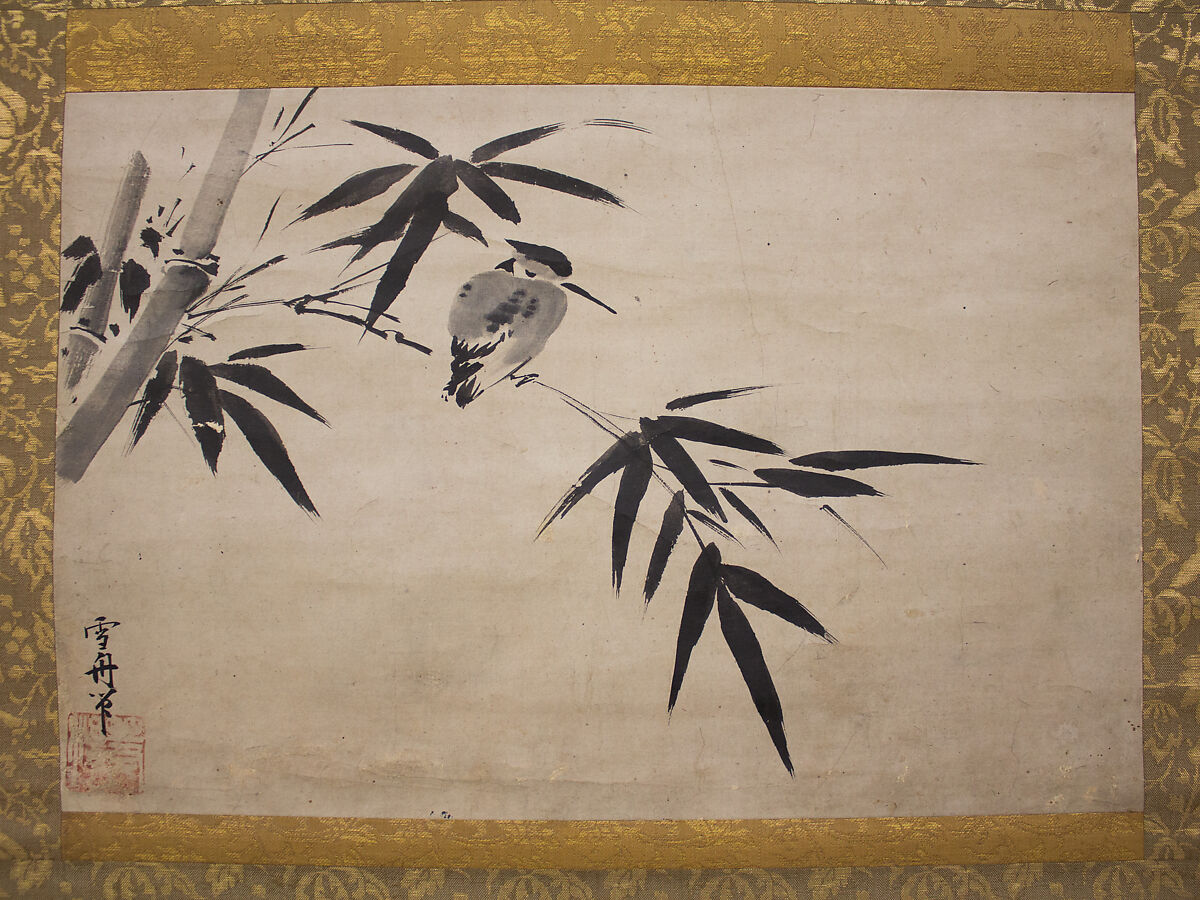
In my choice of monochrome I was certainly influenced by the photographer Henri Cartier-Bresson. Thirty years ago I saw an exhibition of his in Bologna that I have never forgotten, and to this day I favour the purity and poetry of black and white. My travels and the periods I have spent living in Asia opened up a world of knowledge of Eastern philosophies, which guide the way I see life and relate to what surrounds me. As for my approach, I owe a great deal to the study of Sumi-e ink painting and to the discovery of certain concepts in Japanese aesthetics, which have profoundly influenced the development of my style and my compositional choices.
What is your earliest memory of a cat?
My earliest memory of a cat goes back to when I lived in the countryside with my parents, in Filetto, a small village in the province of Ravenna. It was a small farm with many animals, but we had no pets and no cats. For some reason, a cat came to give birth to her kittens in our hayloft, sheltered from the elements and from danger. One day this cat, certainly hungry, challenged her wild instinct: she jumped onto the kitchen windowsill to be seen. She was there, curled on the threshold, looking at us, hoping perhaps to receive something to eat for herself and her kittens. I had never seen a cat except on television. I remember my mother moved by the sight, and myself completely captivated by her grace. She and her kittens grew up with us in full freedom on the farm. Their independence, and at the same time their relationship with me, fascinated me deeply.
Is there a particular story about your relationship with cats — personal or connected to your work — that you would like to share with us?
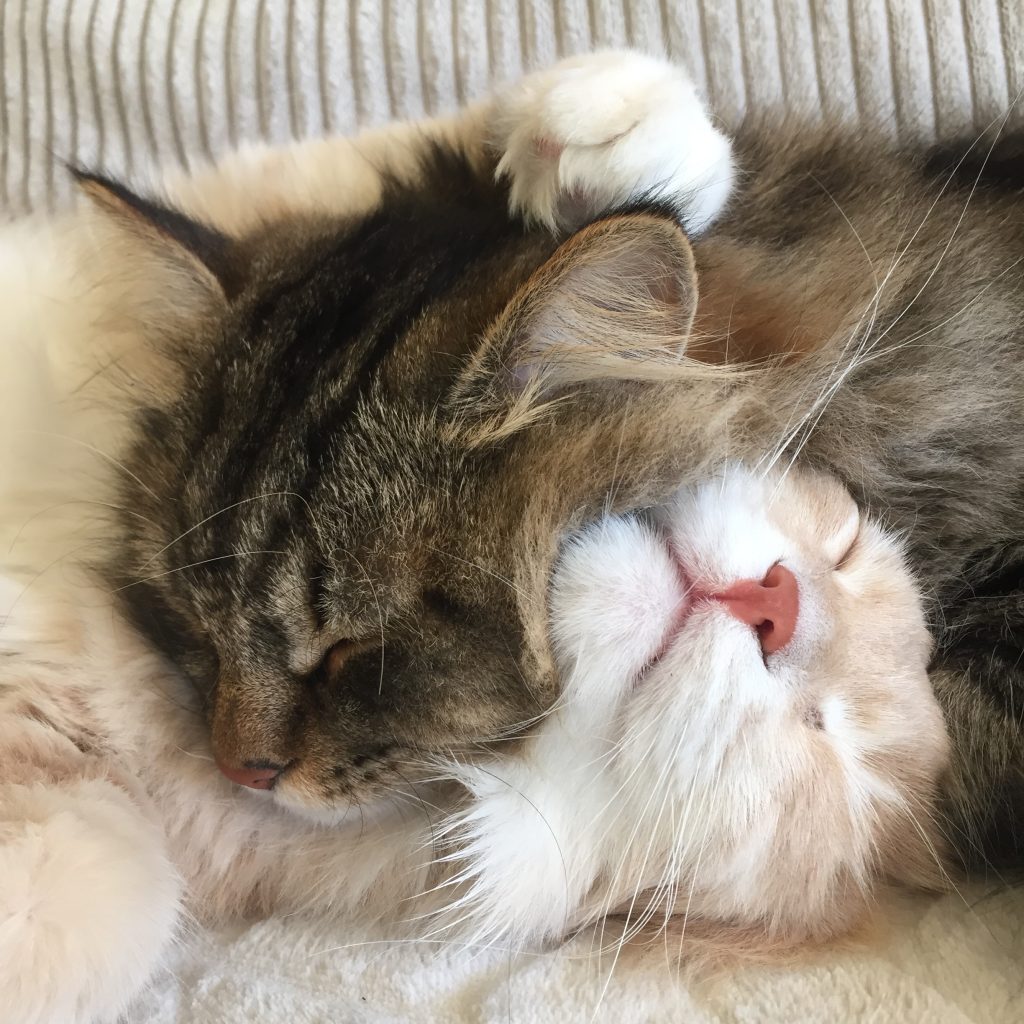
As an adult, travelling frequently, it had become difficult to welcome a cat into my home. But some years ago, already living in the Netherlands, I was forced to stay at home for a long time due to a serious illness. Having slowed my pace, my husband and I decided to welcome a cat: Vladimir, who later became Dino. A year later, Bino arrived too. There is no better medicine for the spirit and the body than living with a cat that dances around you, plays with the lightness of a feather, and sleeps beside you. They took care of me as no one else could have.
Cats in Charcoal
Rosanna Gaddoni’s Digital Exhibition at Cats Museum.
Digital Gallery
Discover Rosanna Gaddoni’s cats in charcoal and graphite.