Over the course of your career you’ve portrayed many animals and glimpses of nature. This exhibition highlights your cat-centred works. How does painting cats differ for you from depicting other animals?
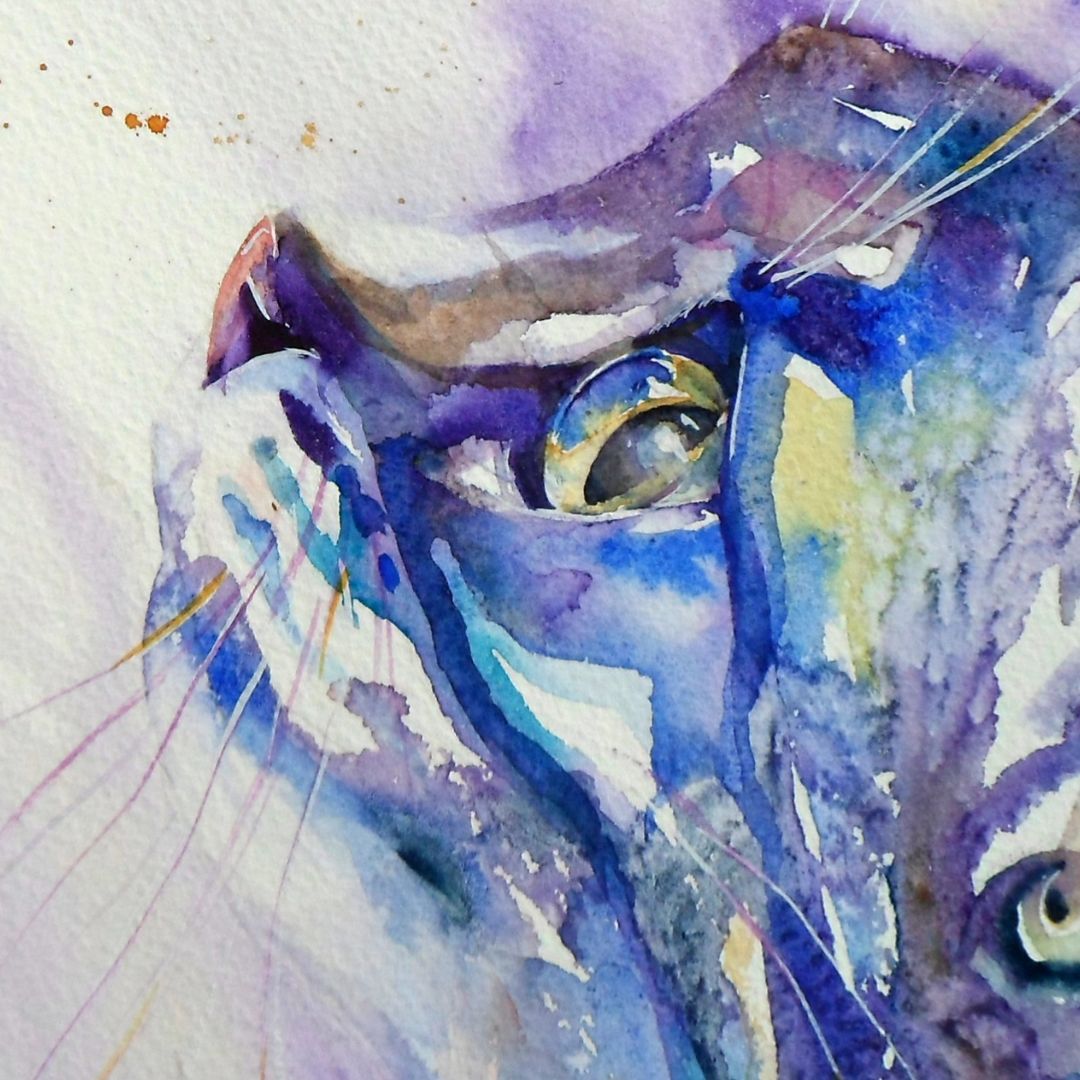
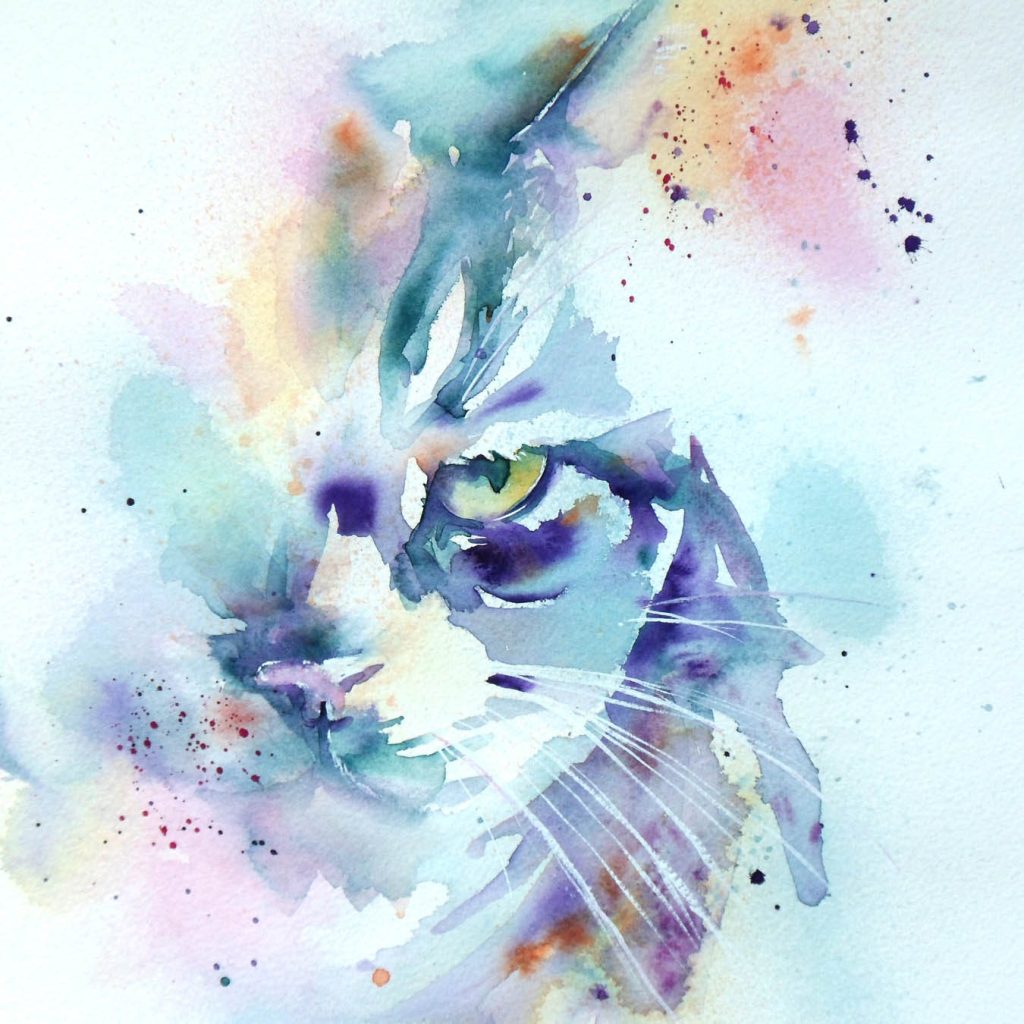
When painting any animal I always try to look at them with fresh eyes and think which are the features that I love the most. For me, cats’ eyes and the patterns of whiskers are often what most attract me, so those are the elements I tend to concentrate on.
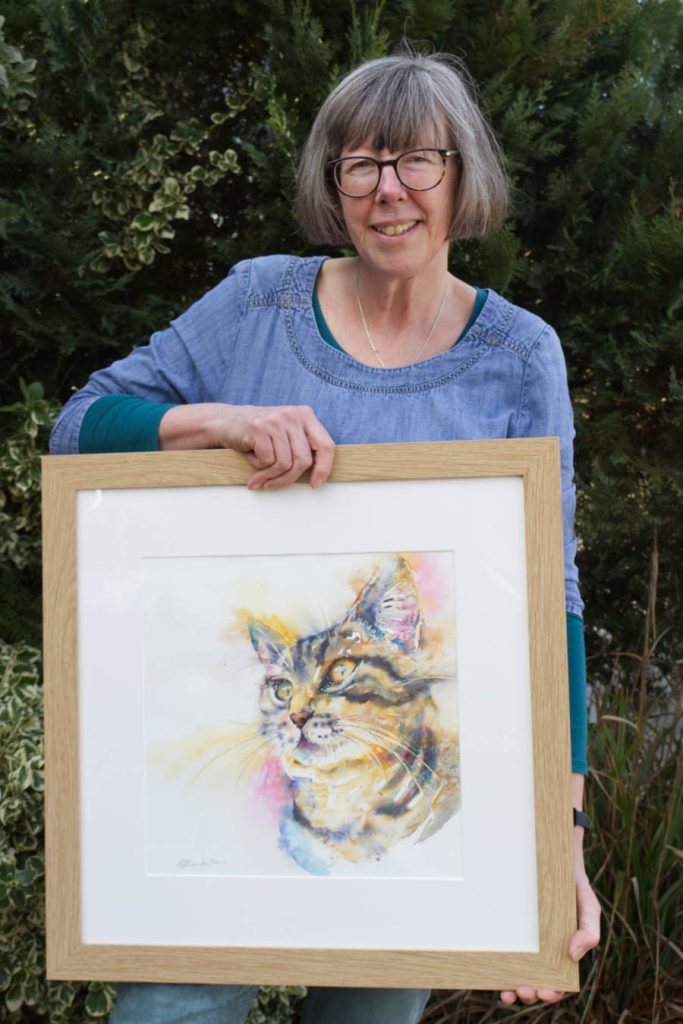
Also, I love to hint at the wild ancestor – the markings are great fun to paint and give a nod to the tiger that lies within every domestic cat. Even in an ordinary tabby or ginger, you can see those beautiful stripes and patterns that hark back to the wild cats from which they came. I like to think of it as “the tiger within.”
Is there a particular feline quality or gesture you especially enjoy capturing in your art?
I think I probably answered that above! I love cats’ eyes. The flecks of colour and patterns remind me of the patterns of stars. The whiskers often make the space in between seem like stained glass, and the markings give a hint to the wild animal from which they came.
Your work has been described as offering “moments of joy in a busy, overwhelming world.” Do you feel our connection with animals can bring about that same sense of calm and delight?
Absolutely! We instinctively know that connecting with animals can have a significant positive impact on us as humans. Research shows benefits such as reduced stress and blood pressure, and increased feelings of social support and mood. Just interacting with animals can also facilitate social interaction and create friendships.
We know you share your home with a cat who even inspired He Who Pays the Piper Calls the Tune. How does living with your subject – seeing it every day – shape or challenge your painting process?
Piper is a very odd cat to be honest! She came to us as a stray during lockdown and has obviously had a past injury as she walks like a cowboy. However, she is real and vibrant and has her own (odd) personality, so I always want my paintings to show the character of the individual animal.
Could you walk us through your process? Some of your pieces feel like variations on a theme, with subtle shifts in colour or atmosphere. How do these evolutions come about?
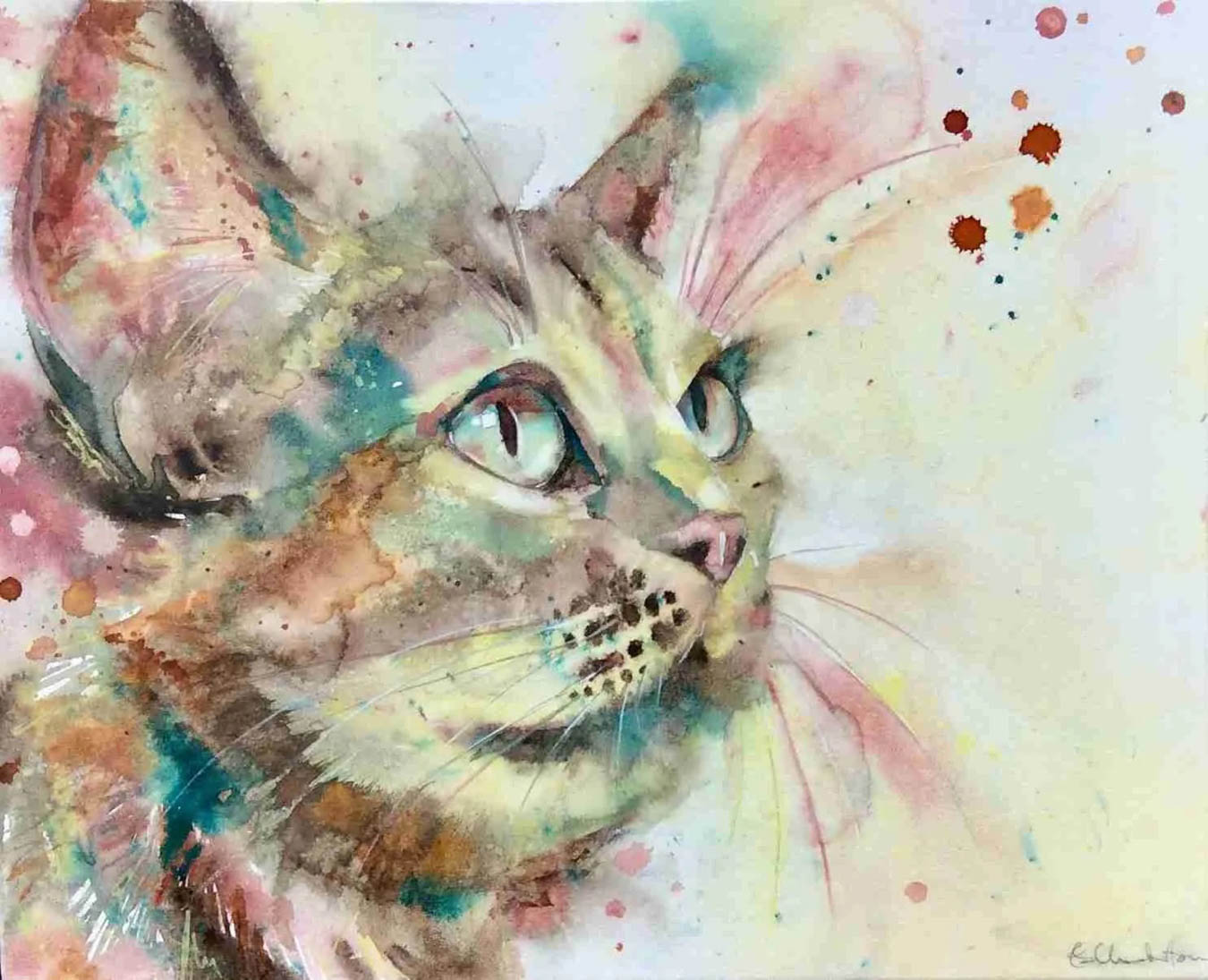
I always take a moment to really try and connect with the subject I am painting and to work out what I want my painting to say. What is the emotion I am trying to capture? What am I hoping the viewer will notice and take away? These observations then impact my composition and colour choice.
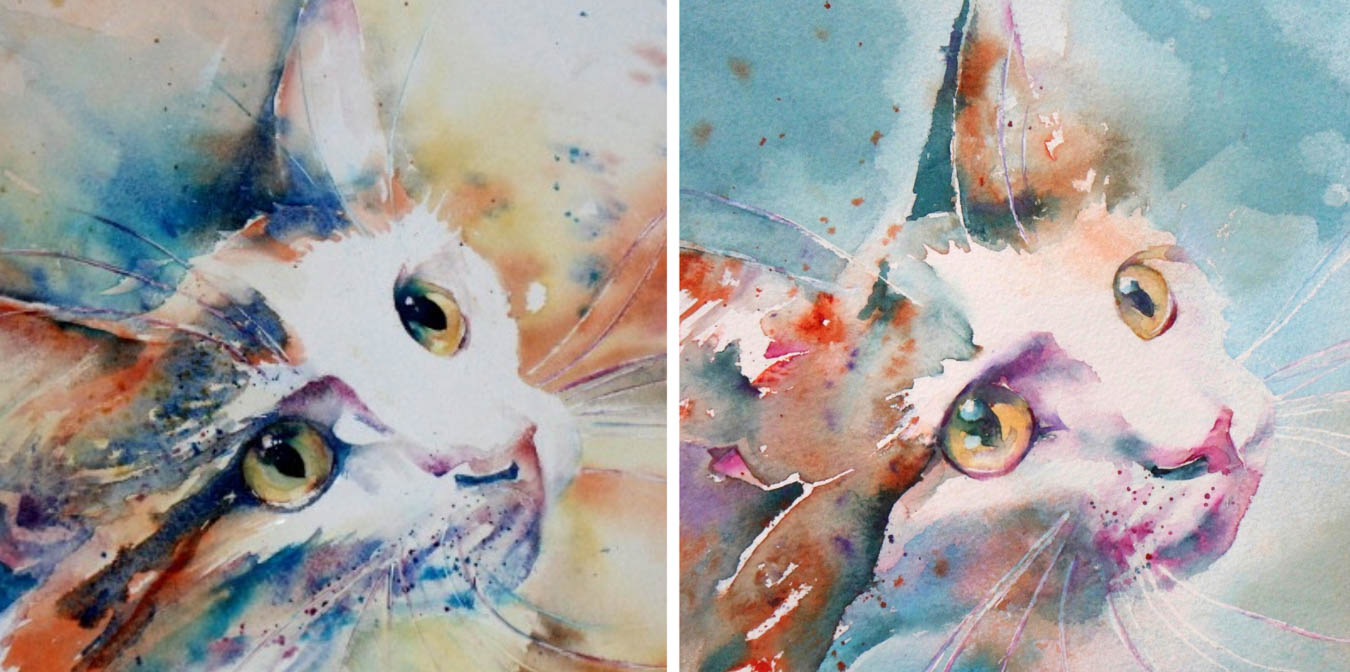
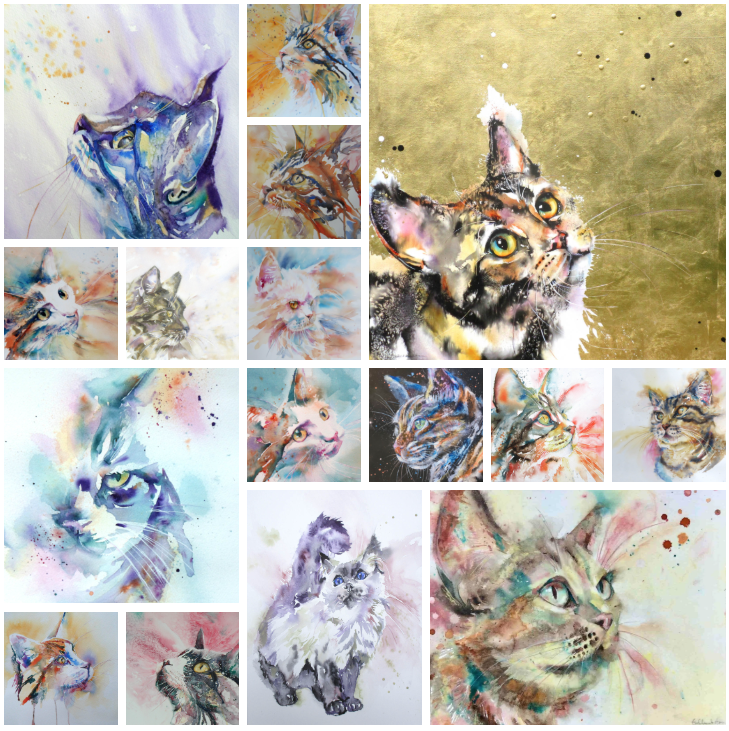
Sometimes I work from the same or very similar images, if one particularly appeals to me. I find it fascinating to experiment with different colour palettes. As we paint, tone – the balance of light and dark – does the heavy lifting in terms of describing the animal, but it’s the hue or colour that brings emotion to the piece and helps reveal the animal’s essence. We respond to colour on an emotional level, so by painting a similar subject in different colours, we can elicit different reactions.
Watercolour has become your signature medium. Was it always your first love, or did you discover it after trying other approaches?
I fell in love with watercolour early on. I love the unpredictability of the medium – how the paint flowing through water has a mind of its own. I often joke that painting loosely in watercolour is like herding cats, so I guess it is apt!
Watercolour lives on the paper. It’s spontaneous and unpredictable, if you let it be. The way the colour moves through water is endlessly fascinating. Of course, we try to control it – without losing freshness and spontaneity – but we are never fully in control of watercolour. It can give both happy accidents and nasty surprises. All very similar to cats: one moment it’s purring, the next it’s scratched you! You just have to learn to recognise the signs.
Which artists, movements or even non-artistic influences have left “pawprints” on your style?
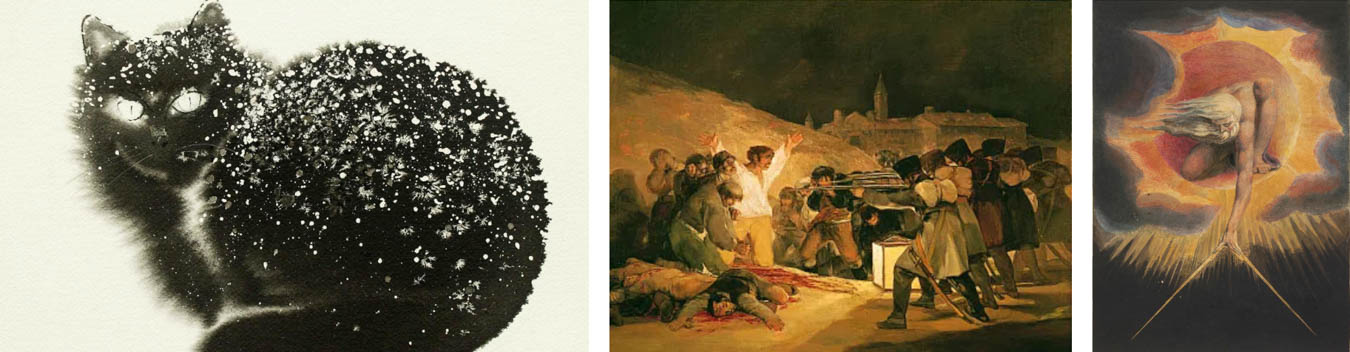
I hugely admire the cats of Endre Penovac – I’m in awe of their simplicity and elegance.
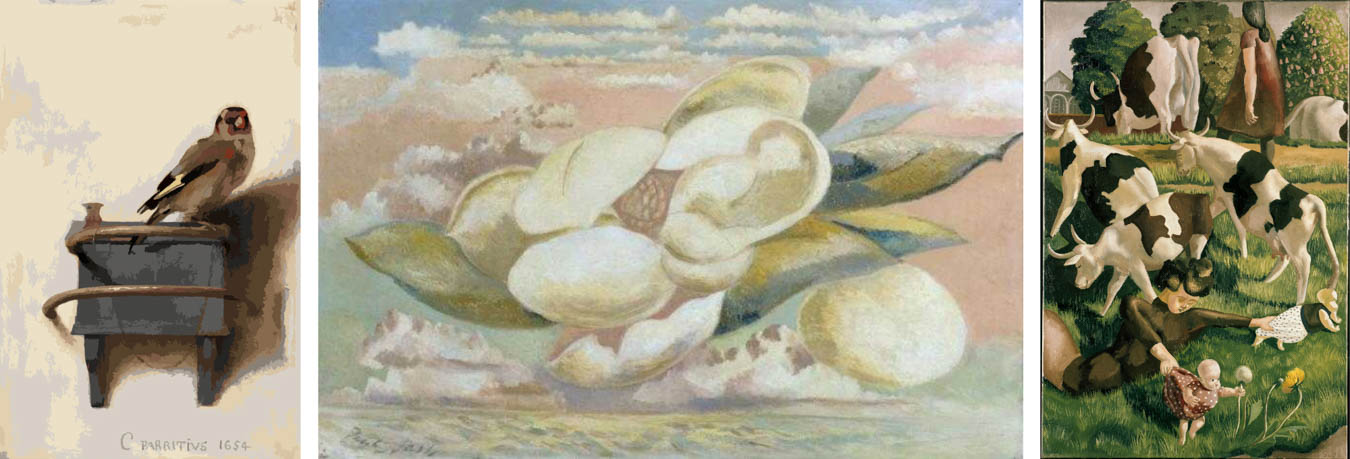
If I had to name other artists whose work has fascinated me, I’d mention Goya – the emotional force of The Third of May 1808 is breathtaking. I can’t say I’m influenced, just in awe. William Blake’s illustrations, Carel Fabritius’s The Goldfinch, and closer to home, living in the Thames Valley, the landscapes of Paul Nash and Stanley Spencer are constant inspirations – if I were a landscape painter (which I may be one day, who knows).
Do you have a favourite cat-related story from your life or practice you’d like to share?
We used to have two cats, and Mo loved the quiet life. When she got fed up with our house, she would disappear for a while. One day we heard a scream and commotion from our neighbour. Their young daughter’s bed was covered in stuffed animals and, when the mother went in, suddenly one moved! She must have been watching too many horror films, because she thought the toys had come to life. Of course, it was Mo – that was her hiding place when life got too busy at home.
What’s your earliest memory of a cat?
We had a marvellous ginger tom when I was a child. For some reason he was not neutered (this would have been in the early 1970s when maybe owners were not so responsible), and there were many litters of ginger kittens in the village – for which I suppose he was guilty! One day he just disappeared; perhaps he had chanced his luck once too often.
Feline Wonders
Liz Chaderton’s Digital Exhibition at Cats Museum. Explore her art and colourful watercolours.
Digital Gallery
Step into Liz Chaderton’s world of watercolour, where every painting uncovers the wonder around us.