


Fierce, mysterious, and gloriously unclassifiable — Leonor Fini (1907–1996) wasn’t just an artist who loved cats. She lived like one. Born in Buenos Aires and raised in Trieste, Fini grew up among sea winds, cultural crossroads, and a certain feline independence that would come to define both her art and her life.
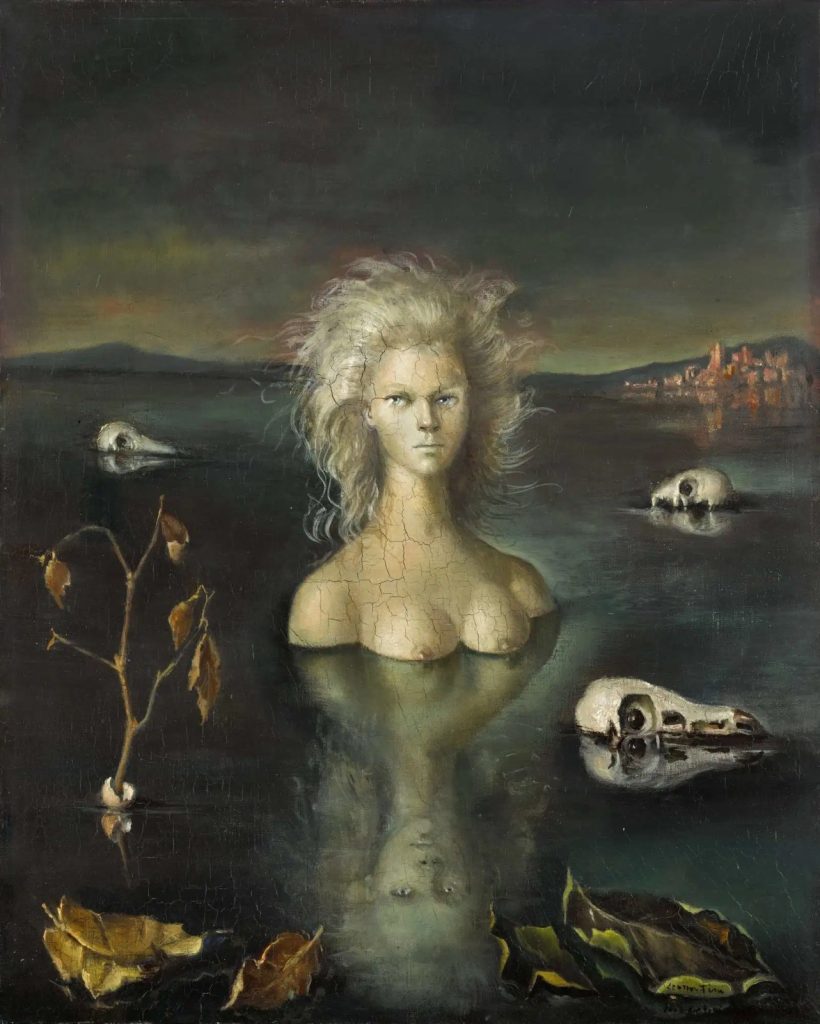
Early on, she trained with the Triestine painter Edmondo Passauro, whose academic rigor gave her the technical confidence to later defy every artistic category imposed upon her. After moving to Paris, she entered the orbit of the Surrealists — but, like any self-respecting cat, she refused to be tamed. She rejected their rules, carved out her own vision, and became one of the most distinctive voices in 20th-century European art.
Life with Cats: Companions, Mirrors, Muses
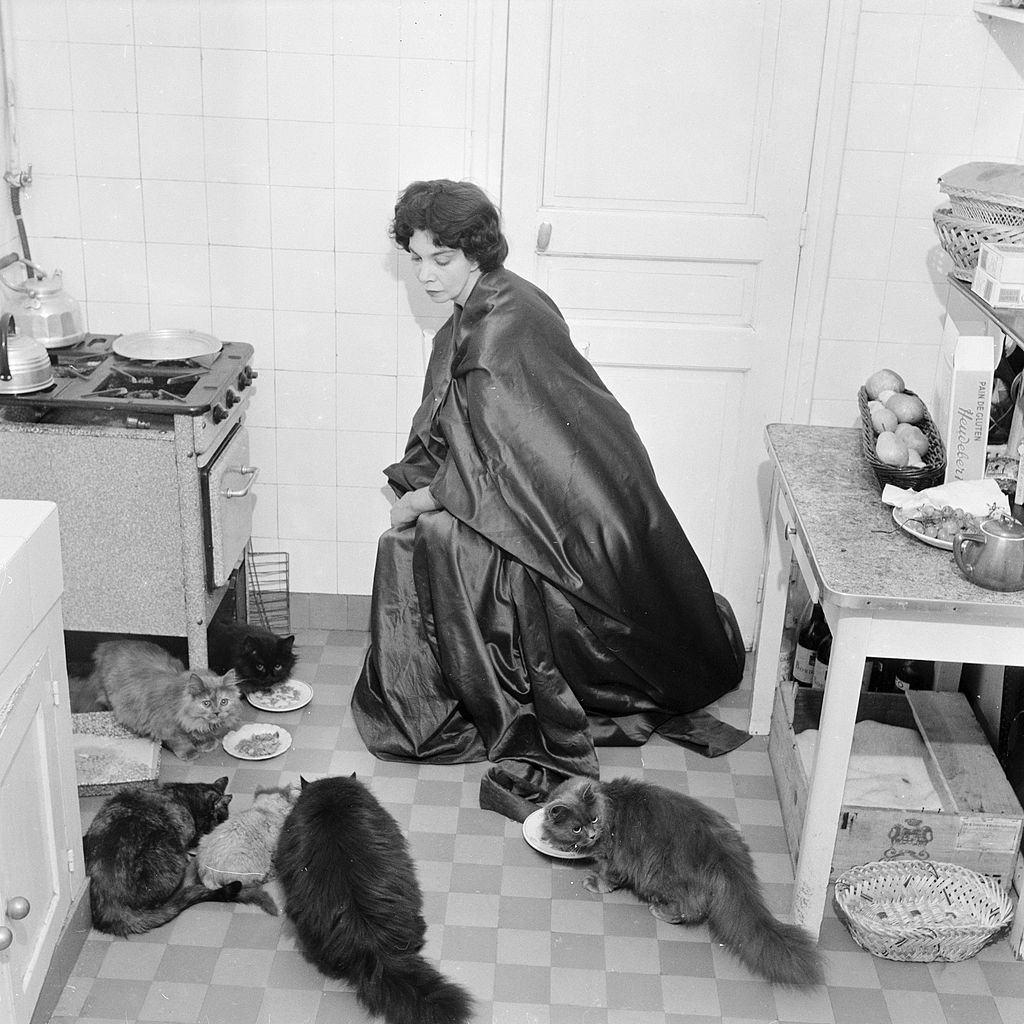
For Fini, cats were never mere pets. They were equals — sovereign beings who shared her domestic spaces, artistic process, and inner world. At times she lived with as many as seventeen cats, allowing them to move freely through her Paris apartment like a pride of household deities. She painted surrounded by fur and purring, and her works reflect this deep, daily intimacy.
Cats, to Fini, embodied mystery, sensuality, power, and refusal — qualities she also saw in women and claimed for herself. Many critics have noted that the women in her paintings often appear with cats, as cats, or in feline poses — not as decorative motifs, but as profound alter egos. These were not damsels or muses; they were priestesses, queens, and shapeshifters with claws.
Cats on Canvas: La Vie Idéale and Dimanche après-midi
In Fini’s work, cats are never secondary. Two pieces in particular illustrate just how central they were to her artistic cosmology:
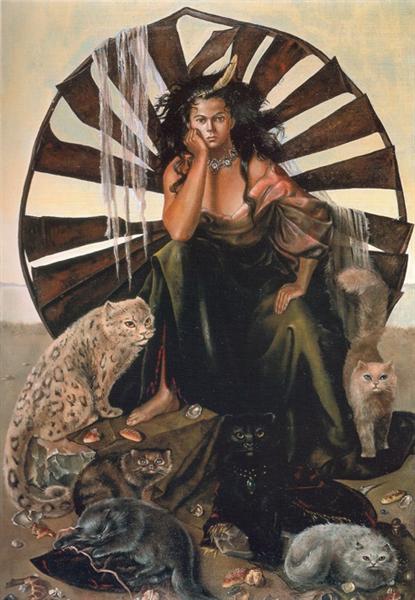
La Vie Idéale (The Ideal Life) 1950
A dreamy, almost liturgical composition: a goddess-like woman is surrounded by a constellation of cats, each one distinct in shape, posture, and gaze. The scene evokes not just companionship, but an ideal state of being — where femininity and feline energy coexist in harmony and sovereignty.
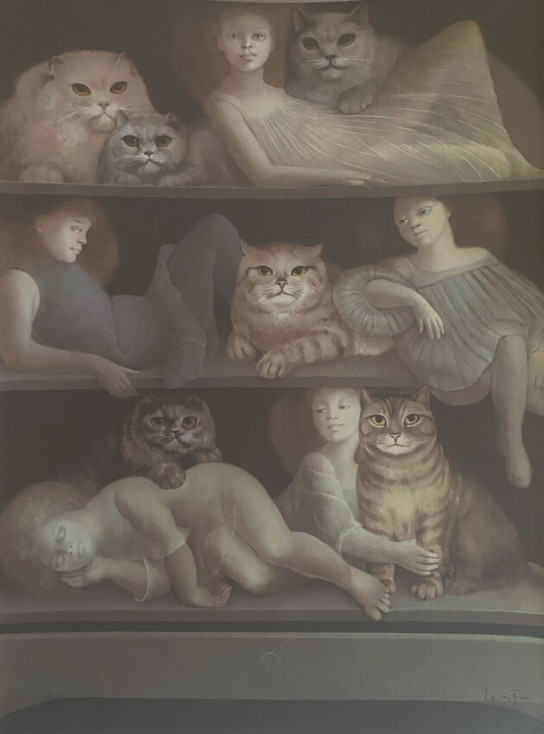
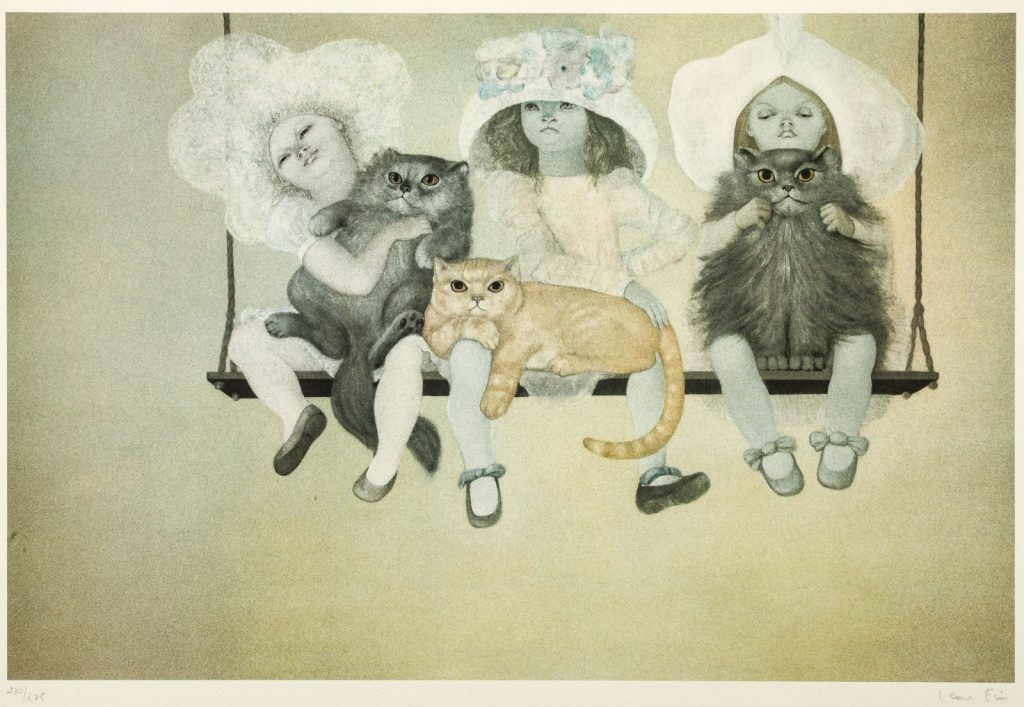
Dimanche après-midi (Sunday Afternoon) 1980
This surreal tableau presents portraits of Fini and her cats arranged like sacred icons or delicate figurines. Some sources cite it as a lithograph, others as oil on canvas — but all agree on its impact. Here, the line between woman and cat becomes wonderfully unstable. Femininity is both celebrated and questioned. The cats are more than pets: they are witnesses, mirrors, familiars. This piece traveled with Fini each year between Paris and her countryside retreat, becoming a kind of personal emblem — a ritual object for quiet Sundays in the company of her chosen tribe.
A Trieste State of Mind
Leonor Fini often described Trieste as her true home. Born in Buenos Aires, she moved there at just two years old when her mother, Malvina Braun, returned to Trieste. There, in her mother’s refined environment and within Trieste’s vibrant intellectual circles — including figures like Umberto Saba, Italo Svevo, and Gillo Dorfles — her artistic identity began to form.
It was also in Trieste where young Leonor had her first encounter with a cat — an enigmatic presence that would seep into her imagination and become a lifelong motif in her art.
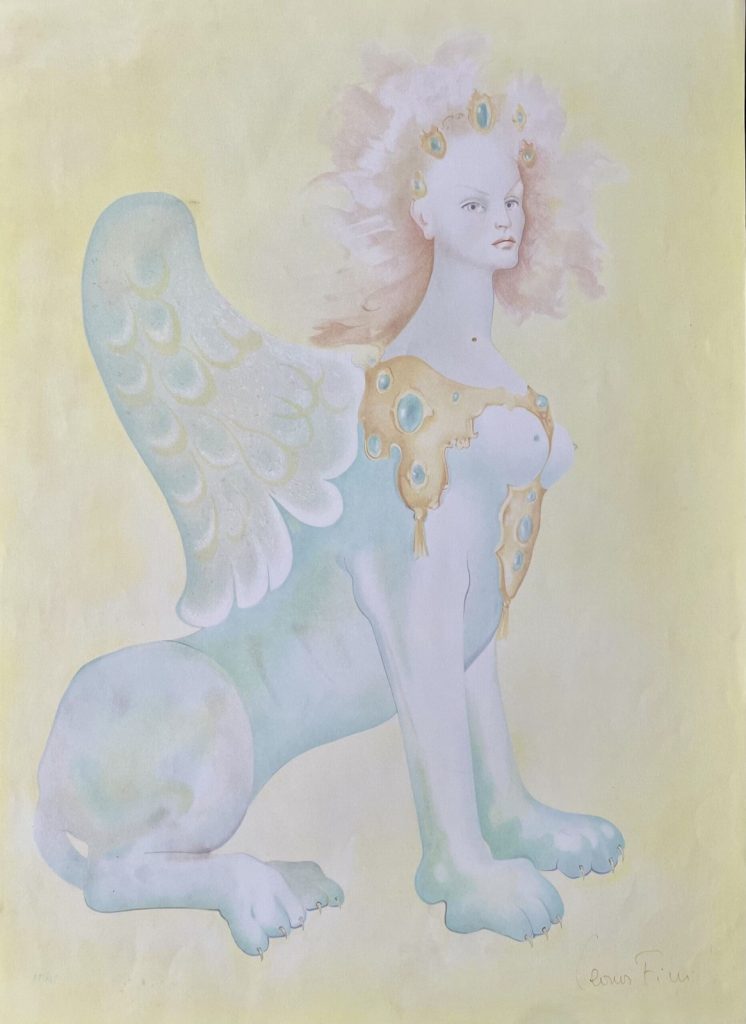
Fini’s relationship with Giorgio Cociani was built on a shared reverence for cats. Their friendship began in the mid-1980s, when she received a photo of a stray cat rescued by Cociani — at a time when she had recently lost someone dear. She wrote that she considered cats “angels,” and saw in his gesture solace and connection. From that moment on, they exchanged letters and calls about cats nearly every day for around twenty years.
In fact, Fini donated a rich and largely unpublished collection of artworks to Cociani — many featuring feline themes—to show her affection and shared artistic values.
The 2021 exhibition Memorie Triestine, curated by Marianna Accerboni in Trieste, showcased nearly thirty letters and postcards from Fini to Cociani — many adorned with her whimsical drawings of cats and collages. These personal artifacts were displayed alongside rare feline-themed drawings, sketches, and prints that Fini had gifted him, revealing a private world where cats were creative muses and spiritual companions.
Why Leonor Fini Matters to Cats Museum
For us, Fini’s connection with and devotion to cats is much more than biography: it’s living proof of how feline presence shapes imagination and life. Her bond with Trieste and with Cociani was rooted in an artistic and emotional partnership anchored by cats. These were not neutral symbols but active participants in her art, her archives, and her world.Her story fits perfectly with the spirit of Cats Museum: where cats aren’t just depicted but inhabit culture, art, and creative exchange.
Sources
- The Daily Telegraph – Leonor Fini: surreal thing
- Galerie Minsky
- Gianfranco Fiaccadori, Elio Ciol, Stefano Ciol: Arte in Friuli-Venezia Giulia, 1999
- iO Donna
- Financial Times
- Fucine Mute
- Il Friuli
- Arte.it
- Trieste Cultura
- Voce del NordEst